Round Eyes vs Almond Eyes: How to Tell the Difference
A practical side-by-side guide for the common “are my eyes round or almond?” question, with photo checks, iris clues, taper signs, styling notes, and when to use AI as a second opinion.
The quick answer
Round eyes usually look more open vertically, while almond eyes usually look longer, more tapered, and more contained around the iris. If you see clear white above or below the iris in a relaxed straight-on photo, round eyes become more likely. If the iris touches both lids and the eye reads as a long oval, almond eyes become more likely.
The best way to decide is not one selfie. Use a neutral front-facing photo, relaxed brows, and daylight. First judge the outline, then check iris exposure, then look at how strongly the inner and outer corners taper.
Round and almond are descriptive shortcuts, not beauty scores. Some people sit between them, and many people have a layered result such as round hooded eyes, hooded almond eyes, or almond eyes with a slight upward tilt.
Round vs almond eyes: the core difference
The core difference is proportion. Round eyes emphasize vertical openness. Almond eyes emphasize horizontal length and taper. Round eyes often feel bright, open, and circular, while almond eyes feel streamlined, balanced, and softly pointed at the corners.
Iris visibility is the most useful tie-breaker for many readers. With round eyes, the white of the eye may show above or below the iris when the face is calm. With almond eyes, the upper and lower lids often touch or slightly cover the iris.
This does not mean every eye fits a perfect diagram. Facial features vary, and one eye can look slightly rounder than the other. The goal is to find the dominant pattern in ordinary photos, not to force a rigid label.
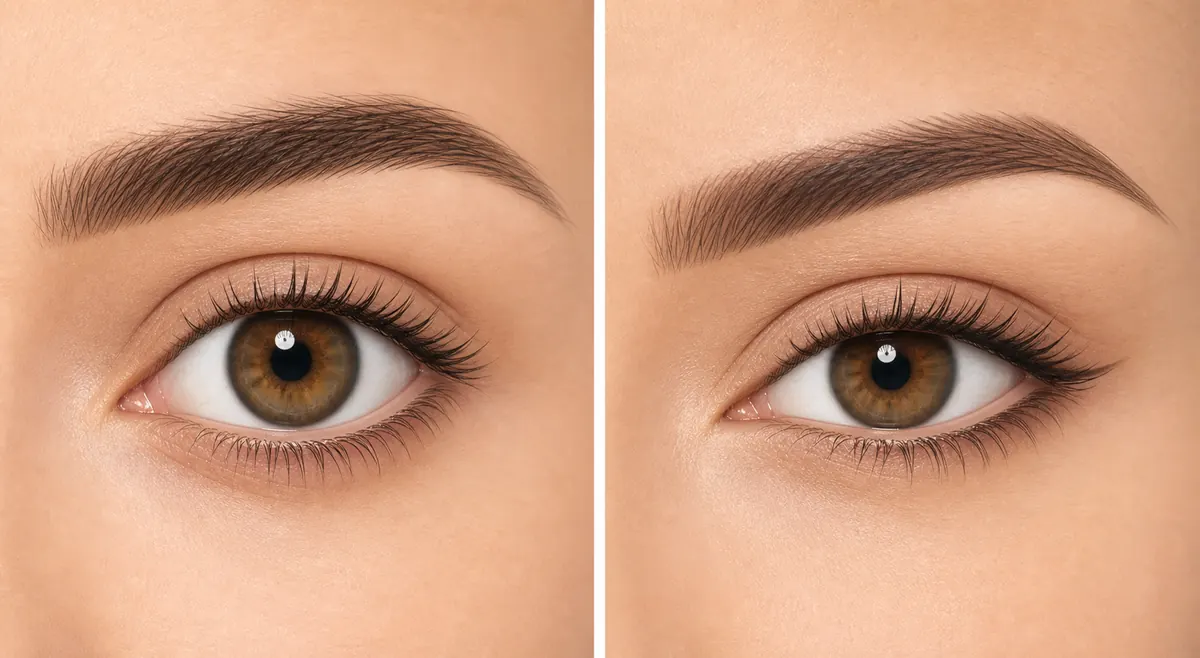
Signs that point to round or almond eyes
Use these clues together. One clue can mislead you, but the pattern becomes clearer when outline, iris exposure, and corner taper agree.
Round: the eye looks vertically open
The eye opening feels closer to a circle or tall oval than a long horizontal oval.
Round: white shows around the iris
You may see visible white above, below, or around more of the iris in a relaxed gaze.
Almond: the outline looks elongated
The eye reads longer than tall, with a smooth horizontal balance.
Almond: the corners taper softly
The inner and outer corners narrow more clearly, even without winged liner.
A neutral photo test for “do I have round or almond eyes?”
Most confusion comes from photos that change the apparent shape. Raised brows can make eyes look rounder. Winged liner can make round eyes look more almond. A camera held too close can stretch the face.
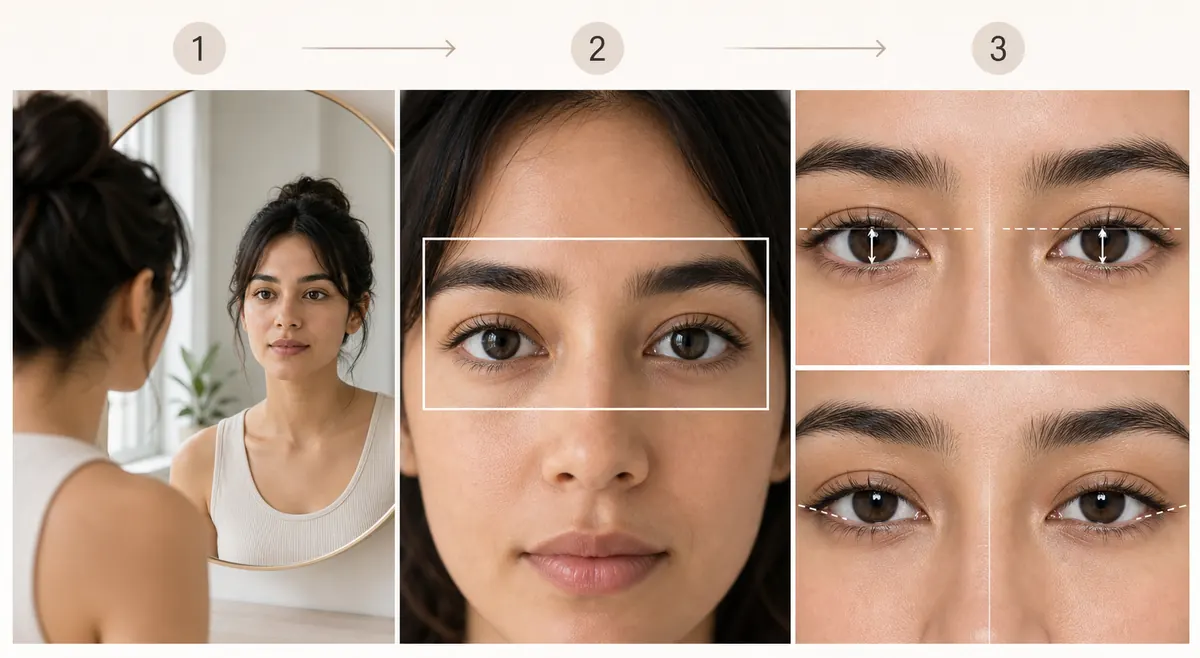
Take two or three ordinary photos and compare them with a mirror view. The answer should be based on the pattern that repeats, not on the most dramatic image.
Start with a relaxed front-facing photo
Use daylight, camera at eye height, and relaxed brows. Avoid strong filters, heavy lashes, and a surprised expression.
- Step back and crop later to reduce wide-angle distortion.
- Keep your chin level and look straight ahead.
- Use one photo with little or no eye makeup.
Judge outline before lid structure
Ask whether the eye first reads open and tall or long and tapered. This separates round-vs-almond from hooded-vs-non-hooded.
- Open and tall points toward round.
- Long and tapered points toward almond.
- Hooding can exist with either shape.
Check where the iris meets the lids
Look at the top and bottom of the iris in a calm gaze. Visible white above or below supports roundness; lid contact supports almond shape.
- Do not overread one tiny sliver of white.
- Check both eyes because asymmetry is common.
- Repeat the check in more than one photo.
Look for natural taper at the corners
Almond eyes usually narrow at the inner and outer corners. Round eyes can still have corners, but the whole opening stays more circular.
- Remove the effect of winged eyeliner from your judgment.
- Compare the natural lash line, not only mascara.
- Separate corner angle from outline shape.
Round eyes vs almond eyes: side-by-side table
This table is the practical decision layer. If most clues fall on one side, that label is probably your main outline. If the clues split, describe the result as mixed and use the AI detector for another view.
| Feature | Round eyes | Almond eyes | What to check |
|---|---|---|---|
| Overall outline | More open vertically; often circular or tall oval. | Longer horizontally; softly tapered at both ends. | Ask whether the first impression is openness or length. |
| Iris exposure | White may show above or below the iris. | Iris often touches or is lightly covered by both lids. | Use a relaxed straight-on gaze. |
| Corner taper | Corners may taper less strongly. | Inner and outer corners narrow more noticeably. | Compare without winged liner. |
| Photo behavior | Looks even rounder with raised brows, curled lashes, or brightening makeup. | Can look rounder in close selfies but returns to a tapered outline in neutral photos. | Check several ordinary photos, not one pose. |
| Common mix-up | Can be mistaken for almond when eyeliner stretches the outer third. | Can be mistaken for round when the eyes are opened wide. | Separate natural structure from styling. |
Makeup and photo clues without changing the verdict
Makeup can emphasize a shape, but it should not be the only reason for the label. Round eyes can be styled with outer-corner definition to look more elongated. Almond eyes can be styled with brightening and curled lashes to look more open.
For identification, judge a bare or lightly styled photo first. For styling, use the label as a starting point rather than a rulebook. If your result is mixed, borrow techniques from both categories and keep what looks balanced in the open-eye view.
If your eyes are round
- Keep inner-corner liner thin.
- Add soft definition to the outer third for length.
- Avoid heavy dark liner all around if it closes the eye too much.
If your eyes are almond
- Follow the natural taper instead of overextending it.
- Use subtle lift if the outer corner is neutral or downturned.
- Avoid judging the shape only from winged-liner photos.
Mixed traits are normal
Many people are not a pure textbook version of round or almond. A person can have softly round eyes with slight hooding, almond eyes with visible white below the iris, or one eye that reads more open than the other.
The most helpful phrasing is often “mostly almond with slight roundness” or “round eyes with a tapered outer corner.” Those descriptions are more accurate than forcing a single rigid category.
If your eye shape appears to change suddenly because of swelling, drooping, injury, pain, or vision symptoms, treat that as a health question rather than a beauty-label question and seek professional care.
When an AI eye shape detector helps
An AI eye shape detector is most useful when your clues split between round and almond. A good photo workflow looks at iris exposure, lid visibility, corner angle, and spacing together rather than reducing the decision to one quiz question.
Use a clear front-facing photo with relaxed brows and minimal obstruction from lashes or glasses. Then compare the result with the table above. If the tool says almond but you see strong vertical openness, the real answer may be a mixed description rather than a contradiction.
Want a second opinion from a photo?
Upload a relaxed front-facing image, then compare the AI result with the round-vs-almond checks in this guide.
Frequently asked questions
Use a neutral front-facing photo. Round eyes look more open vertically and may show white above or below the iris. Almond eyes look longer, more tapered, and usually have the iris touching both lids.
They can sit between the two. If your eyes are elongated but also visibly open, describe them as mixed, softly round, or almond with some roundness rather than forcing one strict label.
No. Almond describes the outline, while upturned describes the outer-corner angle. Almond eyes can be level, slightly upturned, or slightly downturned.
No. Visible white is a helpful clue, not a rule. Use it with the overall outline, corner taper, and several ordinary photos.
Yes. Winged liner, outer-corner shadow, and outward lashes can make round eyes look longer. For identification, compare with a bare or lightly styled photo.
Use the mirror and neutral-photo test first so you understand the visible clues. Then use the detector as a second opinion when your result feels borderline.
References and further reading
These links keep the comparison grounded and help you continue the eye-shape identification process on-site.