Hunter Eyes: Meaning, Traits, Self-Check, and Hunter vs Prey Eyes
A careful guide to the popular online term: what people usually mean by hunter eyes, which visible features matter, how to compare a neutral photo, and why the label is not a medical diagnosis or a beauty score.
The quick answer
Hunter eyes is a social-media and appearance-analysis term for eyes that look relatively deep-set, horizontally compact, and slightly lifted at the outer corners. People often also mention an almond-shaped opening, limited upper-eyelid show, a supported lower lid, and brows that sit fairly close to the eyes. No single trait proves the label.
The fastest useful check is a relaxed, straight-on photo. Compare the outer and inner corners, note how much upper lid and white around the iris is visible, and decide whether the eyes look deep-set or prominent. Then separate those observations from lighting, squinting, brow position, and camera angle.
Hunter eyes is not a medical diagnosis, a personality type, or an objective measure of attractiveness. It also is not a standard category used by eye doctors. Use the term as shorthand for a feature combination, not as a verdict about your face.
What are hunter eyes?
Online discussions use hunter eyes to describe an intense-looking eye area, but the label has no single scientific definition. The most repeated feature is positive canthal tilt: the outer corner appears slightly higher than the inner corner in a level front-facing view. A neutral tilt can still fit the broader look when other traits are present.
Depth matters too. Deep-set eyes sit farther beneath the brow ridge, which can create natural shadow above the lid. That is different from hooding: deep-set describes the eye's apparent position in the socket, while hooded describes skin folding over the eyelid crease. A person can have both traits, one trait, or neither.
The eye opening is often described as almond-shaped because the inner and outer corners taper rather than forming a fully round outline. Limited white above or below the iris can reinforce the compact look. However, expression changes these cues: a mild squint can make almost any eye look narrower, so the label should be judged only from a relaxed view.
Brows, cheek support, eyelids, orbital structure, and facial proportions all affect the impression. That is why copying one celebrity photo or measuring one angle rarely gives a reliable answer. A feature-based description—slightly upturned, deep-set, almond, mildly hooded—is usually more precise than the internet label alone.
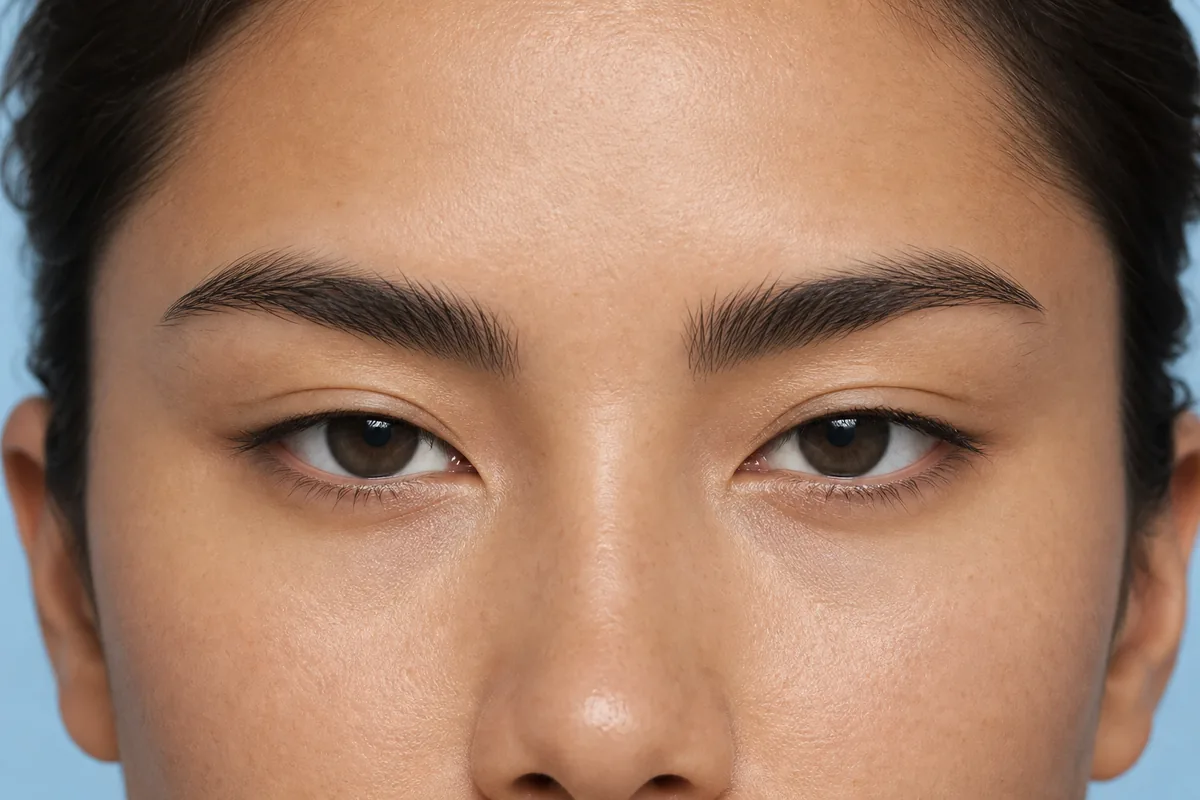
Common visible traits associated with hunter eyes
Look for a cluster of traits across several ordinary photos. One angled selfie, raised brow, or deliberate squint can create a false match.
Slight positive canthal tilt
The outer corner sits a little higher than the inner corner when the head and camera are level. Extreme tilt is not required.
Deep-set appearance
The eyes appear positioned under the brow ridge rather than projecting forward. Natural upper-lid shadow may be visible.
Compact almond opening
The corners taper and the iris is not surrounded by large areas of visible white in a relaxed gaze.
Limited upper-lid exposure
Only a modest amount of mobile lid may show. This can come from depth, mild hooding, brow position, or a combination.
Supported lower-lid contour
The lower eyelid follows the eye closely without a large amount of lower sclera showing in the neutral photo.
Low-set brow relationship
The brows may sit relatively close to the eye area, strengthening the compact impression without defining the eye shape by themselves.
How to know if you have hunter eyes from a neutral photo
A repeatable photo check is more useful than an edited selfie. Use soft daylight, place the camera at eye height, keep your head upright, and relax the forehead and eyelids. Remove sunglasses and avoid heavy liner or lashes that hide the natural corners.
Do not force your gaze wider or narrower. Take two or three photos and compare the same features each time. Small left-right differences are normal, so judge the overall pattern instead of demanding perfect symmetry.
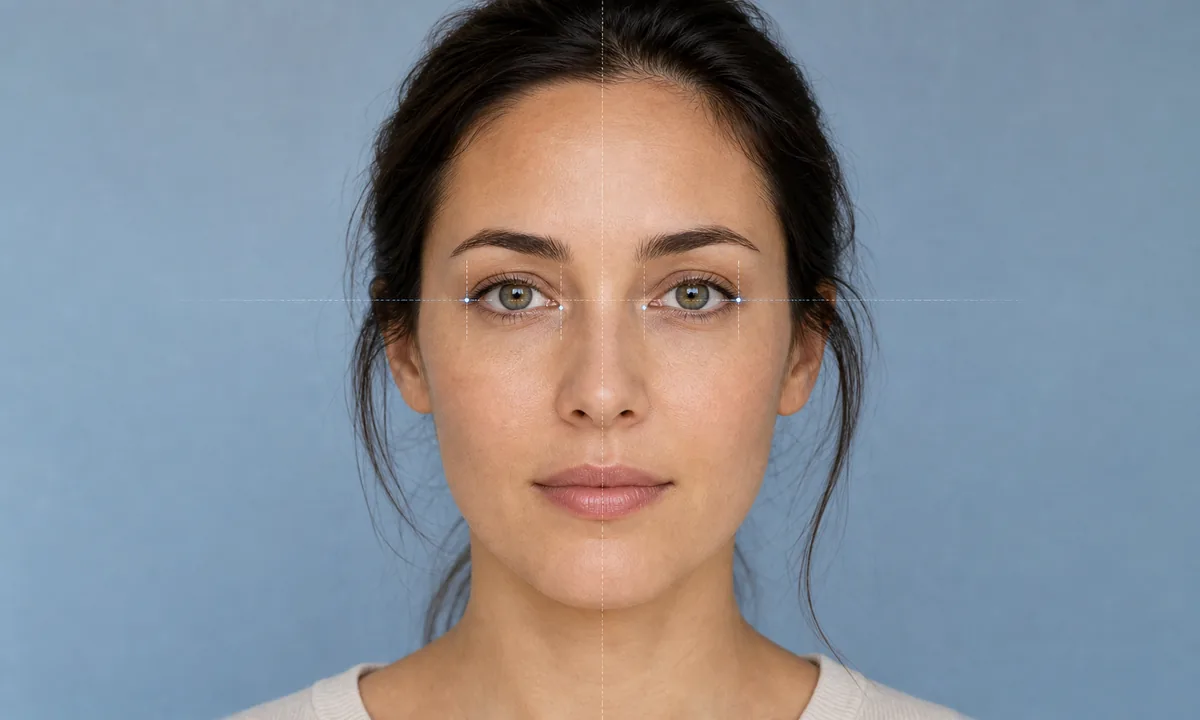
Confirm the camera is level
Use the pupils and the center of the face as a horizontal reference before judging tilt.
- Avoid chin-up or chin-down angles.
- Keep the lens near eye height.
- Do not rotate the image after the fact.
Compare inner and outer corners
Imagine a line between the corners of each eye. A slightly higher outer corner suggests positive tilt.
- Judge both eyes separately.
- Ignore eyeliner wings.
- Treat a nearly level line as neutral, not negative.
Check depth and lid exposure
Look for brow-ridge shadow, visible mobile lid, and whether the eye appears recessed or prominent.
- Deep-set is not the same as hooded.
- Lighting can exaggerate shadow.
- Sudden protrusion or swelling needs medical attention, not an eye-shape label.
Describe the features before naming them
Write down tilt, outline, depth, hooding, scleral show, and spacing. Apply the label only if several observations align.
- Mixed eye traits are common.
- A label should not override what you can see.
- Repeat the check with another ordinary photo.
Hunter eyes vs prey eyes: what is the difference?
Prey eyes is another informal internet term, usually applied to a more open, round, or prominent-looking eye area. Neither label is clinical, and neither describes personality or value.
| Feature | Hunter-eyes pattern | Prey-eyes pattern | Better neutral check |
|---|---|---|---|
| Outer-corner tilt | Often slightly positive or level. | Often level or slightly negative in online examples. | Use a level front-facing photo without eyeliner. |
| Eye opening | Usually narrower and almond-like. | Usually rounder or more vertically open. | Observe iris exposure while the face is relaxed. |
| Apparent depth | Often deep-set beneath the brow ridge. | May look more prominent or forward-set. | Compare side light and a neutral three-quarter view. |
| Upper lid | Often shows limited mobile lid space. | May show more upper lid or a more open crease. | Separate depth from hooding and brow lifting. |
| Meaning | An appearance shorthand, not a behavior type. | An appearance shorthand, not a weakness or diagnosis. | Avoid personality and attractiveness claims. |
Can you get hunter eyes naturally?
Most of the traits linked to hunter eyes come from anatomy: orbital structure, eyelid shape, canthal position, brow relationship, and soft-tissue distribution. Ordinary eye exercises may change how tired or tense the area feels, but there is no good evidence that they permanently move the eye corners or remodel adult orbital bone.
Temporary presentation can change. Sleep, allergy control, reduced irritation, a relaxed expression, eyebrow grooming, makeup, lighting, and camera position can make the eye area look more open or more compact. These are styling or photography effects, not structural transformations.
Surgery around the eyelids or outer corner can carry meaningful risks and must be discussed with an appropriately qualified clinician. Do not use social-media tutorials, tape, forceful massage, or repeated squinting as substitutes for medical advice.
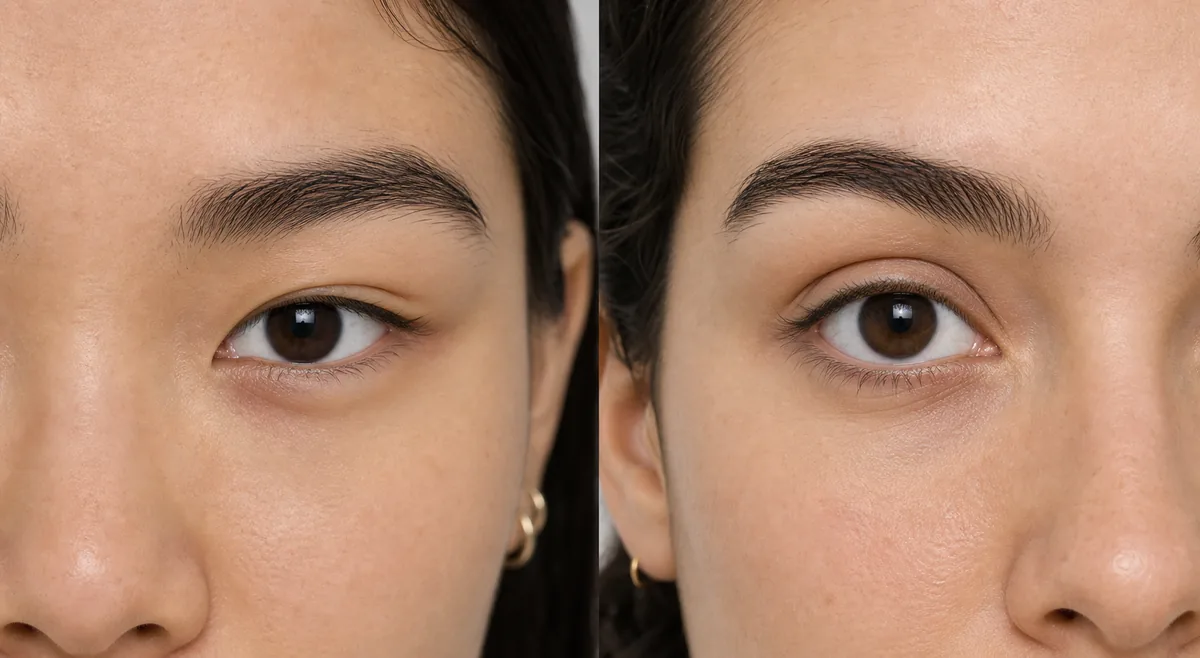
Safe presentation choices
- Use a level camera and soft frontal light.
- Keep the forehead and eyelids relaxed.
- Shape brows without forcing them unnaturally low.
- Use liner to complement your existing corner angle rather than imitate another face.
Claims to treat cautiously
- Exercises that promise permanent canthal-tilt change.
- Mewing or massage claims that promise orbital remodeling.
- Before-and-after photos with different squinting, lenses, lighting, or head angle.
- Personality, dominance, or worth claims based on eye shape.
Limits, health boundaries, and common mistakes
The hunter-eyes label compresses several separate traits into one phrase. Two people may receive the same label for different reasons: one may have positive tilt and deep-set eyes, while another may have neutral tilt, hooding, and a compact almond opening. Feature-level language is more accurate.
Photos are especially easy to misread. Wide-angle lenses, a camera below the eyes, directional shadow, eyebrow tension, filters, and squinting can all produce the look. Compare multiple unedited photos before reaching a conclusion.
Do not use appearance terminology to explain sudden medical changes. New bulging, lid retraction, swelling, pain, double vision, unequal pupils, trauma, or a rapid change in one eye should be evaluated by a medical professional. An online shape guide cannot diagnose those symptoms.
Finally, hunter and prey language can encourage unnecessary ranking. Round, prominent, downturned, hooded, and neutral-tilt eyes are normal variations. The useful goal is accurate description and better photo or styling choices, not forcing every face into a status category.
How an eye shape detector can help
An AI eye shape detector can provide a second opinion on component traits such as almond versus round outline, upturned versus downturned corners, hooding, depth cues, and spacing. It should not be treated as a hunter-eyes score because the phrase is informal and has no standardized threshold.
Upload a clear front-facing photo and compare the result with your own checklist. If the tool says almond and upturned while you also notice a deep-set appearance and limited lid show, you may understand why online communities use the hunter-eyes label. Keep the underlying traits as the more reliable description.
Check the underlying eye-shape traits
Use a relaxed front-facing photo, then compare the result with the tilt, outline, depth, and lid checks in this guide.
Frequently asked questions
Hunter eyes is an informal online label for a combination often including a compact almond opening, deep-set appearance, limited upper-lid show, and slightly positive outer-corner tilt.
Use a relaxed level photo and check corner tilt, eye outline, depth, lid exposure, and scleral show. Several matching traits are more meaningful than one measurement.
Online examples usually describe hunter eyes as narrower and deeper-set, while prey eyes appear rounder, more open, or more prominent. These are not medical categories or value judgments.
There is no good evidence that ordinary exercises permanently move the outer eye corners or remodel adult orbital bone. Expression and presentation can change temporarily.
Many contributing traits are influenced by inherited facial anatomy, but age, soft tissue, expression, health, and photography also affect how the eye area appears.
No. Hooded describes upper-lid skin covering part of the crease. It can contribute to limited lid show, but hunter eyes usually refers to a wider combination of tilt, depth, outline, and lid traits.
Attractiveness is subjective and culturally shaped. Eye shape alone cannot provide an objective beauty ranking, and the hunter/prey labels should not be used to judge a person's value.
Sources and related guides
The external sources cover relevant anatomy and medical safety. Internal guides help separate the informal label into visible eye-shape traits.