Yeux ronds vs yeux en amande : comment faire la difference
Yeux ronds vs yeux en amande : comment faire la difference: a localized guide to compare vertical openness, almond taper, iris visibility, photos, makeup effects, and mixed eye-shape traits.
Réponse rapide
Les yeux ronds paraissent generalement plus ouverts verticalement, tandis que les yeux en amande semblent plus longs, plus effiles et plus contenus autour de l’iris. Si du blanc est visible au-dessus ou au-dessous de l’iris dans une photo frontale detendue, la piste des yeux ronds devient plus forte.
Ne tranchez pas avec un seul selfie. Utilisez une photo frontale neutre, des sourcils detendus et une lumiere douce. Regardez d’abord le contour, puis l’exposition de l’iris, puis l’effilement des coins.
Rond et amande sont des descriptions, pas des notes de beaute. Beaucoup de personnes ont un resultat mixte, par exemple des yeux ronds legerement encapuchonnes ou des yeux en amande avec une inclinaison subtile.
Round vs almond eyes: the core difference
La difference principale est une question de proportion. Les yeux ronds mettent l’accent sur l’ouverture verticale. Les yeux en amande mettent l’accent sur la longueur horizontale et l’effilement.
La visibilite de l’iris est souvent le meilleur indice. Avec des yeux ronds, du blanc peut apparaitre au-dessus ou au-dessous de l’iris. Avec des yeux en amande, les paupieres touchent ou couvrent legerement l’iris.
Tous les yeux ne correspondent pas a un schema parfait. Cherchez le motif dominant dans des photos ordinaires plutot qu’une etiquette rigide.
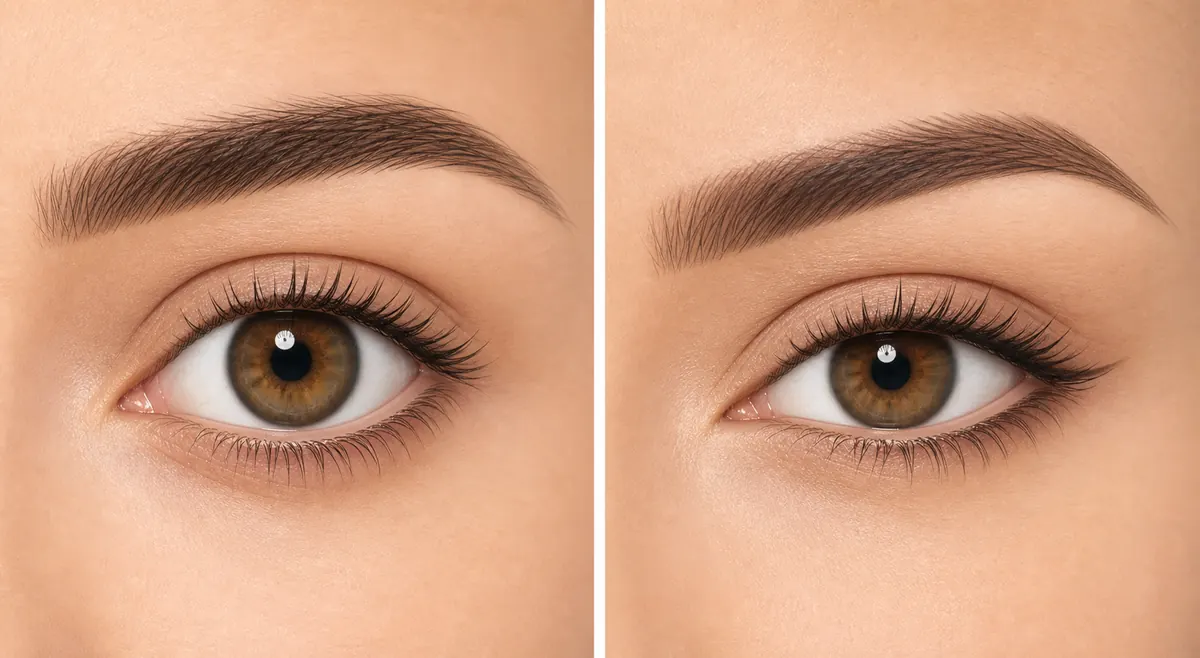
Signs that point to round or almond eyes
Use these clues together. One clue can mislead you, but the pattern becomes clearer when outline, iris exposure, and corner taper agree.
Rond : l’oeil semble ouvert verticalement
L’ouverture ressemble davantage a un cercle ou a un ovale haut qu’a un long ovale horizontal.
Rond : du blanc apparait autour de l’iris
On peut voir du blanc au-dessus, au-dessous ou autour de l’iris dans un regard detendu.
Amande : le contour parait allonge
L’oeil semble plus long que haut, avec un equilibre horizontal.
Amande : les coins s’affinent
Les coins interne et externe se resserrent nettement, meme sans eyeliner aile.
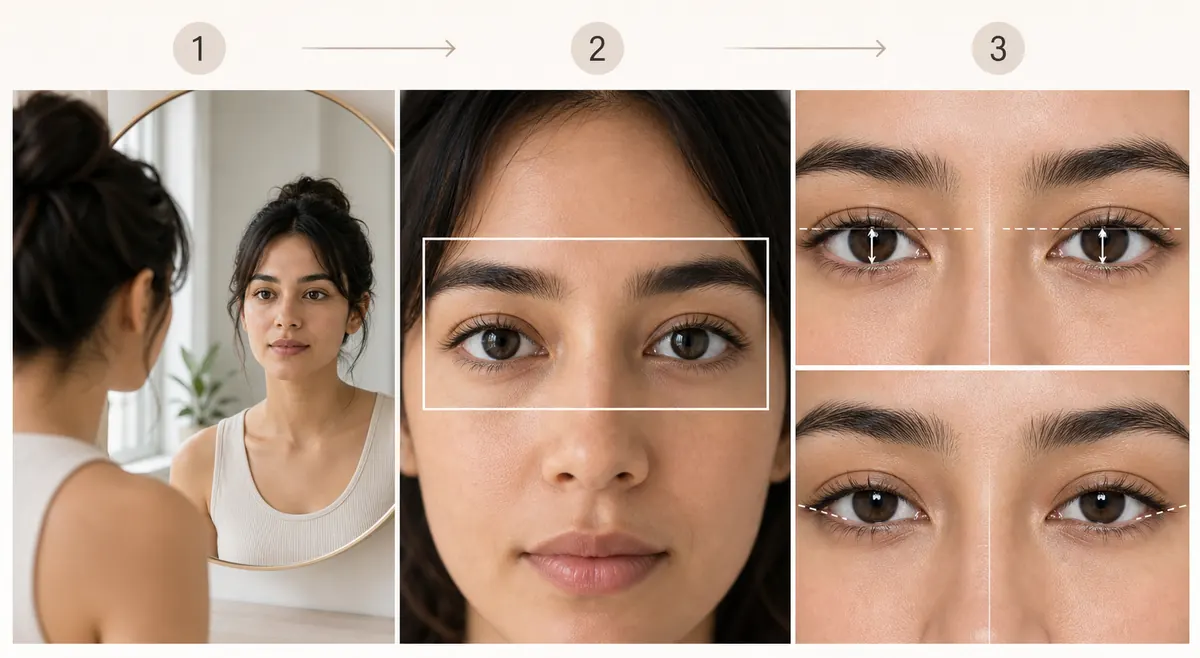
A neutral photo test for “do I have round or almond eyes?”
Most confusion comes from photos that change the apparent shape. Raised brows can make eyes look rounder. Winged liner can make round eyes look more almond. A camera held too close can stretch the face.
Take two or three ordinary photos and compare them with a mirror view. The answer should be based on the pattern that repeats, not on the most dramatic image.
Commencez par une photo frontale detendue
Utilisez la lumiere du jour, l’appareil a hauteur des yeux et des sourcils detendus.
- Reculez puis recadrez pour limiter la distorsion.
- Gardez le menton droit.
- Prenez une photo avec peu ou pas de maquillage.
Jugez le contour avant la paupiere
Demandez-vous si l’oeil parait ouvert et haut ou long et effile.
- Ouvert et haut indique plutot rond.
- Long et effile indique plutot amande.
- Une paupiere encapuchonnee peut exister avec les deux.
Observez le contact entre iris et paupieres
Le blanc visible soutient la piste ronde ; le contact avec les deux paupieres soutient la piste amande.
- Ne surestimez pas une minuscule ligne blanche.
- Comparez les deux yeux.
- Repetez avec plusieurs photos.
Cherchez l’effilement naturel des coins
Les yeux en amande se resserrent souvent aux coins, tandis que les yeux ronds gardent une ouverture plus circulaire.
- Ignorez l’effet d’un eyeliner aile.
- Regardez la ligne naturelle des cils.
- Separez l’angle du coin et le contour.
Round eyes vs almond eyes: side-by-side table
This table is the practical decision layer. If most clues fall on one side, that label is probably your main outline. If the clues split, describe the result as mixed and use the AI detector for another view.
| Feature | Round eyes | Almond eyes | What to check |
|---|---|---|---|
| Overall outline | More open vertically; often circular or tall oval. | Longer horizontally; softly tapered at both ends. | Ask whether the first impression is openness or length. |
| Iris exposure | White may show above or below the iris. | Iris often touches or is lightly covered by both lids. | Use a relaxed straight-on gaze. |
| Corner taper | Corners may taper less strongly. | Inner and outer corners narrow more noticeably. | Compare without winged liner. |
| Photo behavior | Looks even rounder with raised brows, curled lashes, or brightening makeup. | Can look rounder in close selfies but returns to a tapered outline in neutral photos. | Check several ordinary photos, not one pose. |
| Common mix-up | Can be mistaken for almond when eyeliner stretches the outer third. | Can be mistaken for round when the eyes are opened wide. | Separate natural structure from styling. |
Makeup and photo clues without changing the verdict
Makeup can emphasize a shape, but it should not be the only reason for the label. Round eyes can be styled with outer-corner definition to look more elongated. Almond eyes can be styled with brightening and curled lashes to look more open.
For identification, judge a bare or lightly styled photo first. For styling, use the label as a starting point rather than a rulebook. If your result is mixed, borrow techniques from both categories and keep what looks balanced in the open-eye view.
If your eyes are round
- Keep inner-corner liner thin.
- Add soft definition to the outer third for length.
- Avoid heavy dark liner all around if it closes the eye too much.
If your eyes are almond
- Follow the natural taper instead of overextending it.
- Use subtle lift if the outer corner is neutral or downturned.
- Avoid judging the shape only from winged-liner photos.
Mixed traits are normal
Many people are not a pure textbook version of round or almond. A person can have softly round eyes with slight hooding, almond eyes with visible white below the iris, or one eye that reads more open than the other.
The most helpful phrasing is often “mostly almond with slight roundness” or “round eyes with a tapered outer corner.” Those descriptions are more accurate than forcing a single rigid category.
If your eye shape appears to change suddenly because of swelling, drooping, injury, pain, or vision symptoms, treat that as a health question rather than a beauty-label question and seek professional care.
When an AI eye shape detector helps
An AI eye shape detector is most useful when your clues split between round and almond. A good photo workflow looks at iris exposure, lid visibility, corner angle, and spacing together rather than reducing the decision to one quiz question.
Use a clear front-facing photo with relaxed brows and minimal obstruction from lashes or glasses. Then compare the result with the table above. If the tool says almond but you see strong vertical openness, the real answer may be a mixed description rather than a contradiction.
Want a second opinion from a photo?
Upload a relaxed front-facing image, then compare the AI result with the round-vs-almond checks in this guide.
Frequently asked questions
Utilisez une photo frontale neutre. Les yeux ronds sont plus ouverts verticalement ; les yeux en amande sont plus longs et plus effiles.
Oui. Si les indices se partagent, decrivez le resultat comme mixte plutot que de forcer une seule categorie.
Non. Amande decrit le contour ; releve decrit l’angle externe.
Non. C’est un indice utile, pas une regle.
Oui, surtout l’eyeliner externe, mais il vaut mieux identifier la forme avec une photo peu maquillee.
Commencez par le miroir et une photo neutre, puis utilisez le detecteur comme second avis.
References and further reading
These links keep the comparison grounded and help you continue the eye-shape identification process on-site.