Monolid Eyes Guide: How to Tell, Compare, and Choose Makeup
A clear guide to monolid eyes: how to recognize a smooth upper lid, how monolids differ from hooded and double eyelids, and how to use photos, makeup, and AI analysis without forcing your eyes into the wrong label.
The quick answer
Monolid eyes, also called single eyelids, usually have little to no visible crease across the upper eyelid. Instead of a fold dividing the lid into two visible zones, the area from the lash line toward the brow looks smoother when your eyes are open.
The simplest check is to look straight into a mirror with relaxed brows. If you do not see a clear crease above the lashes, and the upper lid looks like one continuous surface, monolid is likely. If you can find a crease but it is hidden under an upper fold, hooded eyes may be a better label.
Monolid describes lid structure, not your whole eye shape. A person can have monolid eyes that are almond, round, upturned, downturned, close-set, or wide-set. Use it as one layer of your eye-shape description rather than a beauty ranking.
What are monolid eyes?
Monolid eyes are an eyelid appearance where the upper lid does not show a prominent crease when the eyes are open. Many guides call this a single eyelid because the lid is not visually split into a lower mobile lid and an upper section by a clear fold.
This trait is common in many East Asian, Central Asian, Indigenous American, and Pacific Rim populations, but it can appear across backgrounds. It is usually a normal inherited feature. Some people also have an epicanthic fold near the inner corner, while others have a smooth lid without a strong inner-corner fold.
A monolid is different from an eye health problem. If your lid shape has always looked this way and your vision is normal, it is simply a facial feature. Sudden drooping, pain, vision change, or one-sided lid weakness should be discussed with an eye-care professional because those symptoms are not explained by eye-shape labels.
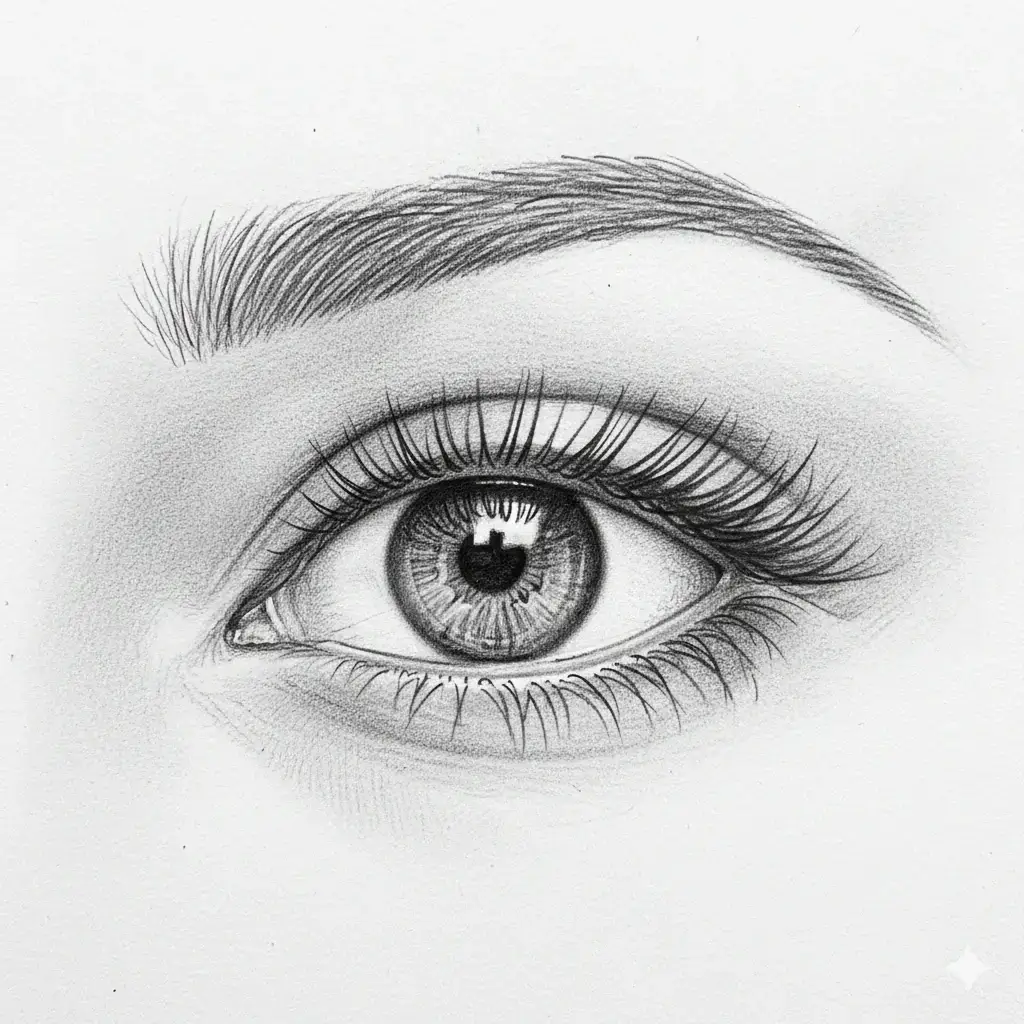
Signs you may have monolid eyes
Use several signs together. A single angled selfie, heavy lashes, or raised brows can make almost any eyelid look different.
Little or no visible crease
The main clue is a smooth upper lid without a clear fold separating the lash-line area from the upper lid.
Eyeshadow placement changes when eyes open
Shadow placed only on the closed lid may disappear or look lower once your eyes are open.
The lid looks like one continuous plane
Instead of two visible lid sections, the upper lid reads as one surface from lashes toward the brow bone.
Hooded-eye advice partly fits but not perfectly
Some open-eye makeup mapping can help, but hooded tutorials may assume a hidden crease that you do not actually have.
A photo and mirror check that works
Monolid eyes are easy to mislabel because lighting and expression change the crease area. A camera above your face can flatten the lid. Raised brows can create a temporary fold. Heavy lashes can hide the lash line. Use a repeatable check instead.
The goal is not to force a perfect category. The goal is to decide whether monolid is part of your eye description so styling advice, photo feedback, and AI results become easier to interpret.
Take a relaxed front-facing photo
Use natural light, keep the camera at eye height, and look straight ahead with your forehead relaxed.
- Avoid raising your brows to create more lid space.
- Remove sunglasses, heavy bangs, or thick lash strips if possible.
- Take one makeup-free or minimal-makeup photo for the clearest read.
Look for a crease, not just lid size
A small eye can still have a double eyelid, and a large eye can still have a monolid. Focus on whether a clear upper-lid crease is visible.
- No clear crease points toward monolid eyes.
- A crease hidden by a fold points more toward hooded eyes.
- A visible crease and open lid space points toward double or non-hooded eyelids.
Compare the inner and outer lid
Some eyes have a partial crease near one side. Judge the overall open-eye view rather than one tiny line in the inner corner.
- Check both eyes because asymmetry is normal.
- Repeat the check in two ordinary photos.
- Do not use stretched, edited, or extreme-angle photos.
Separate eyelid type from eye outline
After deciding whether your lid is monolid, judge whether the eye opening is almond, round, upturned, or downturned.
- Monolid almond eyes are possible.
- Monolid round eyes are also possible.
- Spacing labels like close-set or wide-set should be checked separately.
Monolid vs hooded vs double eyelids
These labels are often mixed together because they all involve the upper eyelid. The cleanest distinction is whether a crease exists, whether it is visible, and whether a fold covers it.
| Feature | Monolid eyes | Comparison label | What to check |
|---|---|---|---|
| Crease visibility | Little to no visible crease when the eyes are open. | Hooded eyes usually have a crease that is partly covered by upper-lid skin. | Look straight ahead with relaxed brows. |
| Lid surface | The upper lid often looks smooth and continuous. | Double eyelids show a fold that splits the lid into two visible zones. | Compare the open-eye view with a gently closed-eye view. |
| Makeup placement | Color may need to be placed where it remains visible with eyes open. | Hooded eyes also use open-eye mapping, but the placement follows a covered crease. | Apply a small mark, open your eyes, and see whether it remains visible. |
| Overall eye shape | Can still be almond, round, upturned, or downturned. | Almond and round describe outline, not the eyelid crease. | Judge eyelid type first, then judge the eye opening. |
Makeup tips for monolid eyes
Monolid makeup works best when you design the look with your eyes open. If all placement happens while the eye is closed, the finished shape may sit too low or disappear in normal conversation. Think about what remains visible in the straight-ahead view.
There is no need to create a fake crease unless you enjoy that style. Monolids are strong for clean liner, soft gradients, glossy lids, color blocks, and lash-line definition because the lid surface can carry shape in a graphic way.

What often works
- Map shadow and liner while looking straight ahead.
- Build gradients upward so color is visible above the lash line.
- Use primer or long-wear formulas if liner transfers.
- Try tightlining, soft smoky edges, or a slightly thicker outer wing.
What to avoid overdoing
- Do not copy crease tutorials that depend on a deep visible fold.
- Avoid placing all depth below a fold that is not visible.
- Do not assume monolid eyes need to look larger to look balanced.
- Avoid using eyelid tape or glue as a default solution if you do not want it.
Limits and common mistakes
The most common mistake is treating monolid as a complete eye-shape verdict. It is only one feature. Your corner angle, iris exposure, spacing, brow position, and eye outline still matter.
Another mistake is confusing monolid eyes with hooded eyes. A fully hooded eye can hide most of the mobile lid, so it may look similar in photos. The difference is that hooded eyes usually still have a crease underneath the fold, while monolids show little to no crease.
Finally, avoid treating monolid as a problem to fix. Some people like crease-enhancing products or surgery, but those are personal choices. For everyday identification and styling, the useful step is understanding how your lid behaves.
When an AI eye shape detector can help
AI analysis can help when your eyes have mixed traits, such as monolid almond eyes, monolid eyes with an upward tilt, or a partial crease on one side. A useful result should consider lid crease, eye outline, corner angle, iris exposure, and spacing together.
Use a clear, front-facing photo with relaxed brows. Then compare the result with the mirror checks in this guide. If the AI says hooded but you see no crease at all, the monolid-vs-hooded table can help you interpret the result more carefully.
Want a second opinion from a photo?
Upload a relaxed front-facing image, then compare the AI result with the crease, lid surface, and eye-outline checks above.
Frequently asked questions
Monolid eyes are eyelids that show little to no visible crease when the eyes are open, creating a smoother upper-lid appearance.
No. Monolid eyes usually lack a visible crease. Hooded eyes usually have a crease, but upper-lid skin covers part of it.
Yes. Monolid describes the eyelid crease, while almond describes the outline of the eye opening. You can have both traits.
Look straight ahead with relaxed brows. If you do not see a clear crease above the lashes and the lid appears smooth, monolid is likely.
Open-eye mapping, visible gradients, long-wear liner, tightlining, and outer-corner definition often work well. The best look depends on your exact eye outline.
Yes. Monolids are a normal eyelid variation. Sudden drooping, pain, or vision changes are different issues and should be checked by a professional.
References and further reading
These links support the eye-shape vocabulary and help readers compare monolid eyes with related lid types.