Hooded Eyes Guide: What They Look Like, Photo Checks, and Makeup Tips
A practical guide to hooded eyes: how to recognize the lid fold, how hooded eyes differ from monolids and non-hooded eyes, and how to use photos, eyeliner, and AI analysis without overthinking your face.
The quick answer
Hooded eyes have an eyelid crease, but the upper lid skin folds over part of that crease or covers much of the mobile lid when your eyes are open. In a relaxed straight-on photo, you may see only a narrow strip of lid above the lashes, or the crease may seem to disappear under the fold.
The easiest way to tell is to look at your eyes normally, not with raised brows. If the lid fold sits over the crease and reduces visible lid space, hooded eyes are likely. If there is little or no crease at all, monolid may be a better label. If the crease and mobile lid are clearly visible, your eyes may be non-hooded or only slightly hooded.
Hooded is a lid trait, not a complete eye-shape verdict. You can have hooded almond eyes, hooded round eyes, or hooded eyes that are also slightly upturned or downturned. Treat it as one layer of your eye description.
What are hooded eyes?
Hooded eyes describe the way the upper eyelid fold sits over the crease. The crease can still exist, but it is partly hidden when the eye is open. That is why many people notice that eyeshadow disappears, eyeliner transfers upward, or the lid looks smaller in photos even though the eye itself is not small.
This trait can be subtle. Some people have only partial hooding near the outer corner, while others have a heavier fold across most of the lid. Age, facial structure, genetics, expression, and camera angle can all change how obvious hooding looks from one photo to another.
The important point is that hooded eyes are normal. They are not a flaw, a diagnosis, or a beauty problem to fix. For most readers, the practical value is learning why certain eyeliner shapes, lash styles, or photo angles behave differently on their eyes.

Signs you may have hooded eyes
Use these signs together instead of relying on one dramatic selfie. A calm mirror check usually tells you more than a filtered close-up.
The crease is present but partly hidden
You can identify a fold above the lash line, yet the fold disappears or sits under upper-lid skin when your eyes are fully open.
Visible lid space is narrow
The area where eyeshadow would sit may look smaller than expected, especially near the outer half of the eye.
Eyeliner transfers or vanishes
A line drawn close to the lashes may stamp onto the upper lid or look much thicker once your eyes are open.
The look changes when brows lift
If raising your brows suddenly reveals much more lid space, you may be seeing hooding rather than your everyday relaxed lid shape.
A photo and mirror check that works
Hooded eyes are easy to misread because the trait depends on movement. A photo taken while your brows are raised can make the lid look less hooded. A photo taken while tired or from above can make the fold look heavier. Use a simple repeatable check instead.
The goal is not to force a perfect label. The goal is to decide whether hooding is part of your eye description so styling advice and AI results make more sense.
Use a relaxed front-facing photo
Stand in natural light with the camera at eye height. Keep your forehead relaxed and look straight ahead.
- Avoid raising your brows to show more lid.
- Avoid a chin-down angle, which can exaggerate hooding.
- Take one photo with minimal eye makeup if possible.
Find the crease first
Look for the fold above the lash line. If a crease exists but is covered by skin when the eye is open, hooding is likely.
- A visible but covered crease points toward hooded eyes.
- Little or no crease points more toward monolid eyes.
- A fully visible crease usually suggests non-hooded or slightly hooded eyes.
Check how much mobile lid shows
Mobile lid is the area between lashes and crease. With hooded eyes, this area may be narrow or hidden in a neutral expression.
- Compare both eyes because asymmetry is common.
- Look at the outer half of the lid, where hooding often shows first.
- Repeat the check across two or three ordinary photos.
Separate lid structure from eye shape
After checking hooding, decide whether your overall eye opening is almond, round, upturned, or downturned.
- Hooded almond eyes are common.
- Hooded round eyes are also possible.
- Spacing labels like close-set or wide-set should be judged separately.
Hooded vs monolid vs non-hooded eyes
These three labels are often confused because they all involve the upper lid. The clearest distinction is whether a crease exists, whether it is covered, and how much mobile lid remains visible.
| Feature | Hooded eyes | Comparison label | What to check |
|---|---|---|---|
| Crease visibility | A crease exists but is partly covered when the eye opens. | Monolid eyes usually show little to no visible crease. | Look in a relaxed mirror view, not with brows lifted. |
| Mobile lid space | Often narrow, hidden, or more visible only when the eye is closed. | Non-hooded eyes usually show more lid space above the lashes. | Compare the open-eye view with a gently closed-eye view. |
| Overall eye shape | Can still be almond, round, upturned, or downturned. | Almond and round describe outline, not hooding. | Judge lid structure first, then judge the eye opening. |
| Common styling issue | Liner can transfer or disappear under the fold. | Non-hooded eyes usually keep more liner visible on the mobile lid. | Open your eyes after applying liner and see where the line lands. |
Eyeliner and makeup tips for hooded eyes
Hooded eyes do not need special rules as much as they need placement that respects the open-eye view. If a look is designed only with the eye closed, it may disappear once the fold comes down. That is why many hooded-eye techniques start with the eye open.
Think in terms of visibility and transfer. Place shape slightly above the natural fold when needed, keep very thick liner from taking over limited lid space, and test your look while looking straight ahead.
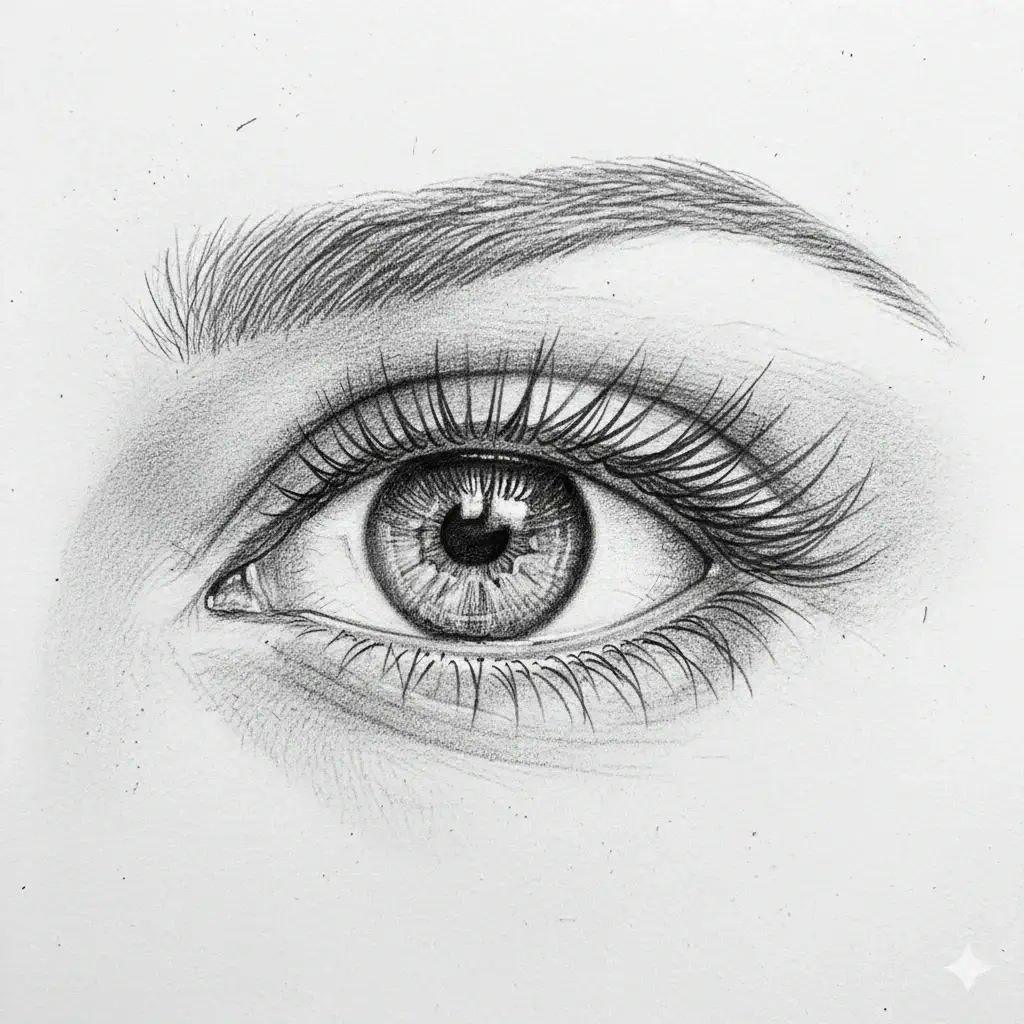
What often works
- Map eyeliner with the eye open before filling it in.
- Keep inner-corner liner thinner so the lid does not look crowded.
- Place crease color a little higher than the hidden fold.
- Use waterproof or transfer-resistant formulas if liner stamps upward.
What to avoid overdoing
- Do not judge the finished look only with eyes closed.
- Avoid a very thick dark band if it hides all visible lid space.
- Do not copy wing angles blindly from non-hooded tutorials.
- Avoid treating hooding as something you must correct.
Limits and common mistakes
The biggest mistake is treating hooded eyes as a single fixed look. Hooding can be light, moderate, heavy, partial, or more visible on one eye than the other. It can also change with expression, sleep, allergies, age, and photo angle.
Another mistake is confusing hooded eyes with tired eyes or downturned eyes. Hooding is about the upper lid fold. Downturned is about the outer corner sitting lower than the inner corner. A person can have both, but they are different observations.
Finally, avoid using the word hooded as a value judgment. The label is useful because it explains lid behavior, not because it ranks your features.
When an AI eye shape detector can help
An AI detector can be useful when your eyes carry more than one trait, such as hooded almond eyes or hooded eyes with a slight upward tilt. A good result should consider lid visibility, eye opening, corner angle, iris exposure, and spacing together.
For best results, use the same photo rules as the mirror check: clear light, front-facing view, relaxed brows, and minimal obstruction from heavy lashes or sunglasses. Then compare the result with what you observe in this guide.
Want a second opinion from a photo?
Upload a relaxed front-facing image, then compare the AI result with the hooding, crease, and mobile-lid checks above.
Frequently asked questions
Hooded eyes have a crease, but the upper lid fold covers part of that crease or reduces the visible mobile lid when the eyes are open.
They often show less lid space above the lashes, especially in a relaxed expression. The fold may make eyeshadow or eyeliner less visible when the eyes are open.
No. Hooded eyes usually have a crease that is partly covered. Monolid eyes usually show little to no visible crease.
Yes. Hooded describes lid coverage, while almond describes the outline of the eye opening. You can have both traits at once.
Thin liner near the inner eye, open-eye mapping, slightly lifted outer placement, and transfer-resistant formulas often work well. The best shape depends on your exact lid fold and corner angle.
They can, because lid skin and brow position may change over time. But hooded eyes can also be a lifelong genetic trait.
References and further reading
These links support the eye-shape vocabulary and help readers continue the identification process.