Olhos redondos vs olhos amendoados: como diferenciar
Olhos redondos vs olhos amendoados: como diferenciar: a localized guide to compare vertical openness, almond taper, iris visibility, photos, makeup effects, and mixed eye-shape traits.
Resposta rapida
Olhos redondos costumam parecer mais abertos na vertical; olhos amendoados parecem mais longos, afilados e contidos ao redor da iris. Se houver branco acima ou abaixo da iris em uma foto frontal relaxada, a leitura redonda fica mais forte.
Nao decida por uma unica selfie. Use uma foto frontal neutra, sobrancelhas relaxadas e luz natural. Veja primeiro o contorno, depois a exposicao da iris e por fim o afilamento dos cantos.
Redondo e amendoado sao descricoes, nao notas de beleza. Muitas pessoas ficam entre os dois ou combinam caracteristicas.
Round vs almond eyes: the core difference
A diferenca central e proporcao. Olhos redondos enfatizam abertura vertical; olhos amendoados enfatizam comprimento horizontal e afilamento.
A visibilidade da iris ajuda muito. Em olhos redondos, pode aparecer branco acima ou abaixo da iris. Em olhos amendoados, as palpebras costumam tocar ou cobrir levemente a iris.
Nem todo olho cabe em um desenho perfeito. Procure o padrao dominante em fotos comuns.
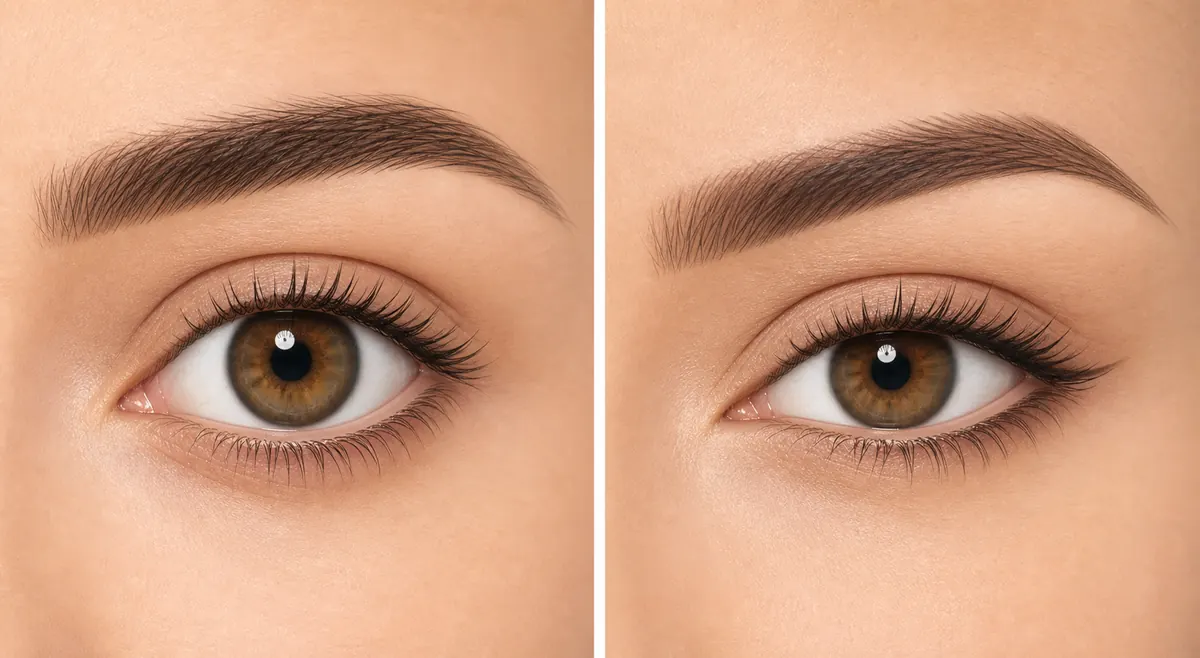
Signs that point to round or almond eyes
Use these clues together. One clue can mislead you, but the pattern becomes clearer when outline, iris exposure, and corner taper agree.
Redondo: o olho parece aberto na vertical
A abertura lembra mais um circulo ou oval alto.
Redondo: aparece branco ao redor da iris
Pode haver branco acima, abaixo ou ao redor da iris em olhar relaxado.
Amendoado: o contorno parece alongado
O olho parece mais longo do que alto.
Amendoado: os cantos afinam
Os cantos interno e externo se estreitam mesmo sem delineado gatinho.
A neutral photo test for “do I have round or almond eyes?”
Most confusion comes from photos that change the apparent shape. Raised brows can make eyes look rounder. Winged liner can make round eyes look more almond. A camera held too close can stretch the face.
Take two or three ordinary photos and compare them with a mirror view. The answer should be based on the pattern that repeats, not on the most dramatic image.
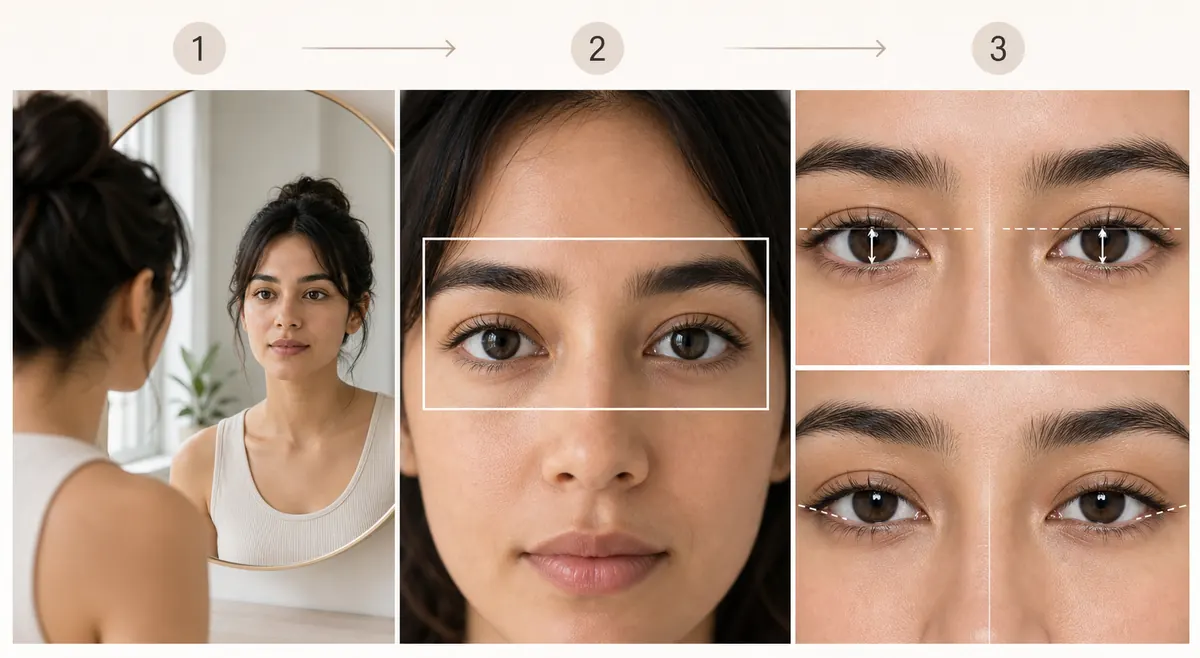
Comece com uma foto frontal relaxada
Use luz natural, camera na altura dos olhos e sobrancelhas relaxadas.
- Afaste-se e recorte depois.
- Mantenha o queixo nivelado.
- Use pouco ou nenhum maquiagem nos olhos.
Julgue o contorno antes da palpebra
Pergunte se o olho parece aberto e alto ou longo e afilado.
- Aberto e alto aponta para redondo.
- Longo e afilado aponta para amendoado.
- Palpebra encoberta pode existir nos dois.
Veja onde a iris encontra as palpebras
Branco visivel apoia redondeza; contato com as duas palpebras apoia formato amendoado.
- Nao exagere uma pequena linha branca.
- Compare os dois olhos.
- Repita em mais de uma foto.
Procure afilamento natural nos cantos
Olhos amendoados geralmente estreitam nos cantos; redondos mantem abertura mais circular.
- Ignore o efeito do delineado.
- Observe a linha natural dos cilios.
- Separe angulo e contorno.
Round eyes vs almond eyes: side-by-side table
This table is the practical decision layer. If most clues fall on one side, that label is probably your main outline. If the clues split, describe the result as mixed and use the AI detector for another view.
| Feature | Round eyes | Almond eyes | What to check |
|---|---|---|---|
| Overall outline | More open vertically; often circular or tall oval. | Longer horizontally; softly tapered at both ends. | Ask whether the first impression is openness or length. |
| Iris exposure | White may show above or below the iris. | Iris often touches or is lightly covered by both lids. | Use a relaxed straight-on gaze. |
| Corner taper | Corners may taper less strongly. | Inner and outer corners narrow more noticeably. | Compare without winged liner. |
| Photo behavior | Looks even rounder with raised brows, curled lashes, or brightening makeup. | Can look rounder in close selfies but returns to a tapered outline in neutral photos. | Check several ordinary photos, not one pose. |
| Common mix-up | Can be mistaken for almond when eyeliner stretches the outer third. | Can be mistaken for round when the eyes are opened wide. | Separate natural structure from styling. |
Makeup and photo clues without changing the verdict
Makeup can emphasize a shape, but it should not be the only reason for the label. Round eyes can be styled with outer-corner definition to look more elongated. Almond eyes can be styled with brightening and curled lashes to look more open.
For identification, judge a bare or lightly styled photo first. For styling, use the label as a starting point rather than a rulebook. If your result is mixed, borrow techniques from both categories and keep what looks balanced in the open-eye view.
If your eyes are round
- Keep inner-corner liner thin.
- Add soft definition to the outer third for length.
- Avoid heavy dark liner all around if it closes the eye too much.
If your eyes are almond
- Follow the natural taper instead of overextending it.
- Use subtle lift if the outer corner is neutral or downturned.
- Avoid judging the shape only from winged-liner photos.
Mixed traits are normal
Many people are not a pure textbook version of round or almond. A person can have softly round eyes with slight hooding, almond eyes with visible white below the iris, or one eye that reads more open than the other.
The most helpful phrasing is often “mostly almond with slight roundness” or “round eyes with a tapered outer corner.” Those descriptions are more accurate than forcing a single rigid category.
If your eye shape appears to change suddenly because of swelling, drooping, injury, pain, or vision symptoms, treat that as a health question rather than a beauty-label question and seek professional care.
When an AI eye shape detector helps
An AI eye shape detector is most useful when your clues split between round and almond. A good photo workflow looks at iris exposure, lid visibility, corner angle, and spacing together rather than reducing the decision to one quiz question.
Use a clear front-facing photo with relaxed brows and minimal obstruction from lashes or glasses. Then compare the result with the table above. If the tool says almond but you see strong vertical openness, the real answer may be a mixed description rather than a contradiction.
Want a second opinion from a photo?
Upload a relaxed front-facing image, then compare the AI result with the round-vs-almond checks in this guide.
Frequently asked questions
Use uma foto frontal neutra. Redondos parecem mais abertos; amendoados mais longos e afilados.
Sim. Se os sinais forem mistos, descreva como formato misto.
Nao. Amendoado e contorno; levantado e angulo externo.
Nao. E uma pista, nao uma regra.
Sim, delineado e sombra externa podem alongar visualmente.
Use espelho e foto neutra primeiro; depois o detector como segunda opiniao.
References and further reading
These links keep the comparison grounded and help you continue the eye-shape identification process on-site.