Runde Augen vs Mandelaugen: So erkennst du den Unterschied
Runde Augen vs Mandelaugen: So erkennst du den Unterschied: a localized guide to compare vertical openness, almond taper, iris visibility, photos, makeup effects, and mixed eye-shape traits.
Kurzantwort
Runde Augen wirken meist vertikal offener, Mandelaugen dagegen laenger, weicher zugespitzt und staerker um die Iris geschlossen. Sichtbares Weiss ueber oder unter der Iris spricht eher fuer runde Augen.
Entscheide nicht nach einem einzigen Selfie. Nutze ein neutrales Frontalfoto mit entspannten Augenbrauen und Tageslicht. Pruefe zuerst die Kontur, dann die Iris-Sichtbarkeit und danach die Zuspitzung der Augenwinkel.
Rund und mandelfoermig sind beschreibende Begriffe, keine Bewertung. Viele Menschen liegen dazwischen oder haben kombinierte Merkmale.
Round vs almond eyes: the core difference
Der Kernunterschied liegt in der Proportion. Runde Augen betonen die vertikale Oeffnung. Mandelaugen betonen horizontale Laenge und sanfte Zuspitzung.
Die Iris ist ein guter Hinweis: Bei runden Augen kann Weiss ober- oder unterhalb sichtbar sein. Bei Mandelaugen beruehren oder bedecken die Lider die Iris oft leicht.
Kein Gesicht muss perfekt in ein Schema passen. Suche nach dem wiederkehrenden Muster in normalen Fotos.
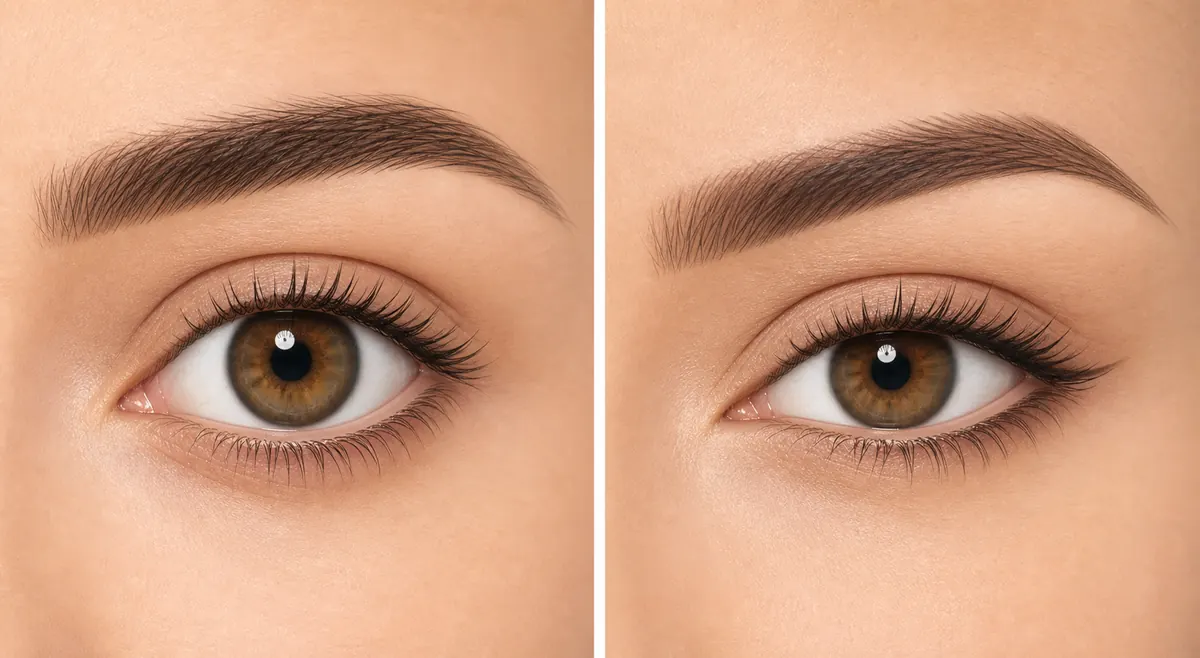
Signs that point to round or almond eyes
Use these clues together. One clue can mislead you, but the pattern becomes clearer when outline, iris exposure, and corner taper agree.
Rund: Das Auge wirkt vertikal offen
Die Oeffnung erinnert eher an einen Kreis oder ein hohes Oval.
Rund: Weiss um die Iris ist sichtbar
In entspannter Blickrichtung kann Weiss ober- oder unterhalb der Iris sichtbar sein.
Mandel: Die Kontur wirkt laenglich
Das Auge erscheint laenger als hoch und horizontal ausgewogen.
Mandel: Die Winkel laufen weich zu
Innen- und Aussenwinkel verengen sich auch ohne Winged Liner.
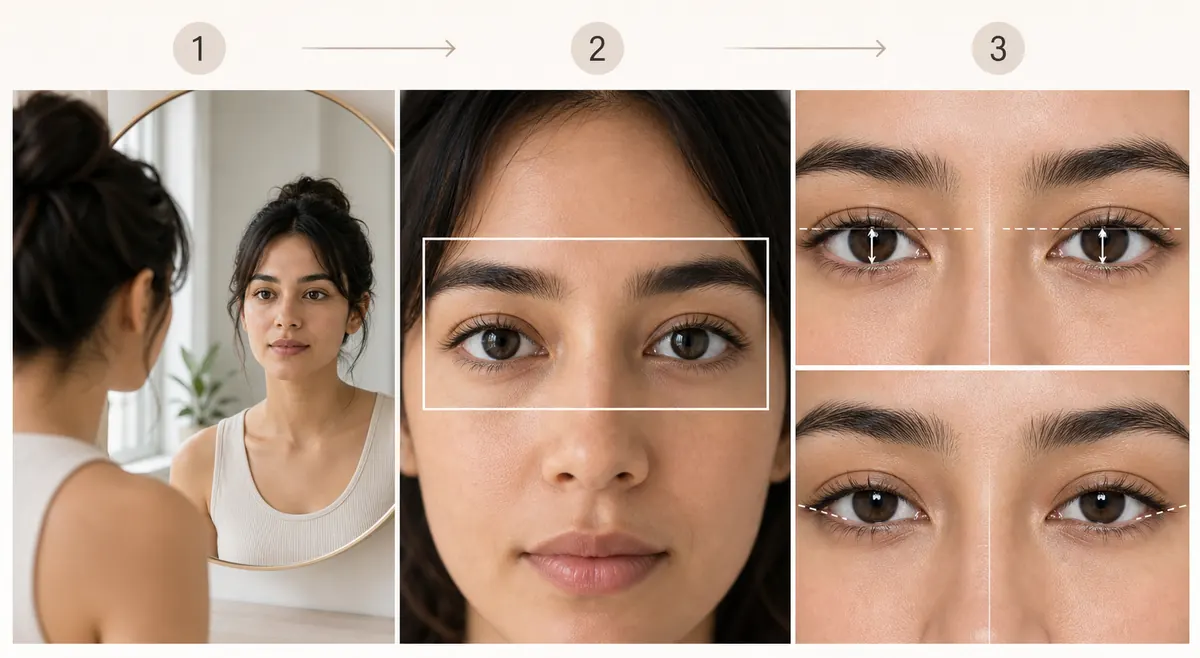
A neutral photo test for “do I have round or almond eyes?”
Most confusion comes from photos that change the apparent shape. Raised brows can make eyes look rounder. Winged liner can make round eyes look more almond. A camera held too close can stretch the face.
Take two or three ordinary photos and compare them with a mirror view. The answer should be based on the pattern that repeats, not on the most dramatic image.
Beginne mit einem entspannten Frontalfoto
Nutze Tageslicht, Kamera auf Augenhoehe und entspannte Brauen.
- Gehe etwas zurueck und schneide spaeter zu.
- Halte das Kinn gerade.
- Nutze ein Foto mit wenig Make-up.
Beurteile zuerst die Kontur
Wirkt das Auge offen und hoch oder lang und zugespitzt?
- Offen und hoch spricht fuer rund.
- Lang und zugespitzt spricht fuer mandelfoermig.
- Schlupflider koennen bei beiden vorkommen.
Pruefe Iris und Lider
Sichtbares Weiss stuetzt rund; Kontakt mit beiden Lidern stuetzt mandelfoermig.
- Ueberbewerte keine winzige weisse Linie.
- Vergleiche beide Augen.
- Pruefe mehr als ein Foto.
Achte auf natuerliche Zuspitzung
Mandelaugen verengen sich an den Winkeln staerker; runde Augen bleiben insgesamt offener.
- Blende Winged Liner aus.
- Beobachte den natuerlichen Wimpernkranz.
- Trenne Winkel und Kontur.
Round eyes vs almond eyes: side-by-side table
This table is the practical decision layer. If most clues fall on one side, that label is probably your main outline. If the clues split, describe the result as mixed and use the AI detector for another view.
| Feature | Round eyes | Almond eyes | What to check |
|---|---|---|---|
| Overall outline | More open vertically; often circular or tall oval. | Longer horizontally; softly tapered at both ends. | Ask whether the first impression is openness or length. |
| Iris exposure | White may show above or below the iris. | Iris often touches or is lightly covered by both lids. | Use a relaxed straight-on gaze. |
| Corner taper | Corners may taper less strongly. | Inner and outer corners narrow more noticeably. | Compare without winged liner. |
| Photo behavior | Looks even rounder with raised brows, curled lashes, or brightening makeup. | Can look rounder in close selfies but returns to a tapered outline in neutral photos. | Check several ordinary photos, not one pose. |
| Common mix-up | Can be mistaken for almond when eyeliner stretches the outer third. | Can be mistaken for round when the eyes are opened wide. | Separate natural structure from styling. |
Makeup and photo clues without changing the verdict
Makeup can emphasize a shape, but it should not be the only reason for the label. Round eyes can be styled with outer-corner definition to look more elongated. Almond eyes can be styled with brightening and curled lashes to look more open.
For identification, judge a bare or lightly styled photo first. For styling, use the label as a starting point rather than a rulebook. If your result is mixed, borrow techniques from both categories and keep what looks balanced in the open-eye view.
If your eyes are round
- Keep inner-corner liner thin.
- Add soft definition to the outer third for length.
- Avoid heavy dark liner all around if it closes the eye too much.
If your eyes are almond
- Follow the natural taper instead of overextending it.
- Use subtle lift if the outer corner is neutral or downturned.
- Avoid judging the shape only from winged-liner photos.
Mixed traits are normal
Many people are not a pure textbook version of round or almond. A person can have softly round eyes with slight hooding, almond eyes with visible white below the iris, or one eye that reads more open than the other.
The most helpful phrasing is often “mostly almond with slight roundness” or “round eyes with a tapered outer corner.” Those descriptions are more accurate than forcing a single rigid category.
If your eye shape appears to change suddenly because of swelling, drooping, injury, pain, or vision symptoms, treat that as a health question rather than a beauty-label question and seek professional care.
When an AI eye shape detector helps
An AI eye shape detector is most useful when your clues split between round and almond. A good photo workflow looks at iris exposure, lid visibility, corner angle, and spacing together rather than reducing the decision to one quiz question.
Use a clear front-facing photo with relaxed brows and minimal obstruction from lashes or glasses. Then compare the result with the table above. If the tool says almond but you see strong vertical openness, the real answer may be a mixed description rather than a contradiction.
Want a second opinion from a photo?
Upload a relaxed front-facing image, then compare the AI result with the round-vs-almond checks in this guide.
Frequently asked questions
Ein neutrales Frontalfoto hilft: Rund wirkt offener, mandelfoermig laenger und zugespitzter.
Ja. Wenn die Hinweise gemischt sind, ist eine gemischte Beschreibung genauer.
Nein. Mandel beschreibt die Kontur, upturned den Aussenwinkel.
Nein. Es ist ein Hinweis, keine feste Regel.
Ja, besonders aeusserer Liner und Schatten.
Erst Spiegel und neutrales Foto, danach der Detektor als zweite Meinung.
References and further reading
These links keep the comparison grounded and help you continue the eye-shape identification process on-site.