Wide-Set Eyes Guide: Meaning, Spacing Check, and Makeup Tips
A practical guide to wide-set eyes: how to check eye spacing with a front-facing photo, how wide-set differs from close-set or balanced spacing, and how to use makeup and AI analysis without confusing spacing with your main eye shape.
The quick answer
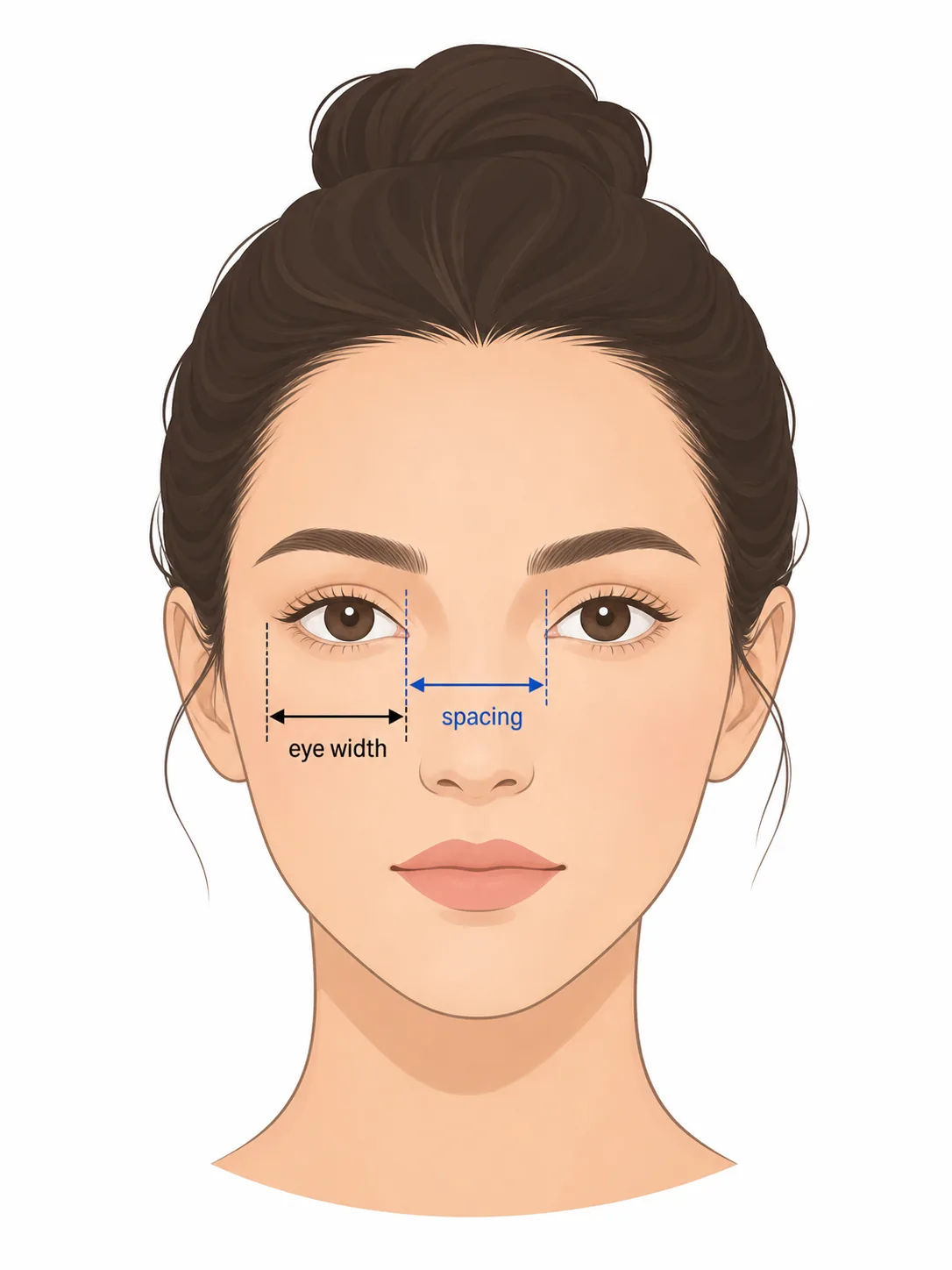
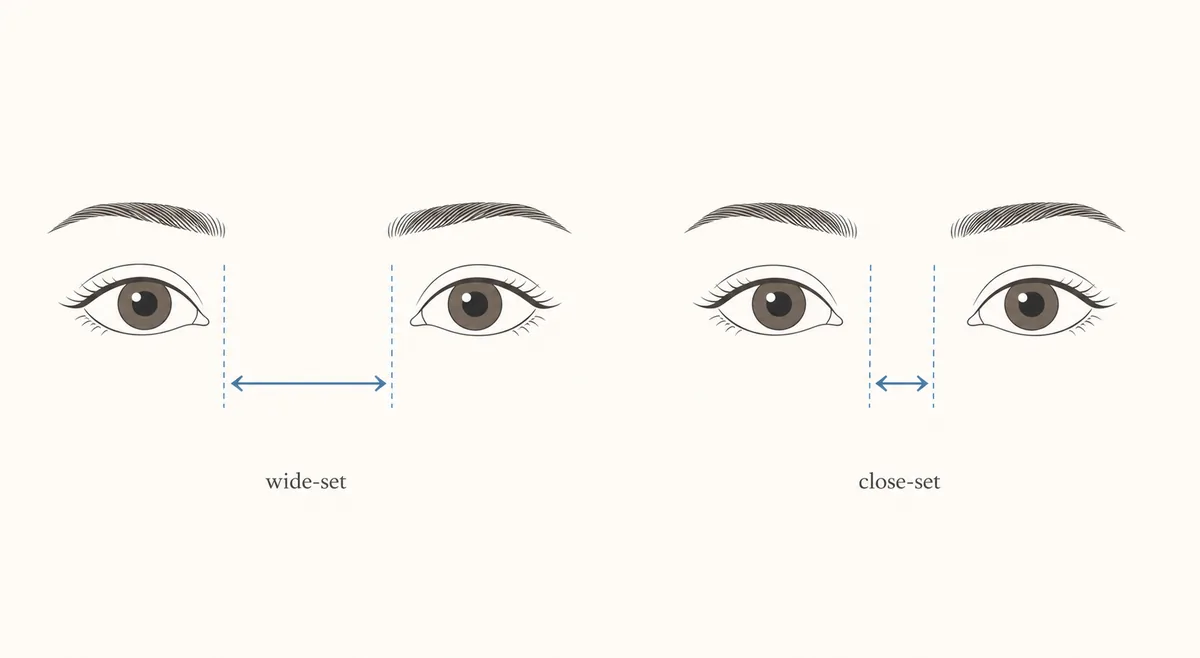
Wide-set eyes usually mean the space between your inner eye corners looks wider than the width of one of your eyes. In a relaxed, front-facing photo, the center space may feel more open, and the eyes may appear placed farther apart across the upper face.
The simplest check is the one-eye-width rule: compare the distance between the inner corners with the visible width of one eye. If the middle distance is clearly larger, wide-set spacing is likely. If it is smaller, close-set spacing may fit better. If it is about the same, your spacing is probably balanced.
Wide-set is a spacing trait, not the same thing as almond, round, hooded, monolid, upturned, or downturned eyes. You can have wide-set almond eyes, wide-set round eyes, or wide-set hooded eyes. Treat it as one layer of your eye description.
What are wide-set eyes?
Wide-set eyes describe the distance between the eyes, especially the space between the inner corners. In beauty and styling language, the phrase usually means the eyes sit farther apart than the common one-eye-width benchmark.
This does not automatically mean anything is wrong. Most people are describing a visible proportion, not a diagnosis. Eye spacing is influenced by bone structure, nose bridge shape, brow width, camera angle, and how much of the inner corner is visible.
Because spacing is separate from lid shape, it is easy to mix labels. A person may correctly have wide-set eyes and hooded lids, or wide-set eyes with an almond outline. Checking spacing first makes later makeup and eyewear advice easier to apply.
Signs you may have wide-set eyes
Use several signs together. A single selfie taken very close to the camera can exaggerate the distance between the eyes.
The inner-corner gap looks wider than one eye
When you compare one eye width with the center gap, the space between the eyes seems noticeably larger.
The upper face feels open in the middle
Your eyes may appear placed more toward the sides of the face, especially in straight-on photos.
Inner-corner makeup changes the balance
A little definition near the inner corners may make your eyes feel more centered, while heavy outer-corner emphasis can make the spacing look even wider.
Spacing remains visible across ordinary photos
The trait shows up in several relaxed photos, not only in a wide-angle selfie or a picture taken from above.
A photo and mirror check that works
Eye spacing is one of the easiest traits to distort with lenses. A phone camera held too close can stretch the center of the face or make features look farther apart. Use a repeatable check before deciding.
The goal is not to measure your face like a medical scan. The goal is to decide whether wide-set spacing is part of your everyday visual description.
Take a neutral front-facing photo
Use natural light, keep the camera at eye height, and step back enough that your face is not distorted by the lens.
- Avoid ultra-wide selfie mode.
- Keep your head straight rather than tilted.
- Use minimal heavy lashes or inner-corner makeup if possible.
Estimate one eye width
Look at the visible width from the inner corner to the outer corner of one eye.
- You do not need a ruler.
- Use the eye that looks clearest in the photo.
- Ignore eyebrow width; this check is about the eyes.
Compare the center gap
Now compare the inner-corner-to-inner-corner distance with that eye width.
- Greater than one eye width suggests wide-set spacing.
- Less than one eye width suggests close-set spacing.
- About one eye width suggests balanced spacing.
Then label your main eye shape
After spacing, decide whether your overall eye opening is almond, round, hooded, monolid, upturned, or downturned.
- Spacing and shape can overlap.
- Wide-set eyes can still be almond or hooded.
- Use multiple ordinary photos before making a final call.
Wide-set vs close-set vs balanced eyes
The clearest distinction is the center gap. Wide-set, close-set, and balanced describe spacing across the face, while almond, round, hooded, and monolid describe shape or lid structure.
| Feature | Wide-set eyes | Comparison label | What to check |
|---|---|---|---|
| Center spacing | The inner-corner gap is greater than one eye width. | Close-set eyes have a gap smaller than one eye width. | Compare the center gap with one visible eye width. |
| Balanced spacing | The eyes may look slightly farther apart than average. | Balanced spacing is close to one eye width. | Use a straight-on photo rather than a close selfie. |
| Main eye shape | Can be almond, round, hooded, monolid, upturned, or downturned. | Shape labels describe outline, crease, or corner angle. | Judge spacing separately from lid shape. |
| Styling effect | Outer-corner emphasis can make spacing look wider. | Close-set eyes often benefit from more outer-corner lift. | Test makeup with eyes open and in normal light. |
Makeup and styling tips for wide-set eyes
Wide-set eyes do not need to be corrected. But if your goal is a more centered or balanced look, place visual weight slightly closer to the inner half of the eye instead of pulling everything outward.
Small placement changes matter more than dramatic techniques. Inner-corner definition, softly blended shadow near the bridge, and moderate outer wings can help the eyes read as balanced while still keeping your natural spacing.
What often works
- Add soft definition near the inner lash line or inner crease.
- Keep highlighter at the inner corner subtle rather than oversized.
- Blend mid-tone shadow slightly inward, not only outward.
- Choose brows that do not start too far apart if you fill them in.
What to avoid overdoing
- Do not extend every shadow shape far past the outer corner.
- Avoid very long outward wings if you want less horizontal spread.
- Do not over-brighten the center gap if it already feels wide.
- Avoid treating wide-set spacing as a flaw; style for the look you want.
Medical-term cautions and common mistakes
People sometimes search for a medical term for wide-set eyes. The term hypertelorism refers to increased distance between paired organs and is used medically in specific contexts. A beauty guide cannot diagnose that. If eye spacing is new, sudden, associated with symptoms, or part of a health concern, speak with a qualified clinician.
The common everyday phrase wide-set eyes is usually about appearance and styling. Do not use a casual photo check to make medical claims about yourself or another person.
Another mistake is judging from a close phone selfie. Wide-angle distortion can stretch the face and exaggerate spacing. Repeat the check with a camera farther away before changing your label.
When an AI eye shape detector can help
AI analysis can help when spacing overlaps with another trait. For example, you might have wide-set almond eyes, wide-set round eyes, or wide-set hooded eyes. A useful result should describe spacing along with crease visibility, eye outline, iris exposure, and corner angle.
Use a clear, front-facing photo and compare the result with the one-eye-width check above. If the AI result mentions wide-set spacing but your photo was taken very close to the camera, retake the photo before trusting that part of the answer.
Want to compare spacing from a photo?
Upload a neutral front-facing image, then compare the AI result with the spacing, shape, and lid checks in this guide.
Frequently asked questions
Wide-set eyes usually mean the distance between the inner eye corners is greater than the width of one eye.
Use a front-facing photo and compare the space between the inner corners with one eye width. A noticeably larger gap suggests wide-set spacing.
They are better described as an eye-spacing trait. You can still have almond, round, hooded, monolid, upturned, or downturned eyes.
Soft inner-corner definition, moderate outer wings, and shadow blended slightly inward can help the eyes look more centered if that is your styling goal.
Hypertelorism is a medical term related to increased distance between paired organs, but a casual beauty photo check cannot diagnose it.
Yes. Wide-set describes spacing, while hooded describes upper-lid coverage. They can appear together.
References and further reading
These links support the eye-spacing vocabulary and help readers continue the identification process.