Close-Set Eyes Guide: How to Tell, Compare, and Style Them
A practical guide to close-set eyes: check your spacing in a neutral photo, separate eye position from eye shape, and use makeup or eyewear choices without treating a natural proportion as a flaw.
The quick answer
Close-set eyes usually means the space between your inner eye corners is smaller than the visible width of one eye. The eyes may look slightly nearer to the center of the face, but the trait can be subtle and is easiest to judge in a relaxed, straight-on photo.
Use the one-eye-width check: compare the inner-corner gap with the width from the inner to outer corner of one eye. A smaller gap suggests close-set spacing, a roughly equal gap suggests balanced spacing, and a larger gap suggests wide-set spacing.
Close-set describes position, not your eyelid or outline. You can have close-set almond eyes, close-set hooded eyes, close-set round eyes, or another combination. Identify spacing and shape as separate layers.
What are close-set eyes?
Close-set eyes, also called eyes that are close together, describe a relatively narrow gap between the inner corners. Beauty guides commonly use one eye width as a practical visual benchmark rather than an exact anatomical rule.
Several surrounding features change the impression. A narrow or broad nose bridge, the start of the eyebrows, deep-set sockets, camera perspective, and inner-corner makeup can make the same spacing look different from one photo to another.
That is why a careful description has more than one part. Close-set is the spacing layer; almond or round describes the opening; hooded or monolid describes crease visibility; upturned or downturned describes the corner angle.
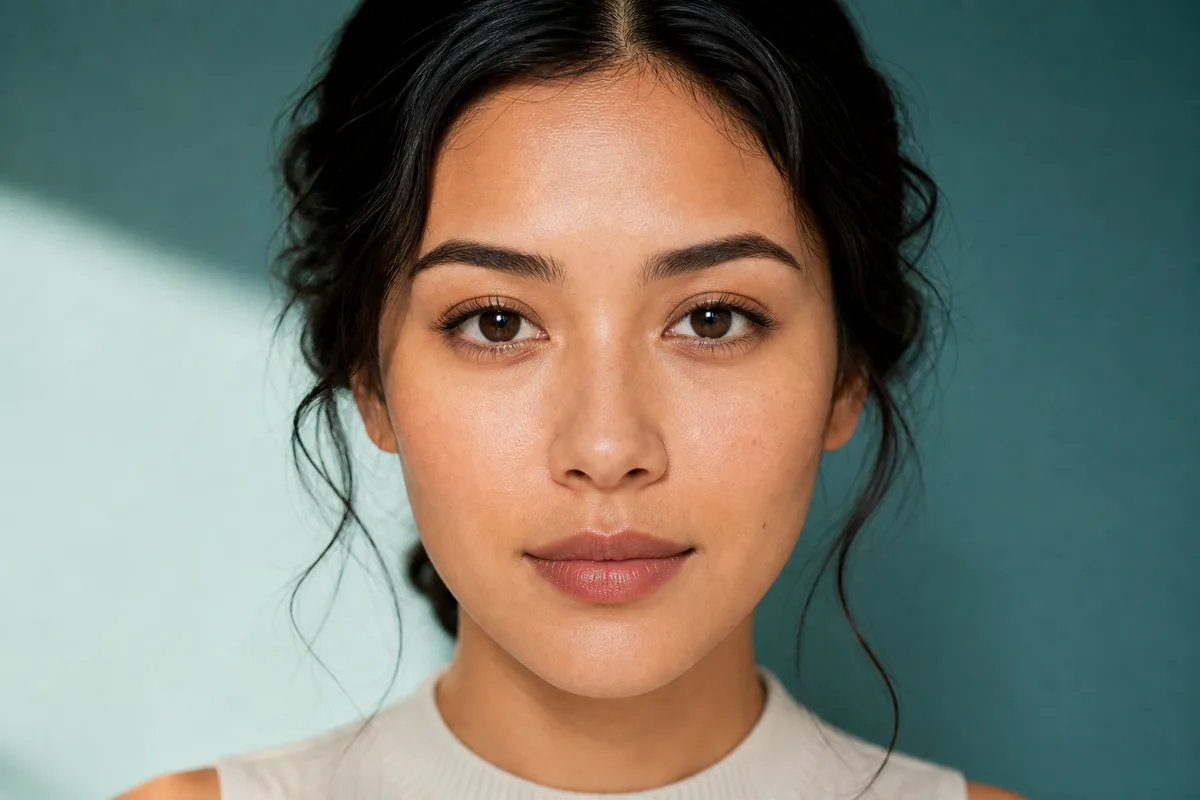
Signs your eyes may be close-set
Look for a pattern across several ordinary photos. One close selfie is not enough because phone lenses can change facial proportions.
The center gap is less than one eye width
The inner-corner-to-inner-corner distance appears clearly smaller than the visible width of either eye.
Visual weight gathers near the center
Your eyes and the inner ends of your brows may make the middle of the upper face feel more defined.
Outer-corner emphasis changes the balance
A longer outer wing, flared lashes, or shadow blended outward may make the spacing look more open.
The spacing stays consistent
The same relationship appears in a mirror and in several front-facing photos taken from a sensible distance.
A photo and mirror check that works
The useful question is not whether your face matches a perfect ratio. It is whether close-set spacing is a stable feature that helps you interpret eye-shape results and styling advice.
Use a neutral image, then repeat the check in a mirror. Small differences near the one-eye-width benchmark are normal, so choose balanced spacing when the result is not clear.
Take a neutral front-facing photo
Stand in soft daylight, hold the camera at eye level, and step back before using a modest zoom or crop.
- Avoid ultra-wide selfie mode.
- Keep your head level and gaze forward.
- Use light or no inner-corner makeup for the check.
Estimate one visible eye width
Compare the horizontal distance from the inner corner to the outer corner of the clearer eye.
- A visual estimate is enough.
- Do not use eyebrow width.
- Ignore lash extensions that project beyond the corner.
Compare the inner-corner gap
Place that eye width mentally over the space between the two inner corners.
- Less than one eye width suggests close-set eyes.
- About one eye width suggests balanced spacing.
- More than one eye width suggests wide-set eyes.
Check shape separately
Now assess the outline, crease, and outer-corner angle without changing the spacing result.
- Close-set almond eyes are possible.
- Close-set hooded eyes are possible.
- Use two or three normal photos before deciding.
Close-set vs balanced vs wide-set eyes
The center gap separates these spacing labels. None of them tells you whether the eye itself is almond, round, hooded, monolid, upturned, or downturned.
| Feature | Close-set eyes | Comparison label | What to check |
|---|---|---|---|
| Center spacing | The inner-corner gap is smaller than one eye width. | Wide-set eyes have a gap greater than one eye width. | Compare the gap with one visible eye width. |
| Balanced spacing | The eyes may read slightly nearer the center. | Balanced spacing is close to one eye width. | Do not force a label when the difference is tiny. |
| Main eye shape | Can overlap with almond, round, hooded, monolid, upturned, or downturned. | Shape labels describe outline, crease, or angle. | Judge spacing before moving to the lid and corners. |
| Photo sensitivity | A very close camera can exaggerate the nose and alter the apparent gap. | Wide-angle distortion can mislead either direction. | Retake the photo from farther away. |
Makeup and glasses tips for close-set eyes
Close-set eyes do not need correction. If you want a more open or outward-balanced effect, move contrast and visual length toward the outer third while keeping the inner corner light and uncluttered.
The most useful techniques are small placement choices rather than a heavy transformation. Test one change at a time with your eyes open, then keep the version that suits your style and lid shape.
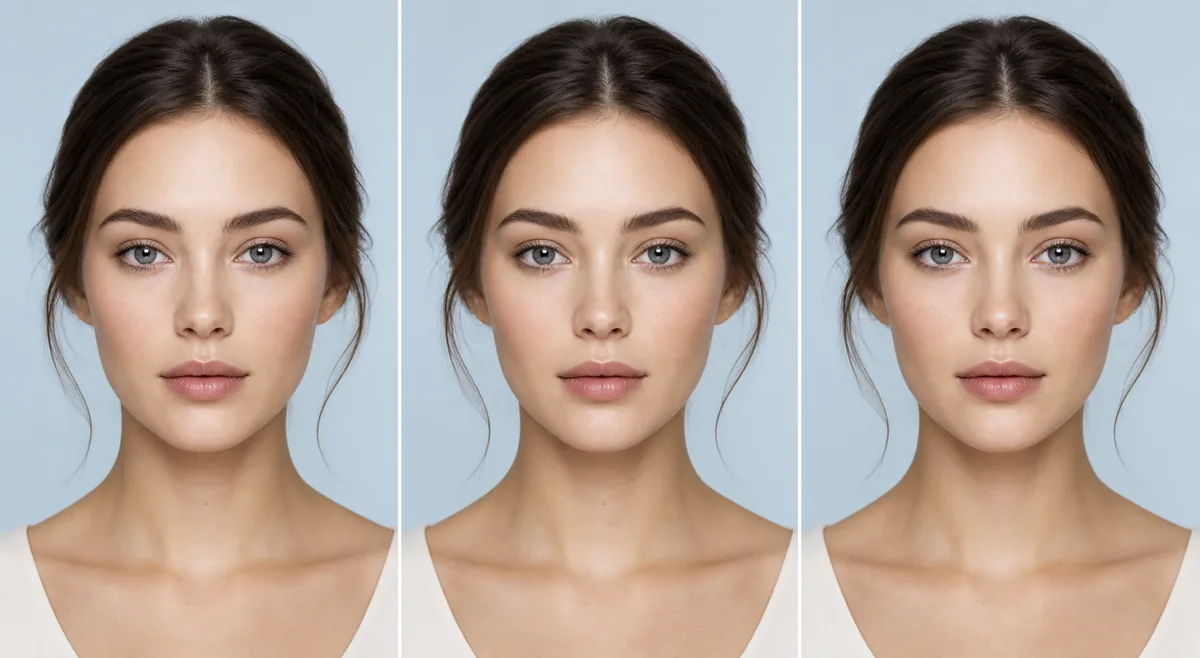
Makeup placement to try
- Use a light, soft finish near the inner corner.
- Blend medium and deep shadow toward the outer third.
- Start darker liner near the middle rather than the tear duct.
- Choose outer-flared lashes or concentrate mascara outward.
Brows, liner, and glasses
- Keep the inner brow soft instead of drawing a hard block.
- Extend wings outward only as far as your lid shape supports.
- Try frames with visual detail toward the temples.
- Avoid treating any frame rule as universal; face width and prescription also matter.
Common mistakes and health boundaries
Do not confuse close-set eyes with crossed eyes or an eye-alignment problem. Close-set is an appearance-based spacing description; eye alignment concerns movement and where the eyes point. A cosmetic photo guide cannot evaluate alignment or vision.
Clinical terms and measurements are not interchangeable with the one-eye-width beauty check. If you notice a new change, double vision, pain, swelling, unequal eye movement, or another symptom, seek assessment from a qualified eye-care professional.
Also avoid judging attractiveness from spacing. Close-set, balanced, and wide-set are neutral proportions. Makeup and eyewear advice should help you create an effect you enjoy, not turn a feature into a defect.
When an AI eye shape detector can help
AI analysis is most useful when several labels overlap. A result might describe close-set spacing together with an almond outline, a hooded crease, or a slightly upturned corner. That layered result is more informative than one broad label.
Upload a clear front-facing image and compare the output with the one-eye-width check. If the camera was close, the face was turned, or strong makeup changed the inner corners, retake the image before trusting the spacing result.
Want a second look at your eye spacing?
Use a neutral front-facing photo, then compare the AI result with the spacing and shape checks in this guide.
Frequently asked questions
Close-set eyes usually means the space between the inner corners is smaller than the visible width of one eye.
Use a straight-on photo and compare one eye width with the inner-corner gap. A clearly smaller gap suggests close-set spacing.
No. Close-set describes the position of the eyes on the face, while crossed eyes refers to alignment and should be assessed by an eye-care professional when there is concern.
Yes. Spacing, outline, crease visibility, and corner angle are separate traits that can overlap.
If you want a wider-looking effect, keep the inner corner light and place deeper shadow, liner, and lash emphasis toward the outer third.
Frames with some visual width or temple detail can draw attention outward, but overall face shape, comfort, and prescription are more important than one spacing rule.
References and further reading
Use these pages to compare the opposite spacing pattern, review all eye-shape layers, and see an established makeup approach.