Occhi rotondi vs occhi a mandorla: come capire la differenza
Occhi rotondi vs occhi a mandorla: come capire la differenza: a localized guide to compare vertical openness, almond taper, iris visibility, photos, makeup effects, and mixed eye-shape traits.
Risposta rapida
Gli occhi rotondi appaiono di solito piu aperti in verticale, mentre gli occhi a mandorla sembrano piu lunghi, affusolati e contenuti intorno all’iride.
Non decidere da un solo selfie. Usa una foto frontale neutra, sopracciglia rilassate e luce naturale. Valuta prima il contorno, poi l’iride e infine gli angoli.
Rotondo e a mandorla sono descrizioni, non giudizi estetici. Molte persone hanno tratti misti.
Round vs almond eyes: the core difference
La differenza centrale e la proporzione: rotondo significa apertura verticale, a mandorla significa lunghezza orizzontale e taper morbido.
La visibilita dell’iride e un indizio utile. Negli occhi rotondi puo vedersi bianco sopra o sotto l’iride; negli occhi a mandorla le palpebre spesso la toccano.
Non cercare un diagramma perfetto. Cerca il motivo dominante in foto normali.
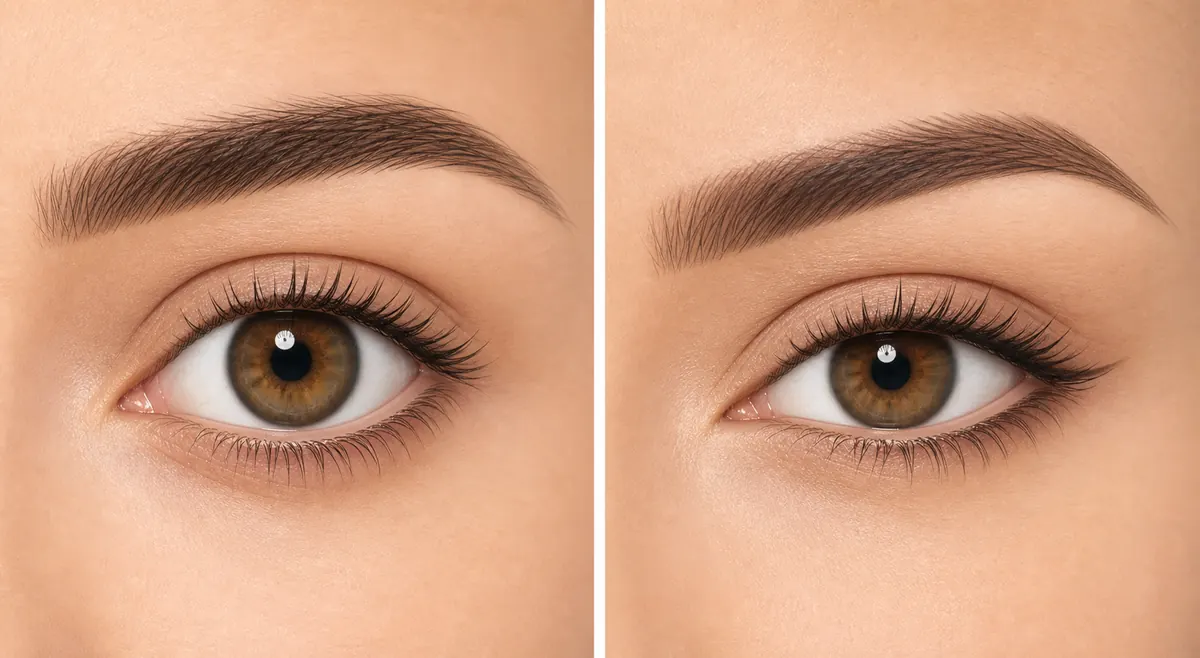
Signs that point to round or almond eyes
Use these clues together. One clue can mislead you, but the pattern becomes clearer when outline, iris exposure, and corner taper agree.
Rotondi: l’occhio sembra aperto in verticale
L’apertura ricorda un cerchio o un ovale alto.
Rotondi: si vede bianco intorno all’iride
Puo comparire bianco sopra o sotto l’iride con sguardo rilassato.
A mandorla: il contorno e allungato
L’occhio sembra piu lungo che alto.
A mandorla: gli angoli si assottigliano
Gli angoli interno ed esterno si restringono anche senza eyeliner.
A neutral photo test for “do I have round or almond eyes?”
Most confusion comes from photos that change the apparent shape. Raised brows can make eyes look rounder. Winged liner can make round eyes look more almond. A camera held too close can stretch the face.
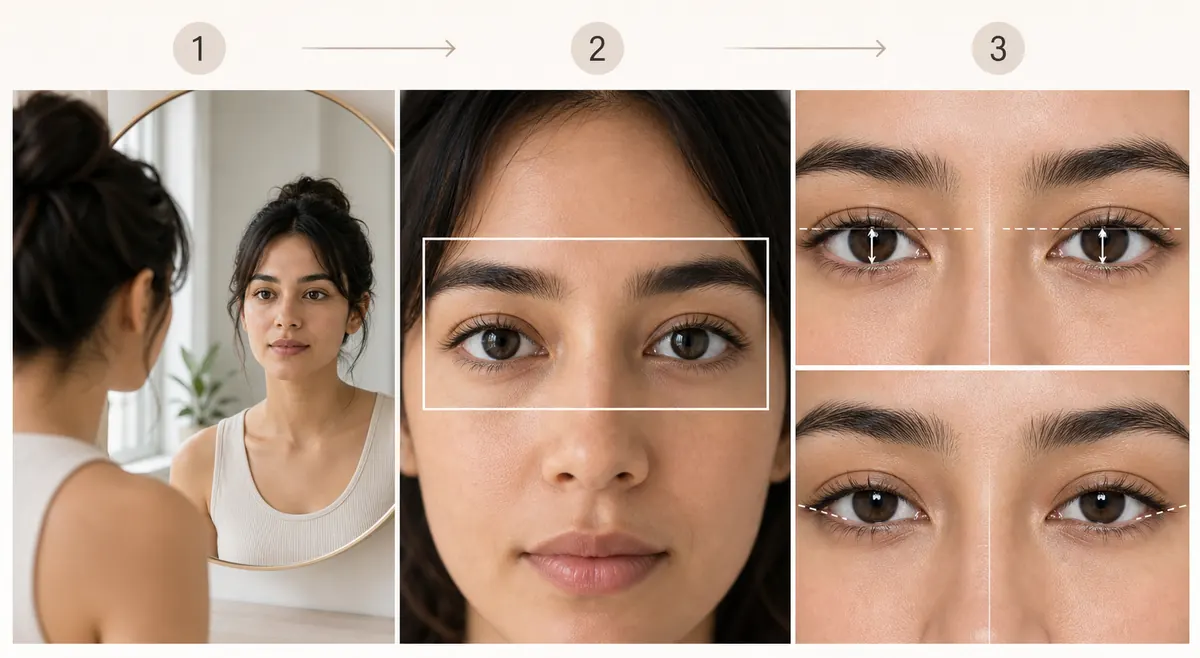
Take two or three ordinary photos and compare them with a mirror view. The answer should be based on the pattern that repeats, not on the most dramatic image.
Inizia con una foto frontale rilassata
Usa luce naturale, camera all’altezza degli occhi e sopracciglia rilassate.
- Allontanati e ritaglia dopo.
- Tieni il mento dritto.
- Usa poco trucco.
Valuta prima il contorno
Chiediti se l’occhio appare aperto e alto o lungo e affusolato.
- Aperto e alto indica rotondo.
- Lungo e affusolato indica mandorla.
- La palpebra hooded puo coesistere con entrambi.
Controlla iride e palpebre
Bianco visibile supporta rotondo; contatto con entrambe le palpebre supporta mandorla.
- Non esagerare una piccola linea bianca.
- Confronta entrambi gli occhi.
- Ripeti con piu foto.
Cerca il taper naturale
Gli occhi a mandorla si restringono di piu agli angoli; quelli rotondi restano piu aperti.
- Ignora l’effetto dell’eyeliner.
- Guarda la linea naturale delle ciglia.
- Separa angolo e contorno.
Round eyes vs almond eyes: side-by-side table
This table is the practical decision layer. If most clues fall on one side, that label is probably your main outline. If the clues split, describe the result as mixed and use the AI detector for another view.
| Feature | Round eyes | Almond eyes | What to check |
|---|---|---|---|
| Overall outline | More open vertically; often circular or tall oval. | Longer horizontally; softly tapered at both ends. | Ask whether the first impression is openness or length. |
| Iris exposure | White may show above or below the iris. | Iris often touches or is lightly covered by both lids. | Use a relaxed straight-on gaze. |
| Corner taper | Corners may taper less strongly. | Inner and outer corners narrow more noticeably. | Compare without winged liner. |
| Photo behavior | Looks even rounder with raised brows, curled lashes, or brightening makeup. | Can look rounder in close selfies but returns to a tapered outline in neutral photos. | Check several ordinary photos, not one pose. |
| Common mix-up | Can be mistaken for almond when eyeliner stretches the outer third. | Can be mistaken for round when the eyes are opened wide. | Separate natural structure from styling. |
Makeup and photo clues without changing the verdict
Makeup can emphasize a shape, but it should not be the only reason for the label. Round eyes can be styled with outer-corner definition to look more elongated. Almond eyes can be styled with brightening and curled lashes to look more open.
For identification, judge a bare or lightly styled photo first. For styling, use the label as a starting point rather than a rulebook. If your result is mixed, borrow techniques from both categories and keep what looks balanced in the open-eye view.
If your eyes are round
- Keep inner-corner liner thin.
- Add soft definition to the outer third for length.
- Avoid heavy dark liner all around if it closes the eye too much.
If your eyes are almond
- Follow the natural taper instead of overextending it.
- Use subtle lift if the outer corner is neutral or downturned.
- Avoid judging the shape only from winged-liner photos.
Mixed traits are normal
Many people are not a pure textbook version of round or almond. A person can have softly round eyes with slight hooding, almond eyes with visible white below the iris, or one eye that reads more open than the other.
The most helpful phrasing is often “mostly almond with slight roundness” or “round eyes with a tapered outer corner.” Those descriptions are more accurate than forcing a single rigid category.
If your eye shape appears to change suddenly because of swelling, drooping, injury, pain, or vision symptoms, treat that as a health question rather than a beauty-label question and seek professional care.
When an AI eye shape detector helps
An AI eye shape detector is most useful when your clues split between round and almond. A good photo workflow looks at iris exposure, lid visibility, corner angle, and spacing together rather than reducing the decision to one quiz question.
Use a clear front-facing photo with relaxed brows and minimal obstruction from lashes or glasses. Then compare the result with the table above. If the tool says almond but you see strong vertical openness, the real answer may be a mixed description rather than a contradiction.
Want a second opinion from a photo?
Upload a relaxed front-facing image, then compare the AI result with the round-vs-almond checks in this guide.
Frequently asked questions
Con una foto frontale neutra: rotondi sono piu aperti, a mandorla piu lunghi e affusolati.
Si, molti occhi sono intermedi.
No, il contorno e diverso dall’angolo esterno.
No, e solo un indizio.
Si, soprattutto eyeliner e ombra esterna.
Prima specchio e foto neutra, poi detector come seconda opinione.
References and further reading
These links keep the comparison grounded and help you continue the eye-shape identification process on-site.