Deep Set Eyes Guide: How to Tell, Compare, and Style Them
A practical guide to deep set eyes: how they sit under the brow bone, how to separate them from hooded or prominent eyes, and how to use photos, makeup placement, and AI analysis without turning one trait into your whole face.
The quick answer
Deep set eyes sit a little farther back under the brow bone, so the brow area may cast a natural shadow over the lid. In a relaxed straight-on photo, the eyes can look more recessed even when the eyelid crease is visible and the eye opening is not small.
The simplest check is side lighting plus a neutral front-facing photo. If the brow bone appears more forward than the eye itself, the upper lid sits in a deeper socket, and shadow appears even without heavy makeup, deep set eyes may be part of your eye description.
Deep set is about eye depth, not the same thing as hooded, almond, round, close-set, or wide-set. You can have deep set almond eyes, deep set hooded eyes, or deep set eyes that are also slightly upturned or downturned. Treat it as one layer, then check your overall eye shape separately.
What are deep set eyes?
Deep set eyes describe eyes that appear positioned deeper in the eye socket, often beneath a more noticeable brow bone. The trait is easiest to see from the relationship between brow, lid, and eyeball position rather than from eye size alone.
Because the brow area can create natural shadow, deep set eyes are sometimes described as intense, shaded, or sculpted. That shadow does not mean the eyes are tired or unhealthy; it is usually a facial-structure observation. Lighting, expression, camera angle, and makeup can make the depth look stronger or softer.
The useful question is practical: does your eye depth change how eyeliner, eyeshadow, lashes, glasses, or photo angles look on you? If yes, identifying the deep set trait can help you choose placement that shows up in an open-eye view.
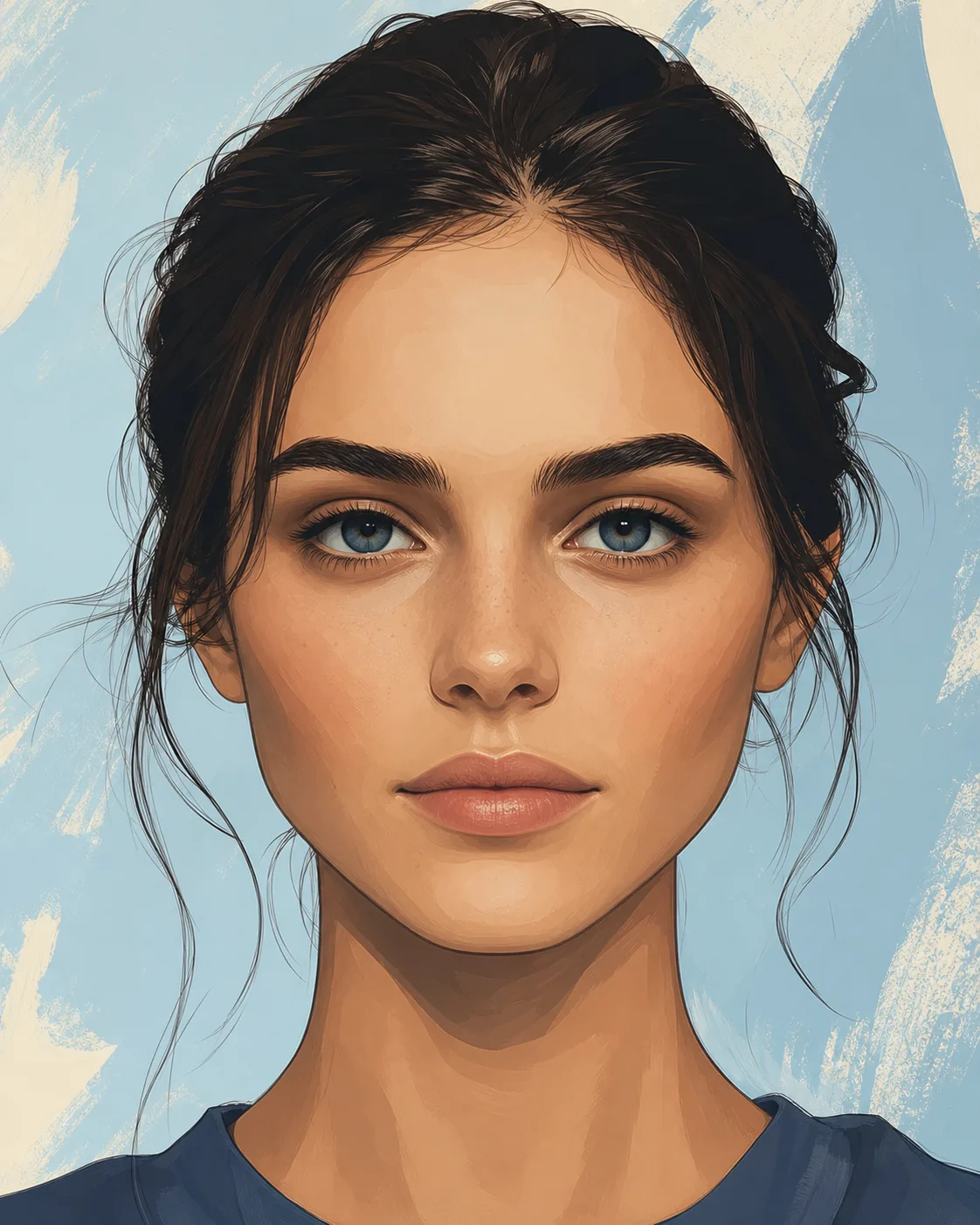
Signs you may have deep set eyes
Use several signs together. One dramatic selfie, celebrity comparison, or harsh overhead shadow can mislead you.
The brow bone casts natural shadow
A soft shadow appears over the upper lid even in normal light, especially near the crease and outer half of the eye.
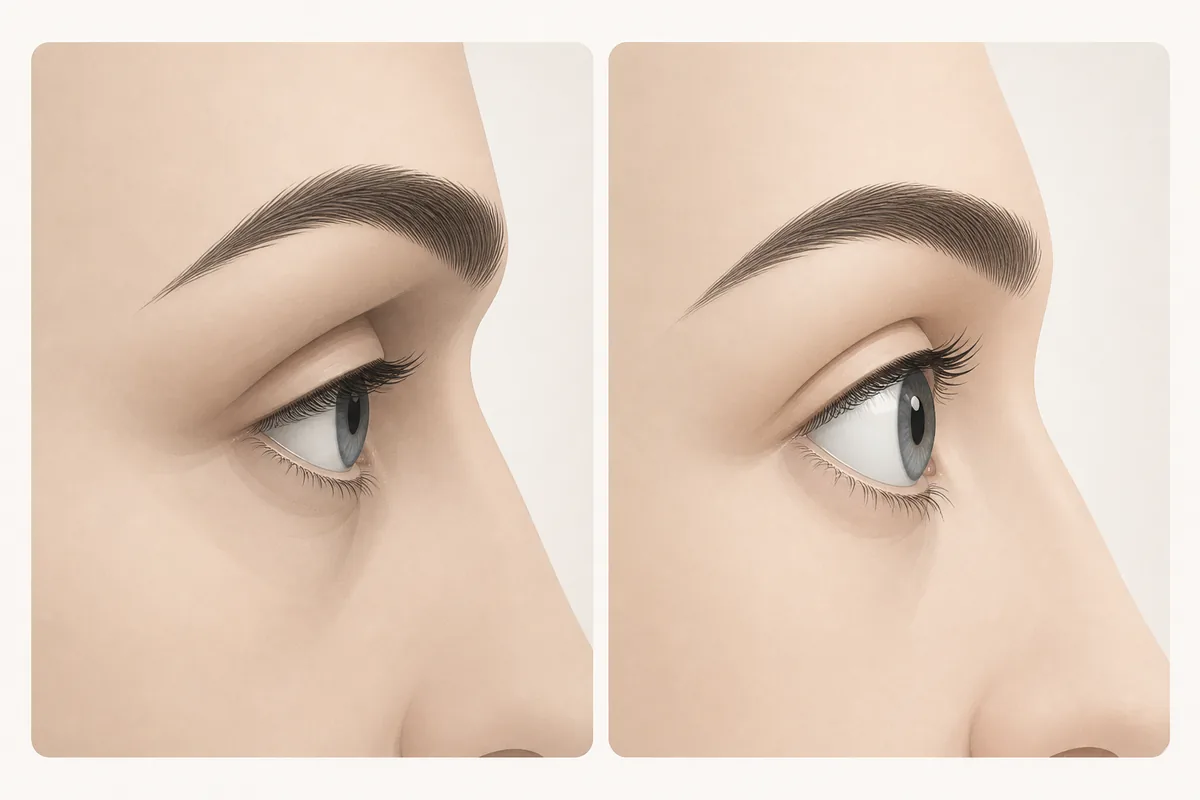
The eye looks slightly recessed from the side
In a side or three-quarter view, the brow area may project forward while the eyeball appears set farther back.
Lid color disappears into depth
Eyeshadow placed low on the lid may look darker or less visible once your eyes are open.
The trait combines with other shapes
Your outline can still be almond, round, upturned, downturned, hooded, close-set, or wide-set.
A photo and mirror check that works
Deep set eyes are easy to overcall when a photo is taken from above or under harsh lighting. A repeatable check is more useful than comparing yourself with a single celebrity image.
The goal is not to prove a perfect label. The goal is to decide whether eye depth should guide makeup placement, glasses choice, and how you read AI eye-shape results.
Use a relaxed front-facing photo
Stand near a window or soft light source with the camera at eye height. Keep your brows relaxed and look straight ahead.
- Avoid overhead bathroom light as your only source.
- Avoid raising your brows to reveal extra lid.
- Take one photo without heavy eye makeup if possible.
Check the brow-to-eye relationship
Look at whether the brow bone sits visually forward while the eye itself appears set back.
- A forward brow with natural lid shadow supports deep set.
- A forward-looking eyeball with little socket shadow points more toward prominent eyes.
- Compare both eyes because depth can look uneven.
Separate depth from hooding
Find the crease and mobile lid. Hooding is about a fold covering the crease; deep set is about how far the eye sits under the brow.
- You can have both deep set and hooded eyes.
- A visible crease does not rule out deep set eyes.
- A hidden crease does not automatically mean deep set eyes.
Check the overall eye outline last
After judging depth, decide whether the opening looks almond, round, upturned, or downturned.
- Use the eye outline, not the brow shadow, for almond vs round.
- Use corner angle for upturned vs downturned.
- Use spacing separately for close-set or wide-set eyes.
Deep set vs hooded vs prominent eyes
These labels overlap in real faces, but they describe different visual questions: depth, lid fold, and forward projection.
| Feature | Deep set eyes | Comparison label | What to check |
|---|---|---|---|
| Main trait | Eyes appear set farther back beneath the brow bone. | Hooded eyes describe a lid fold covering the crease, not eye depth. | Look at side depth and brow shadow before judging crease coverage. |
| Crease and lid space | The crease may be visible, hidden, or partly shaded depending on your lid shape. | Prominent eyes tend to look more forward or rounded from the side. | Use a three-quarter view to see whether the eye projects forward or sits back. |
| Common visual effect | Natural shadow can make the lid look darker or more sculpted. | Tired eyes or dark circles are skin and lighting issues, not the same label. | Repeat the check in soft daylight to reduce harsh-shadow errors. |
| Styling issue | Low eyeshadow may disappear into socket depth, and thick liner can make the eye look smaller. | Almond or round describes the outline, not socket depth. | Judge depth first, then outline, then spacing. |
Makeup and styling tips for deep set eyes
Deep set eyes usually benefit from placement that keeps the open-eye view bright and visible. The aim is not to erase depth; it is to decide where color, liner, and light should sit so the shape reads clearly.
If a tutorial only shows the eye closed, test the look with your eyes open before finishing. Deep set eyes can make low lid color look stronger in the socket and softer on camera.
What often works
- Keep the mobile lid slightly brighter when you want the eyes to look more open.
- Blend transition color above the deepest shadow instead of packing all color into the socket.
- Use thinner liner near the inner half so the lid does not look crowded.
- Curl lashes and separate them so the lash line stays visible under the brow shadow.
What to avoid overdoing
- Do not darken the whole socket if your goal is a softer open-eye look.
- Avoid very thick black liner across the full lid unless you want a dramatic effect.
- Do not copy prominent-eye tutorials without adjusting placement.
- Avoid treating deep set eyes as a flaw; it is a normal structure trait.
Limits and common mistakes
The biggest mistake is confusing deep set eyes with a mood, health issue, or beauty ranking. Deep set is a structure label. Dark circles, tiredness, swelling, and lighting can change the look around your eyes, but they are separate observations.
Another common mistake is mixing every eye label into one verdict. Deep set describes depth. Hooded describes lid fold. Almond and round describe the opening. Close-set and wide-set describe spacing. A useful description may include two or three of these, but not every label needs to become a separate problem.
Be careful with medical-sounding searches such as sunken eyes. If the change is sudden, painful, one-sided, or connected with other symptoms, use professional medical advice instead of a beauty guide. For normal feature identification, a calm photo check is enough.
When an AI eye shape detector can help
An AI detector can help when your eyes combine several traits, such as deep set almond eyes, deep set hooded eyes, or deep set eyes with a slight upward tilt. A useful result should consider lid crease, iris exposure, corner angle, spacing, and visible depth cues together.
Use the same photo rules from the check above: soft light, front-facing view, relaxed brows, clear eyes, and minimal obstruction from heavy lashes or sunglasses. Then compare the AI output with what you observe in the mirror.
Want a second opinion from a photo?
Upload a relaxed front-facing image, then compare the AI result with the depth, crease, and outline checks in this guide.
Frequently asked questions
Deep set eyes appear positioned farther back under the brow bone, often creating a natural shadow over the lid or crease area.
Use a relaxed front-facing photo and a side or three-quarter view. If the brow bone looks forward and the eye appears recessed with natural lid shadow, deep set eyes may be part of your eye description.
No. Hooded eyes describe upper-lid skin covering part of the crease. Deep set eyes describe eye depth under the brow bone. Some people have both traits.
Deep set eyes appear farther back under the brow. Prominent eyes appear more forward or rounded from the side. A three-quarter photo usually makes the difference clearer.
Yes. Almond describes the outline of the eye opening, while deep set describes depth. Deep set almond eyes are a common combination.
Attractiveness is subjective. Deep set eyes are a normal feature and can create a defined, sculpted look. The practical value is understanding placement for makeup, glasses, and photos.
References and related guides
These related pages help separate eye depth from lid shape, outline, and spacing before you rely on one label.