Best Glasses for Face Shape: How to Choose the Right Frames
Use face shape as a start, then check width, bridge, eye position, prescription, and comfort.

The quick answer: balance first, then fit
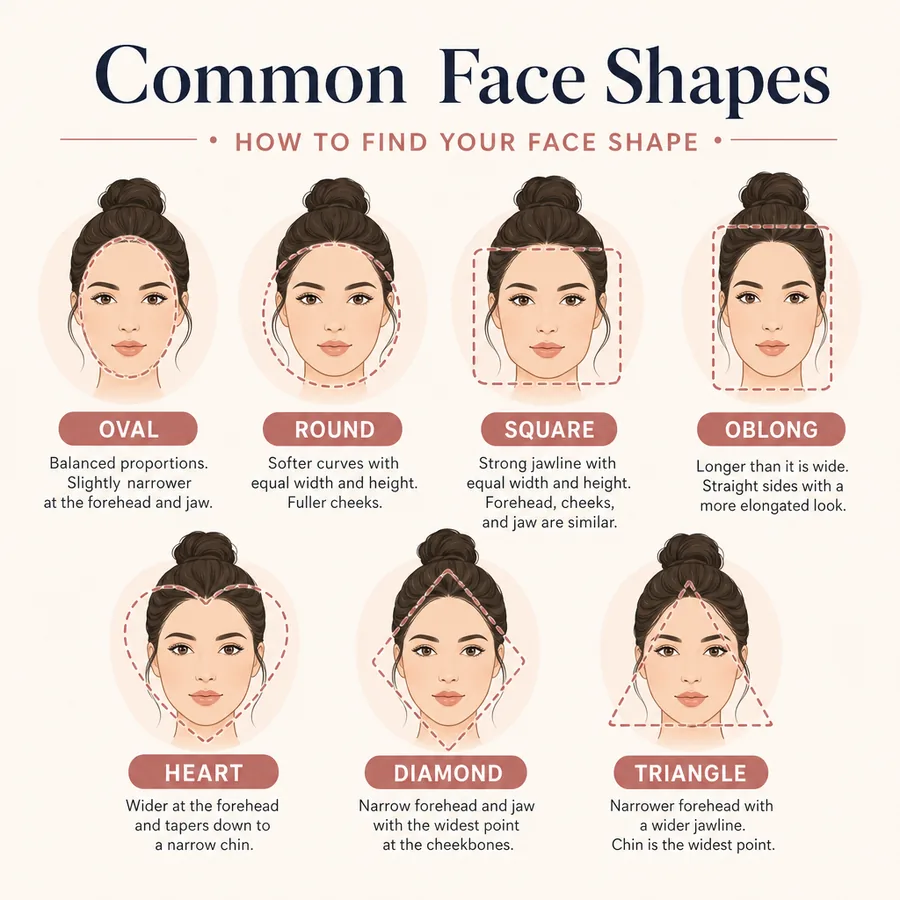
The best glasses for your face shape are the frames that create a comfortable visual balance without fighting your features. Searches for best glasses for face shape are a useful starting point, not a verdict. Try angular frames when your face is mostly round, softer curves when your face is strongly square, and frames with useful depth when your face is long or oblong. Oval faces can usually explore many silhouettes, while heart, diamond, and triangle shapes often benefit from thoughtful width and weight placement.
That advice is a shortlist, not a verdict. Two people with the same face shape can need different bridge sizes, temple lengths, lens heights, or prescription thicknesses. A frame that looks balanced in a product photo can still slide down, pinch at the temples, touch the cheeks, or leave the eyes off-center. Choose a few shapes to try, then judge the actual fit in a mirror or with a reliable try-on view.
If you do not know your face shape yet, use the site's face shape chart or detector as a quick starting point. The useful question is not only "Which shape am I?" It is "Which frame proportions should I test first, and do they stay comfortable when I move?"
Best glasses for face shape by frame family
Start with the row that resembles your strongest proportions. Then test one nearby alternative; mixed features are common, and a different frame can work better than a textbook match.
| Face shape | Frames to try first | Why they can work | Fit detail to check |
|---|---|---|---|
| Round | Rectangular, square, softly geometric | Clearer corners can add structure and contrast to soft cheek and jaw curves. | Avoid choosing a frame only because it is very wide; check that the lower edge does not touch the cheeks. |
| Oval | Wayfarer, oval, round, cat-eye, geometric | Balanced proportions leave room to choose based on style, brow line, and lens needs. | Keep the frame width close to the widest part of your face so it does not look lost or oversized. |
| Square | Round, oval, softly upswept | Curved edges can soften a strong jaw and keep the overall outline from looking too rigid. | A comfortable bridge and moderate lens height matter more than chasing a perfect curve. |
| Oblong | Deeper lenses, taller rectangular or rounded frames | Useful vertical depth can visually balance a face that is noticeably longer than it is wide. | Check that the frame does not sit too low; excessive drop can lengthen the face visually. |
| Heart | Lightweight round, oval, low-set or softly upswept frames | A lighter lower half can complement a wider forehead and narrower chin. | Watch temple pressure and bridge placement; heavy top bars can dominate the brow area. |
| Diamond | Oval, rimless, cat-eye, gentle brow emphasis | Softer curves can balance prominent cheekbones while keeping the brow and jaw visually connected. | Make sure the widest part of the frame does not press into the cheekbones. |
| Triangle | Frames with detail or width at the brow, cat-eye, bold upper rims | Visual weight near the brow can balance a broader jawline and narrower forehead. | Compare the frame width with your jaw, and check that the temples remain relaxed. |
Best glasses for face shape is a starting point, not a universal rule. Labels overlap, and real frame dimensions can matter more than marketing names.
The fit checks that matter more than the label
A face-shape recommendation is useful only if the frame stays in the right position. When you test glasses, look straight ahead, relax your face, and check the frame from the front and side. A good fit should feel stable without needing to be held in place by your ears or cheeks.
Product listings show a frame family, not the complete fit. Compare lens, bridge, and temple measurements with a pair you already wear comfortably. An optician can confirm prescription measurements that a selfie cannot.
Frame width
The front should sit close to your face without extending dramatically past the temples. If the frame is too narrow, the temples can press; if it is too wide, it may slide or look disconnected from your brow.
Bridge and nose
The bridge should rest securely without pinching or leaving a large gap. Nose pads can change the adjustment, but they cannot turn every bridge shape into a comfortable match.
Eye position
Your pupils should sit naturally inside the lenses rather than far toward an edge. Centering affects appearance, optical alignment, and how the frame feels when you look around.
Cheek clearance
Smile and look down. The lower rims should not repeatedly touch your cheeks. This matters especially for round faces, shorter noses, and deeper or oversized frames.
Temple pressure
The arms should lie along the sides of your head without a sharp squeeze. Pressure can become noticeable after an hour even when a frame feels fine for one minute.
Brow relationship
The top rim can echo, sit below, or lightly frame the brow. Choose deliberately: a very heavy top line may overpower a small brow area, while a low rim can make the eyes look visually lower.
A pre-purchase checklist for online and in-store shopping
Use this short sequence before you commit to a frame. It keeps face-shape advice connected to the details that determine whether glasses are wearable every day.
- 1. Confirm the use case. Decide whether you need everyday prescription glasses, sunglasses, computer lenses, safety eyewear, or a light backup pair. The use case changes lens thickness, coatings, coverage, and acceptable weight.
- 2. Pick two frame families. Choose the face-shape starting point and one nearby alternative. For example, compare a rectangular frame with a softly geometric frame instead of browsing every style at once.
- 3. Compare real dimensions. Look for lens, bridge, and temple measurements. Compare them with a pair that fits. A label such as oversized or narrow is less useful than the numbers.
- 4. Check the try-on evidence. Use a straight-on photo or a reputable virtual try-on as a first filter. Keep your head level and your hair away from the frame edge; angled selfies can distort width and height.
- 5. Test movement and expression. Smile, talk, look down, and turn your head. A frame that shifts, catches hair, or touches the cheeks is not a good daily fit, even if its silhouette is attractive.
- 6. Leave room for adjustment. Ask whether the frame can be adjusted and whether return terms cover fit problems. Prescription measurements and frame geometry should be confirmed before final ordering.
Prescription, sunglasses, and daily-use details
Face shape is only one input when lenses are involved. Strong prescriptions may work better in smaller or less deep frames because lens thickness, weight, and optical center become more noticeable. That does not mean you must choose a plain frame; it means the frame should be discussed with your prescription and pupillary distance in mind.
Sunglasses add a coverage decision. A frame can suit your face visually yet leave too much side light. For driving, sport, or bright outdoor use, ask a qualified optical professional about lens category, impact needs, and fit.
Everyday pair
Prioritize stable bridge contact, moderate weight, durable hinges, and a shape you will still enjoy after a full workday.
Computer use
Choose a comfortable lens height and a frame that stays centered when you shift between a screen, keyboard, and distance. Fit is more important than a trend label.
Sunglasses
Check coverage, glare needs, and activity-specific durability. A flattering shape should also stay secure when you walk, turn, or look down.
Common glasses and face-shape myths
Simple rules are memorable, but they often hide the details that make a frame work for a real person.
Myth: The opposite frame shape is always best.
Contrast can be helpful, but it is not mandatory. A round frame can look intentional on a round face when its width, color, and bridge fit are right. Balance is more useful than a strict opposite-shape rule.
Myth: One face shape gives one correct answer.
Face shapes are practical categories, not fixed measurements. Hair, expression, camera angle, weight changes, and mixed proportions can change the visible outline. Try a primary match and a close alternative.
Myth: A virtual try-on proves the fit.
A try-on image can compare color and silhouette, but it cannot fully measure bridge pressure, temple length, lens thickness, or prescription alignment. Use it to narrow choices, then verify the physical fit.
Best glasses for face shape: build a shortlist
Start with two or three frame families from the chart, compare their dimensions, and keep the pair that stays centered and comfortable while you move. If your face sits between categories, record what changes between the two choices: brow weight, lens depth, corner angle, or width. That observation is more useful than forcing a single label.
Best glasses for face shape: start here
Use the photo-based detector for glasses, then treat its result as a shortlist and confirm the frame fit separately.
Try the face shape detector for glassesFrequently asked questions