Hooded vs Deep Set Eyes: How to Tell the Difference
Hooded and deep set eyes can look similar in a photo, but they describe different parts of your eye structure. Use this practical comparison to check lid space, crease visibility, brow-bone depth, and the way your eyes look from the front and side.
The quick answer
Hooded eyes are defined by the upper-lid skin or brow area covering part of the crease or mobile lid when the eyes are open. Deep set eyes are defined by eye depth: the eyes sit farther back beneath the brow bone, which can create natural shadow. One term describes lid coverage; the other describes the eye's position in the socket.
The easiest way to compare them is to look at two separate questions. First, how much of your crease or mobile lid remains visible with a relaxed gaze? Second, does the brow bone look more forward than the eyeball from a side or three-quarter view? The first question points toward hooding; the second points toward deep set structure.
These traits can occur together. You may have deep set hooded eyes, hooded almond eyes, or deep set eyes with a round, upturned, or downturned outline. Treat hooding and depth as separate layers before deciding your overall eye shape.
What do hooded and deep set eyes mean?
Hooded eyes have a fold of skin that rests lower over the crease or mobile lid. With the eyes open, the fold may make the lid space look smaller, hide part of the crease, or make eyeliner disappear under the fold. Hooding can be subtle, strong, even on both sides, or more noticeable on one eye.
Deep set eyes appear farther back beneath the brow bone. The brow area may project forward and cast a soft shadow over the lid even when the crease is visible. Deep set is about depth and the brow-to-eye relationship, not about eye size, tiredness, or whether a person has dark circles.
The labels answer different visual questions, so they should not be used as competing beauty categories. A person can have a visible crease and still be deep set, or have a pronounced hood and little visible socket depth. Lighting, facial expression, brow position, and camera lens can make either feature look stronger.
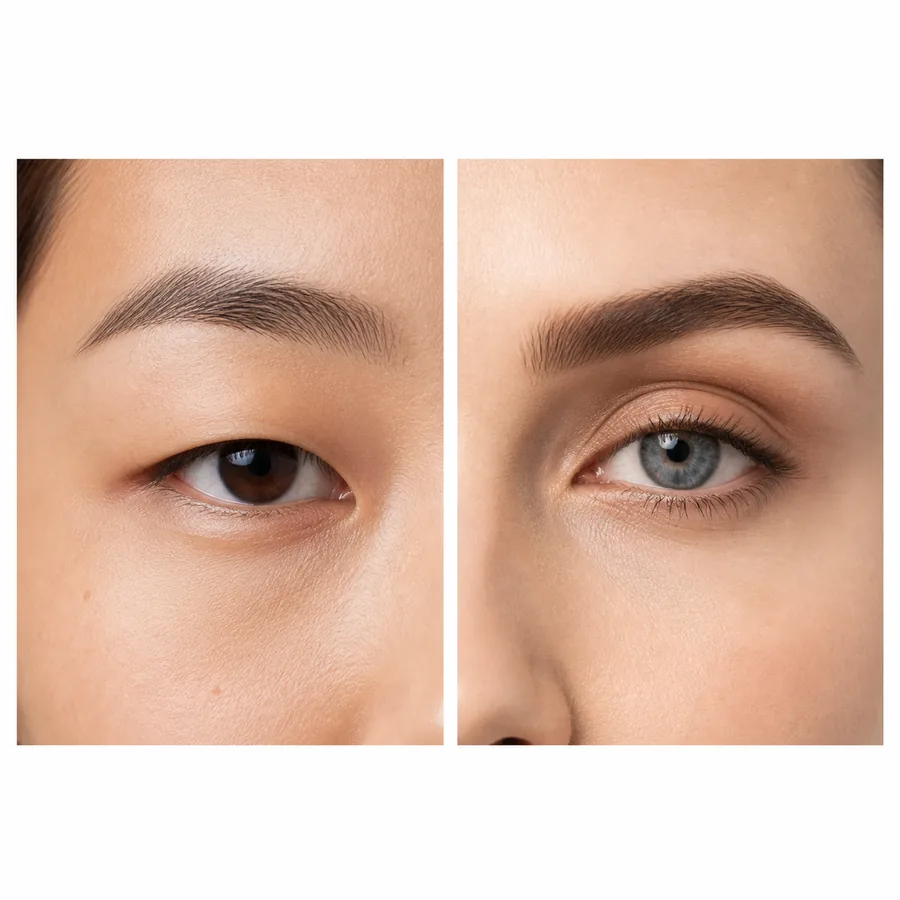
Signs to compare before choosing a label
Use several clues together. A single close-up selfie, raised eyebrow, heavy liner, or overhead light can make almost any eye look more hooded or more recessed.
Crease coverage
With your brows relaxed and eyes open, check whether upper-lid skin covers the crease or mobile lid. More coverage supports hooding.
Brow-bone depth
From a side or three-quarter view, notice whether the brow bone sits visually forward while the eye itself appears farther back. That supports deep set structure.
Visible lid space
Hooding often changes how much lid space is visible above the lash line. Deep set shadow can also reduce visible brightness, but the cause is different.
What changes when you raise your brows
Raising the brows can temporarily lift the fold and reveal more lid, so repeat the check with a neutral expression instead of using a posed photo.
A mirror and photo check that separates the two
If you are asking, “Do I have deep set or hooded eyes?”, use a repeatable check rather than comparing yourself with one celebrity or one beauty filter. Take two neutral photos and inspect lid coverage and socket depth separately.
The goal is not to force one perfect label. The goal is to understand which feature affects eyeliner, eyeshadow, glasses, and the way your eye shape reads in photos.
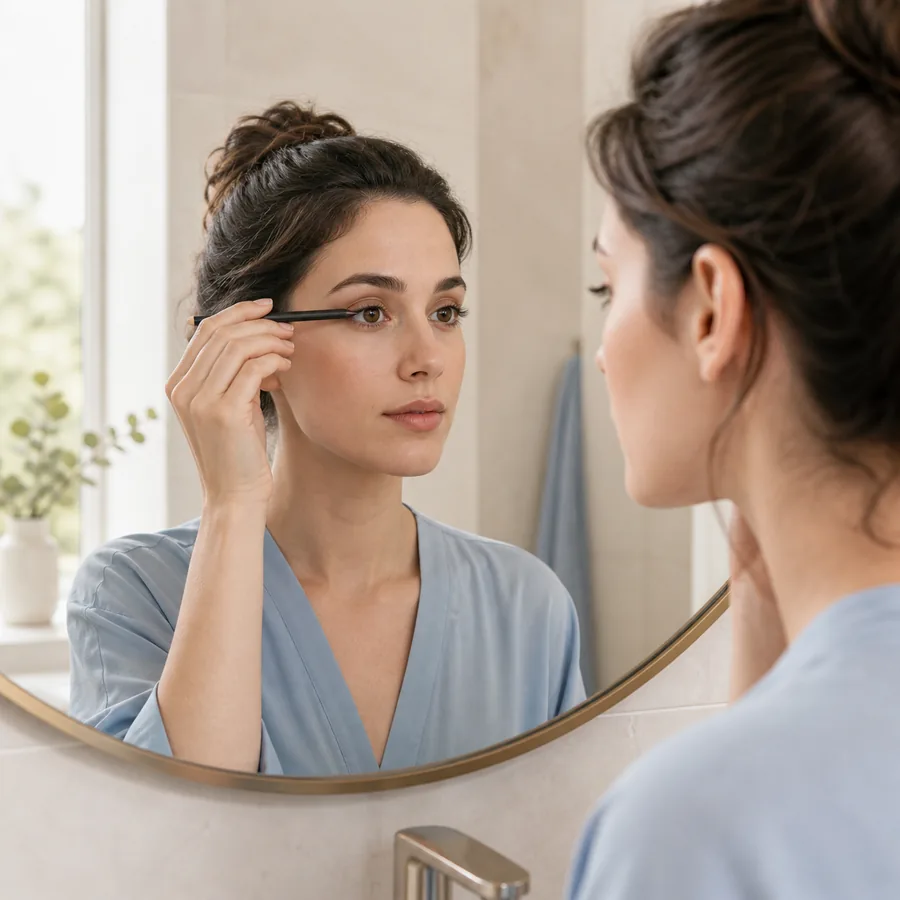
Take a relaxed front-facing photo
Stand near soft window light with the camera at eye height. Look straight ahead, relax your forehead, and keep your eyes open naturally.
- Avoid judging from overhead bathroom light alone.
- Remove sunglasses and, if possible, use minimal eye makeup.
- Take the photo from a normal distance instead of using a wide-angle close-up.
Check the crease and mobile lid
Look at the area between the lash line and brow. If a skin fold covers much of the crease when the eye is open, hooding is likely part of the description.
- Do not lift the brows while checking.
- A visible crease does not rule out mild hooding.
- Compare both eyes because asymmetry is common.
Add a three-quarter or side view
Turn your head slightly or ask someone to take a profile-leaning photo. Compare the brow bone with the position of the eye itself.
- A forward brow with a recessed-looking eye supports deep set structure.
- A forward or rounded eyeball points more toward prominent eyes, not deep set eyes.
- Keep the lighting soft so shadow is not mistaken for depth.
Describe the combination, not just one label
After checking fold and depth, describe the outline and spacing separately. A useful answer might be “deep set, mildly hooded, almond-shaped eyes.”
- Use the outer outline for almond versus round.
- Use corner angle for upturned versus downturned.
- Use the distance between the eyes for close-set versus wide-set.
Hooded vs deep set eyes: side-by-side comparison
The two labels can overlap, but they point to different observations. Start with lid coverage, then check depth from a second angle.
| Feature | Hooded eyes | Deep set eyes | What to check |
|---|---|---|---|
| Main trait | A skin fold covers part of the crease or mobile lid when the eyes are open. | The eyes appear farther back beneath the brow bone. | Ask whether the clue is fold coverage or socket depth. |
| Crease visibility | The crease may be partly hidden, especially toward the outer lid. | The crease may be visible, hidden, or shaded depending on the lid shape. | Use a relaxed front view and do not raise the brows. |
| Side view | A side view may not show much extra depth; the fold remains the key clue. | The brow can look more forward while the eye looks recessed. | Use a three-quarter view with soft, even light. |
| Natural shadow | Shadow may come from the overhanging fold and the angle of the brow. | Shadow may come from the brow-to-eye depth even with a visible crease. | Repeat the photo in daylight without heavy makeup. |
| Makeup effect | Eyeliner or crease color can disappear when the eye opens. | Low lid color can sit in shadow, while thick liner can crowd the visible opening. | Judge placement with the eyes open, not only while closed. |
| Can they coexist? | Yes. A hood can be mild or strong on an eye that is also deep set. | Yes. Depth and hooding are independent traits that can overlap. | Record both traits before describing the overall eye outline. |
Makeup and glasses tips after you identify the difference
Knowing whether lid coverage, socket depth, or both affect your eyes can make styling advice more practical. The useful test is always the open-eye view: apply a small amount, look straight ahead, and adjust the placement you can actually see.
For glasses, the same principle applies. Frame shape, bridge fit, lens reflections, and personal preference matter more than a single eye label. Use the comparison as a starting point, not a rule that tells you which frames you must wear.
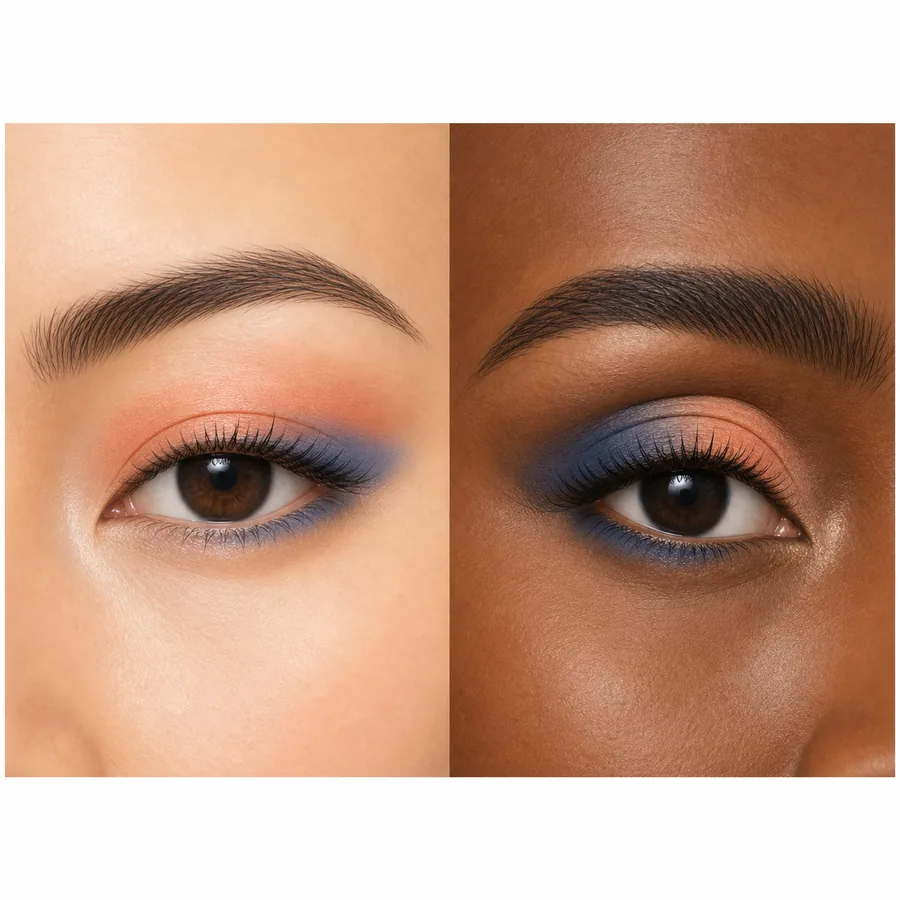
If hooding is the stronger feature
- Place transition color slightly above the fold so it remains visible when your eyes are open.
- Keep liner thin or lift the outer shape gradually instead of filling the whole visible lid.
- Test mascara and lashes with the eyes open so they do not transfer onto the fold.
- For glasses, check that the upper frame does not visually compete with the fold if you prefer a more open look.
If deep set depth is the stronger feature
- Keep the mobile lid brighter when you want to reduce the look of natural socket shadow.
- Blend color above the deepest shadow rather than packing every dark shade into the socket.
- Use a three-quarter photo to check whether frames or brow shadows change the apparent depth.
- Avoid treating deep set eyes as a flaw; adjust placement for visibility and comfort, not correction of a defect.
Limits and common mistakes
The most common mistake is treating hooded versus deep set as a binary beauty verdict. These are descriptive terms, not scores. They do not tell you whether your eyes are attractive, healthy, or better than another shape.
Another mistake is allowing makeup, expression, or camera distortion to decide the label. A raised brow can reveal lid space; a wide-angle selfie can exaggerate the center of the face; strong overhead light can create shadow that looks like depth. Compare more than one neutral view.
Do not confuse a normal feature description with a medical concern such as a sudden sunken appearance, swelling, pain, or a one-sided change. If a change is new or worrying, seek qualified medical advice. This article is for stable, everyday feature identification.
When an AI eye shape detector can help
An AI eye shape detector can provide a second opinion when several traits overlap, such as deep set hooded eyes, hooded almond eyes, or eyes that look different from one angle to the next. A useful result should be read as a pattern across lid crease, visible lid, corner angle, eye outline, spacing, and depth cues—not as a definitive identity label.
For a more useful comparison, upload a clear front-facing image with soft light, relaxed brows, open eyes, and no sunglasses. Then compare the result with the mirror steps above. If the tool and your own observation disagree, check the photo conditions before assuming either one is correct.
Want a second opinion from a photo?
Upload a relaxed front-facing image, then compare the result with the crease, depth, and outline checks in this guide.
Frequently asked questions
No. Hooded eyes describe upper-lid skin covering part of the crease or mobile lid. Deep set eyes describe the eyes sitting farther back beneath the brow bone. Some people have both traits.
Use a relaxed front view to check crease coverage, then use a three-quarter view to check brow-to-eye depth. More fold coverage points toward hooding; a forward brow with a recessed-looking eye points toward deep set structure.
Yes. The traits describe different features and commonly overlap. You can be mildly hooded and deep set, strongly hooded without much depth, or deep set with a mostly visible crease.
Deep set eyes appear positioned farther back in the socket, often beneath a more noticeable brow bone. Natural shadow may fall over the lid, but the trait is not the same as tiredness or dark circles.
No. Hooding can be mild, and a crease may remain visible. The useful clue is whether an upper-lid fold covers part of the crease or mobile lid when the eyes are relaxed and open.
They describe different directions of apparent depth. Deep set eyes look farther back beneath the brow; prominent eyes tend to look more forward or rounded from the side. A three-quarter view helps separate them.
Yes. Almond and round describe the outline of the eye opening, while hooded describes lid coverage and deep set describes depth. Several labels can accurately describe one pair of eyes.
It may suggest patterns from a clear image, but it cannot replace your own comparison or professional advice. Use neutral lighting and treat the result as an educational second opinion rather than a definitive diagnosis.
Related guides and tools
Use these pages to separate lid coverage and eye depth from the overall eye outline, spacing, and photo-based analysis.