Sanpaku Eyes: Meaning, Types, Myths, and a Safe Self-Check
Sanpaku describes visible white above or below the iris in a relaxed forward gaze. This guide explains the appearance without turning a traditional label into a personality test or medical diagnosis.
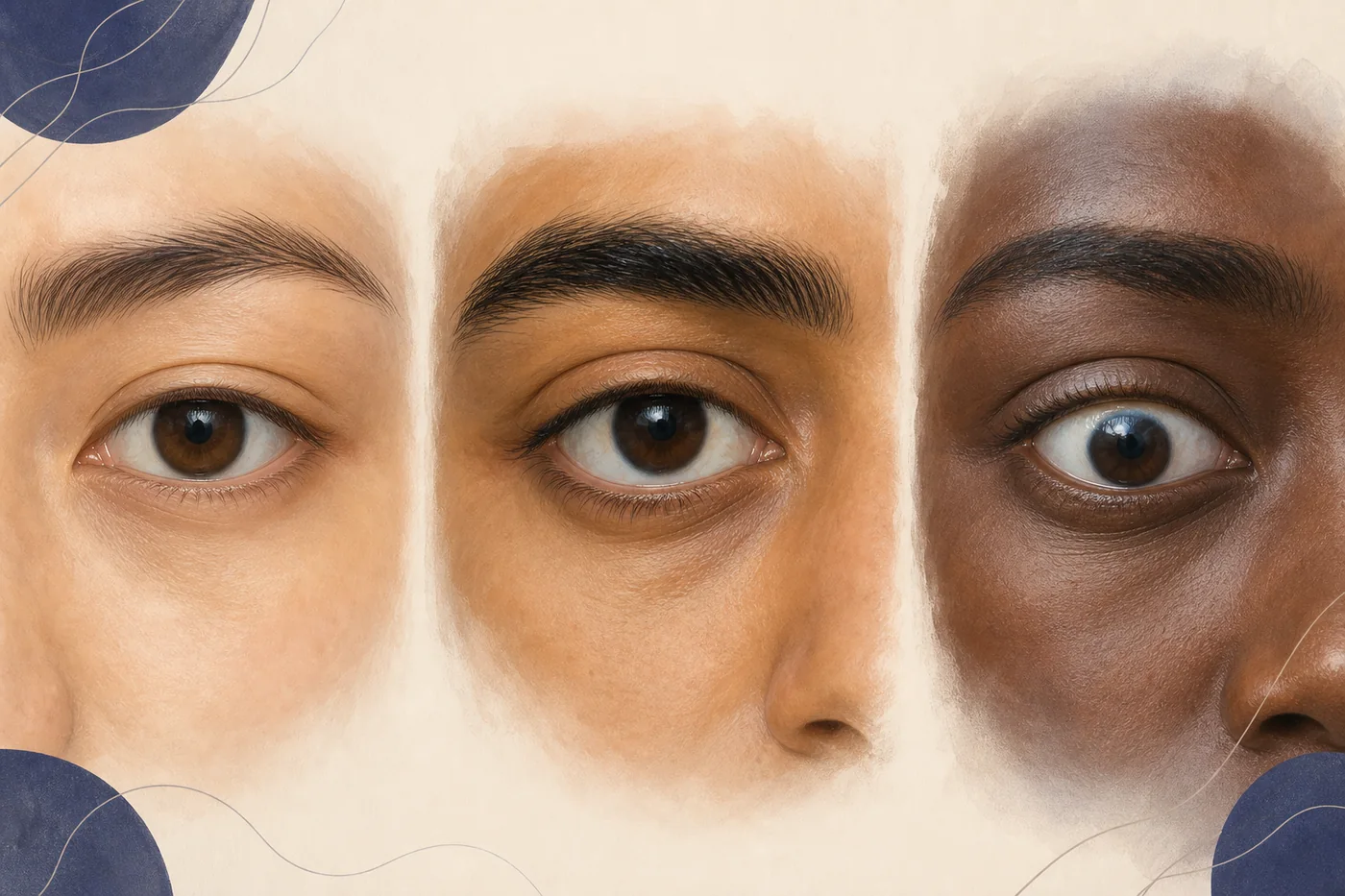
What are sanpaku eyes?
Sanpaku eyes are eyes in which the white of the eye remains visible above or below the iris while the person looks straight ahead with a relaxed expression. The word comes from Japanese and is commonly explained as “three whites,” because white can be seen on three sides of the iris rather than mainly at the left and right.
It is an appearance label, not a diagnosis and not a reliable way to predict character, health, danger, or fate. Camera angle, gaze direction, eyelid position, tiredness, facial expression, prominent eyes, and temporary irritation can all change how much sclera appears in a photo.
Sanpaku eyes meaning: a visual description, not a verdict
In a neutral eye, the upper and lower edges of the iris often meet or nearly meet the eyelids. With sanpaku appearance, a strip of sclera is still visible on one vertical side of the iris. White below the iris is often called yin sanpaku, while white above the iris is often called yang sanpaku. These names come from a cultural framework, not a modern clinical classification.
Sanpaku can coexist with other traits. A person may have round eyes with lower scleral show, prominent eyes with more visible white, hooded lids with a covered crease, or an upturned or downturned outer corner. This is why sanpaku should not replace your broader eye-shape result. It describes one relationship between the iris and eyelids.
The amount of visible white also exists on a continuum. A thin, occasional line is different from a strong, persistent change. Symmetry matters too: a similar appearance in both eyes over many years is different from a sudden one-sided change.
- Look at iris-to-lid contact, not eye color or pupil size.
- Check a relaxed forward gaze, not a dramatic expression.
- Treat the result as one feature that can overlap with round, deep-set, prominent, hooded, or tilted eyes.
How to tell if you have sanpaku eyes
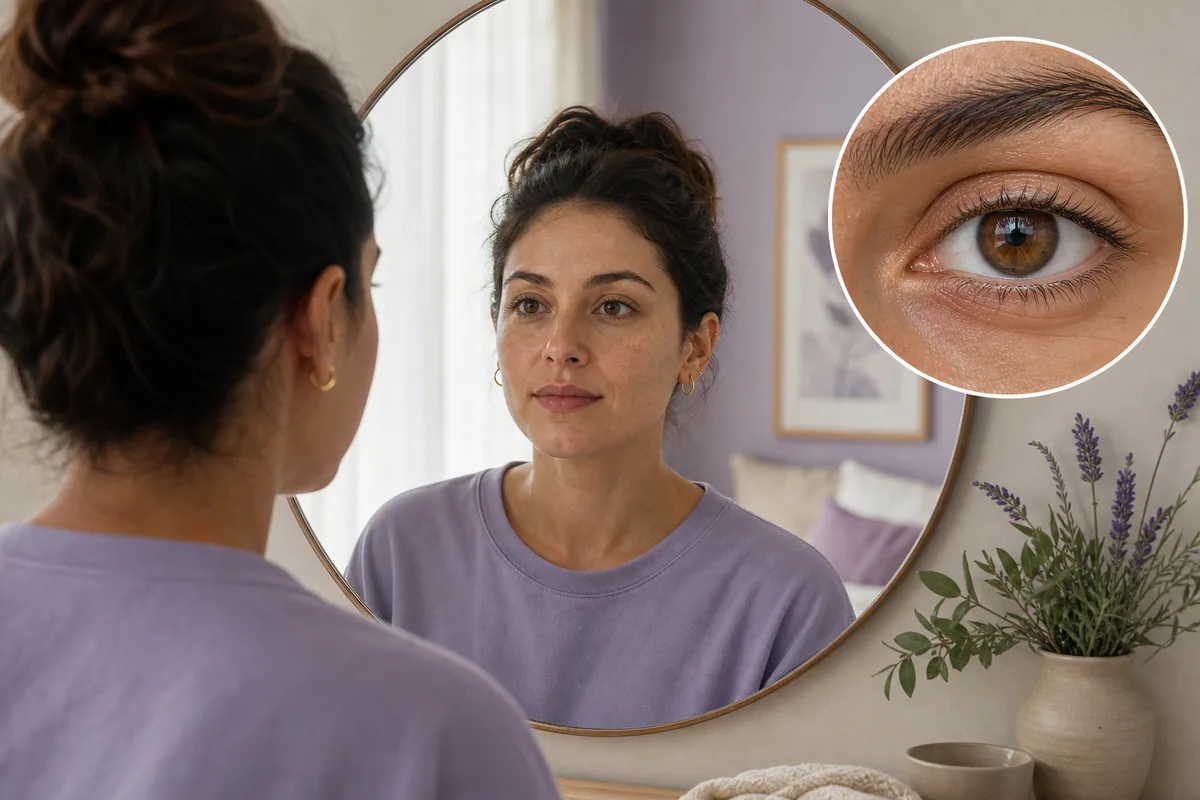
Stand in soft, even light and hold a mirror or camera at eye level. Keep your head upright, relax your forehead and lower lids, and look at a point directly ahead. Do not widen your eyes, lift your brows, tilt your chin, or look up or down. Those actions can create temporary scleral show.
Compare several moments rather than one image. A useful check includes a mirror view, a straight-on photo taken from about arm’s length, and another photo after blinking and relaxing. If the white consistently remains below or above the iris in both eyes, the descriptive sanpaku label may fit.
Then check context. Is the feature symmetrical? Has it looked similar in older photographs? Does it disappear when your expression relaxes? Is the effect actually caused by a round opening, prominent eyes, lower-lid position, or camera perspective? These questions prevent an exaggerated result.
- Use a level lens and avoid a close wide-angle selfie.
- Remove beauty filters and avoid strong overhead light.
- Check both eyes separately because facial symmetry is rarely perfect.
- Do not use the check to diagnose thyroid eye disease, eyelid retraction, trauma, or infection.
Yin sanpaku, yang sanpaku, and ordinary scleral show
Yin sanpaku usually refers to white visible below the iris. It is the pattern most people mean when they search for sanpaku eyes. It may simply be a stable part of someone’s anatomy, especially when both eyes have looked similar for years and there are no symptoms.
Yang sanpaku usually refers to white visible above the iris. It is less commonly used in everyday beauty guides and can be exaggerated by looking downward or raising the upper lid. A still photo should therefore be checked against a neutral mirror view before applying the label.
Ordinary scleral show is broader than the sanpaku label. Small amounts of white may appear because of expression, gaze, age-related lid position, contact lens discomfort, dryness, or the natural prominence of the eye. Describing what you see is more useful than forcing every variation into a named type.
Sanpaku eyes myths, personality claims, and cultural context
Online posts often connect yin or yang sanpaku with personality, danger, poor health, emotional instability, or an early death. These claims are not supported by a reliable method that can predict an individual outcome from visible sclera. Celebrity collages are especially weak evidence because they mix different expressions, camera angles, ages, lighting, and image editing.
The term became internationally familiar through macrobiotic writing and later popular culture. That history explains why the topic carries symbolic meanings, but cultural history is not the same as anatomical or medical evidence. A responsible guide can explain the tradition without presenting folklore as fact.
Avoid ranking sanpaku as attractive or unattractive. Eye appearance is multidimensional, and a small amount of scleral show can look striking, soft, intense, youthful, tired, or neutral depending on the whole face and expression.
When visible eye white is just a trait—and when to seek care
A long-standing, symmetrical appearance without discomfort is often simply an individual feature. However, “sanpaku” should not be used to dismiss a new change. Sudden bulging, eyelid retraction, double vision, pain, marked redness, light sensitivity, reduced vision, injury, or one eye changing more than the other deserves professional evaluation.
Medical sources use terms such as scleral show, eyelid retraction, proptosis, or exophthalmos depending on the finding. Those terms have specific clinical meanings and cannot be confirmed from an online beauty photo. If your concern is new, uncomfortable, or progressive, contact an optometrist, ophthalmologist, or appropriate medical service rather than relying on an eye-shape label.
For cosmetic analysis, keep the conclusion modest: describe whether white is visible, where it appears, whether it is symmetrical, and which other eye-shape traits overlap. That is enough to guide makeup placement or understand an AI result without making a health claim.
Sanpaku eye types at a glance
Use this table as a descriptive check, not as a personality test or diagnosis.
| Pattern | Visible white | What it describes | Best check |
|---|---|---|---|
| Typical neutral contact | Mainly left and right of the iris | Upper and lower iris edges meet or nearly meet the lids | Relaxed forward gaze |
| Yin sanpaku | Below the iris | Persistent lower scleral show | Rule out looking upward, wide eyes, and low camera angle |
| Yang sanpaku | Above the iris | Persistent upper scleral show | Rule out looking downward and raised upper lids |
| Temporary scleral show | Changes between photos | Expression, gaze, angle, irritation, or fatigue may be involved | Repeat after blinking in even light |
Sanpaku eyes FAQ
Are sanpaku eyes rare?
There is no dependable global percentage because sanpaku is not measured consistently in population statistics. A small amount of upper or lower scleral show is not unusual, and the appearance changes with gaze and expression.
What causes sanpaku eyes?
A stable appearance may reflect natural iris-to-lid anatomy, eye prominence, roundness, or eyelid position. Temporary appearance can come from gaze, expression, fatigue, dryness, or camera angle. New or symptomatic changes need professional assessment.
Do sanpaku eyes predict personality or fate?
No reliable evidence shows that visible sclera predicts character, danger, illness, or lifespan. Those ideas belong to folklore and popular culture rather than a validated assessment method.
Can almond or hooded eyes also be sanpaku?
Yes. Almond, round, hooded, monolid, deep-set, prominent, upturned, and downturned describe different dimensions. Sanpaku can overlap with any of them if white remains visible above or below the iris.
Can the eye shape detector diagnose sanpaku?
The detector can provide a cosmetic eye-shape estimate from a photo, but it cannot diagnose eyelid disease, thyroid eye disease, injury, infection, or other medical causes of a changed appearance.
Sources and further reading
These references support the distinction between a descriptive appearance label and clinical eye changes.
- Cleveland Clinic: Bulging Eyes (Proptosis) — Symptoms, causes, and reasons to seek medical evaluation.
- PubMed: Inferior scleral show — Clinical terminology and measurement context for lower scleral show.
- Eye Shape Chart — Compare sanpaku appearance with broader eye-shape categories used on this site.
Compare your complete eye-shape pattern
Sanpaku describes only the white visible around the iris. Use a clear front-facing photo to compare shape, lid, tilt, depth, and spacing together.
Try the eye shape detector