Gli occhi a mandorla sono rari? Cosa significa davvero questa forma
Gli occhi a mandorla sono rari? Scopri perché sono una categoria comune, perché le percentuali precise sono difficili da dimostrare e come confrontare i tuoi tratti visibili.
Risposta rapida
Gli occhi a mandorla di solito non sono rari in senso statistico. Sono una categoria comune nelle guide beauty, mentre le percentuali precise sono spesso non dimostrate.
Separare forma, colore, inclinazione e tratti misti evita conclusioni sbagliate.
La conclusione pratica è semplice: gli occhi a mandorla sono una forma normale e comune, mentre le percentuali globali esatte vanno trattate con cautela se la fonte non definisce il tratto, il campione e il metodo. La domanda utile è se il contorno principale è a mandorla e se sono presenti anche palpebra incappucciata, angolazione o distanza tra gli occhi.
Quanto sono comuni davvero?
Gli occhi a mandorla sono una categoria descrittiva comune nel linguaggio della bellezza. Il termine indica di solito un'apertura più lunga che alta, angoli leggermente affusolati e poco bianco visibile sopra o sotto l'iride.
A precise percentage is much harder to support. Scientific and clinical studies may measure eyelid height, canthal tilt, or periocular proportions, but those measurements are not the same as a public beauty label. That is why viral numbers should be treated as weak unless the source explains the sample and definition.
A better question is not whether the shape is rare, but whether almond is your main outline and whether another trait such as hooding, upturn, downturn, close-set spacing, or wide-set spacing should be added.
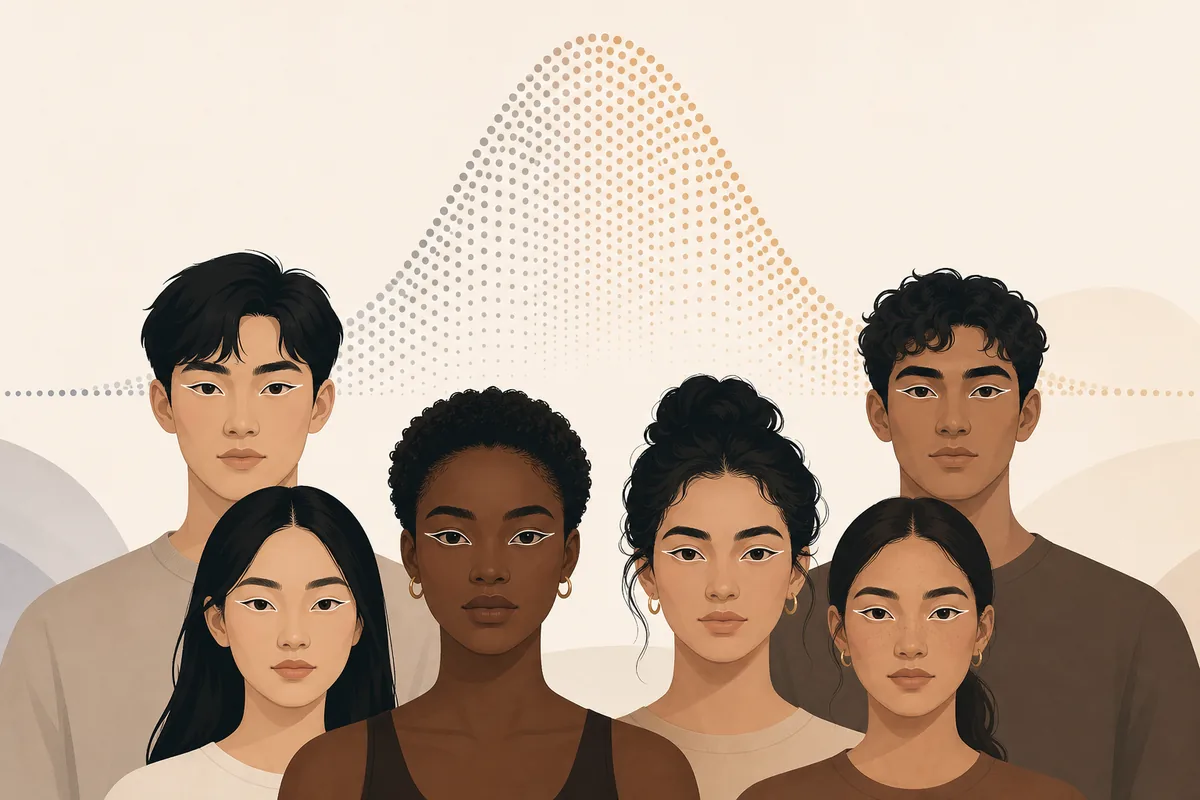
Perché le affermazioni creano confusione
Separare forma, colore, inclinazione e tratti misti evita conclusioni sbagliate.
La forma non è il colore
Eye-color rarity does not explain eye-shape frequency.
La forma non indica l'origine
Almond-like outlines can appear across many backgrounds.
I tratti misti sono normali
Gli occhi a mandorla possono anche essere incappucciati, all'insù, all'ingiù, ravvicinati o distanziati.
I numeri richiedono un metodo
A percentage without a sample, definition, and method should not drive your conclusion.
Come valutare i tuoi tratti
Usa una foto chiara e frontale, con luce uniforme. Evita filtri forti, sopracciglia sollevate, eyeliner marcato e selfie ravvicinati con grandangolo.
Look at one feature at a time so you do not mix outline, lid coverage, eye spacing, and corner direction.
Inizia dal contorno
Chiediti se l'apertura dell'occhio appare più lunga che alta.
- Almond reads horizontally balanced.
- Round reads more vertically open.
- A neutral expression is best.
Controlla l'iride
In molte descrizioni, l'iride tocca o quasi tocca entrambe le palpebre.
- Extra white above or below the iris can suggest round eyes.
- Lighting and expression matter.
- Confronta più di un'immagine.
Controlla gli angoli
Outer-corner direction is a separate trait from almond shape.
- Lifted means upturned.
- Lowered means downturned.
- Either can coexist with almond.
Aggiungi i tratti secondari
Solo dopo aver chiarito il contorno aggiungi le etichette palpebra coperta, monolid, occhi ravvicinati o distanziati.
- Una sola etichetta può essere troppo semplice.
- Le descrizioni a più livelli sono spesso più precise.
- Usa il rilevatore come seconda opinione.
Affermazioni utili o fuorvianti
This table keeps the search intent practical and cautious.
| Affermazione | Lettura migliore | Perche conta | Cosa controllare |
|---|---|---|---|
| Gli occhi a mandorla sono rari | Troppo generico senza un metodo. | Rarity claims need a defined population and definition. | Use visible traits first. |
| Gli occhi a mandorla sono comuni | Ragionevole come categoria beauty. | Molte guide usano la forma a mandorla come categoria principale. | Confirm with outline and iris contact. |
| Gli occhi a mandorla definiscono l'origine | Fuorviante. | Shape alone should not be used for ethnicity assumptions. | Evita conclusioni basate su stereotipi. |
| Gli occhi a mandorla sono sempre all'insù | Non è preciso. | Mandorla descrive il contorno; all'insù descrive l'angolo. | Confronta separatamente angolo interno ed esterno. |
Cosa cambia per trucco, ciglia e occhiali
The styling value of the almond label is practical, not about rarity. A balanced almond outline often adapts well to liner, shadow, lashes, and many frame shapes.
I tratti secondari cambiano i consigli. Con occhi a mandorla incappucciati il dettaglio deve restare visibile sopra la piega; con angoli all'insù può servire meno allungamento esterno; con occhi ravvicinati, illuminare l'angolo interno e spostare la profondità verso l'esterno può creare equilibrio.
Use the label as a starting point, then check your actual photo and your comfort. No eye shape needs to be corrected to be valid.
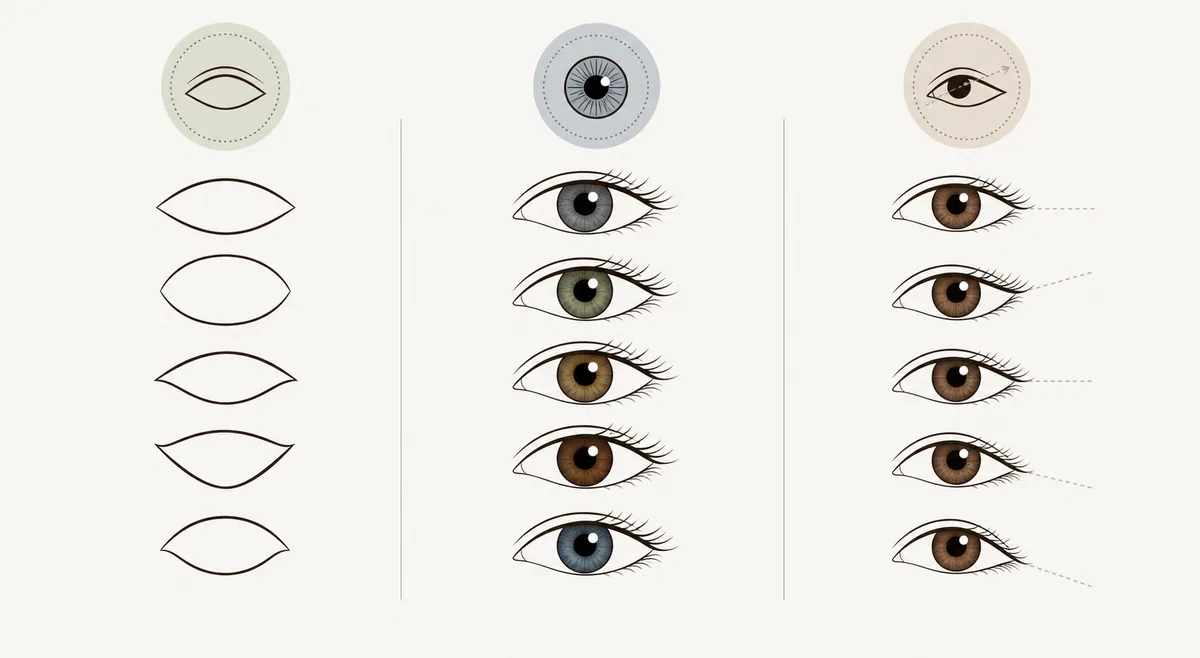
Mandorla con palpebra coperta
- Mantieni visibili i dettagli con gli occhi aperti.
- Evita un eyeliner troppo spesso.
- Usa sfumature morbide.
Mandorla all'insù
- Asseconda l'inclinazione naturale.
- Mantieni la codina proporzionata.
- Controlla entrambi gli occhi aperti.
Mandorla con occhi ravvicinati
- Illumina l'angolo interno.
- Sposta la profondità verso l'esterno.
- Evita un interno troppo scuro.
Risultato misto
- Usa mandorla per descrivere il contorno.
- Aggiungi un tratto secondario.
- Ripeti il test con una foto neutra.
Cosa non possiamo affermare con certezza
Non dovremmo indicare una percentuale globale precisa senza una fonte chiara che definisca e misuri il tratto in modo coerente.
We also should not infer identity, health, personality, or attractiveness from eye shape. The label is useful for self-description and styling, not for ranking people.
La risposta più prudente è che gli occhi a mandorla sono una categoria comune e normale, mentre le percentuali esatte di rarità sono spesso poco affidabili.
Quando aiuta un rilevatore IA
An AI detector can help when your real question is whether almond is the best label for your own photo. It compares several visible cues at once, including lid visibility, iris exposure, corner direction, and spacing.
Use a clear front-facing photo and treat the result as a structured second opinion. A layered output is often more useful than a single dramatic label.
Quando aiuta un rilevatore IA
Gli occhi a mandorla di solito non sono rari in senso statistico. Sono una categoria comune nelle guide beauty, mentre le percentuali precise sono spesso non dimostrate.
Domande frequenti
Gli occhi a mandorla di solito non sono rari in senso statistico. Sono una categoria comune nelle guide beauty, mentre le percentuali precise sono spesso non dimostrate.
A precise global number is not reliable without a clear study and definition. Treat broad percentages carefully.
Yes. Almond describes the outline, while hooded describes crease coverage.
Yes. Do not use eye shape alone to infer ethnicity or ancestry.
Use a neutral photo and check outline, iris contact, corner taper, and secondary traits separately.
Riferimenti
Selected sources for careful wording around eye-shape categories and periocular variation.