Sind Mandelaugen selten? Was die Augenform wirklich bedeutet
Sind Mandelaugen selten? Erfahren Sie, warum sie als häufige beschreibende Kategorie gelten, warum genaue Prozentzahlen schwer zu belegen sind und wie Sie Ihre sichtbaren Merkmale prüfen.
Kurzantwort
Mandelaugen gelten in Beauty-Guides nicht als extrem seltene Form. Sie sind eine häufig beschriebene Kategorie; genaue Prozentzahlen sind jedoch meist nicht belastbar.
Wichtig ist, Augenform, Augenfarbe, Winkel und Mischmerkmale getrennt zu betrachten.
Die praktische Schlussfolgerung ist in jeder Sprache ähnlich: Mandelaugen sind ein normales und häufig beschriebenes Augenformmuster; genaue weltweite Seltenheitszahlen sind meist nicht zuverlässig; und Ihr eigenes Ergebnis wird klarer, wenn Sie den Hauptumriss mit sekundären Merkmalen ergänzen.
Wie häufig sind Mandelaugen wirklich?
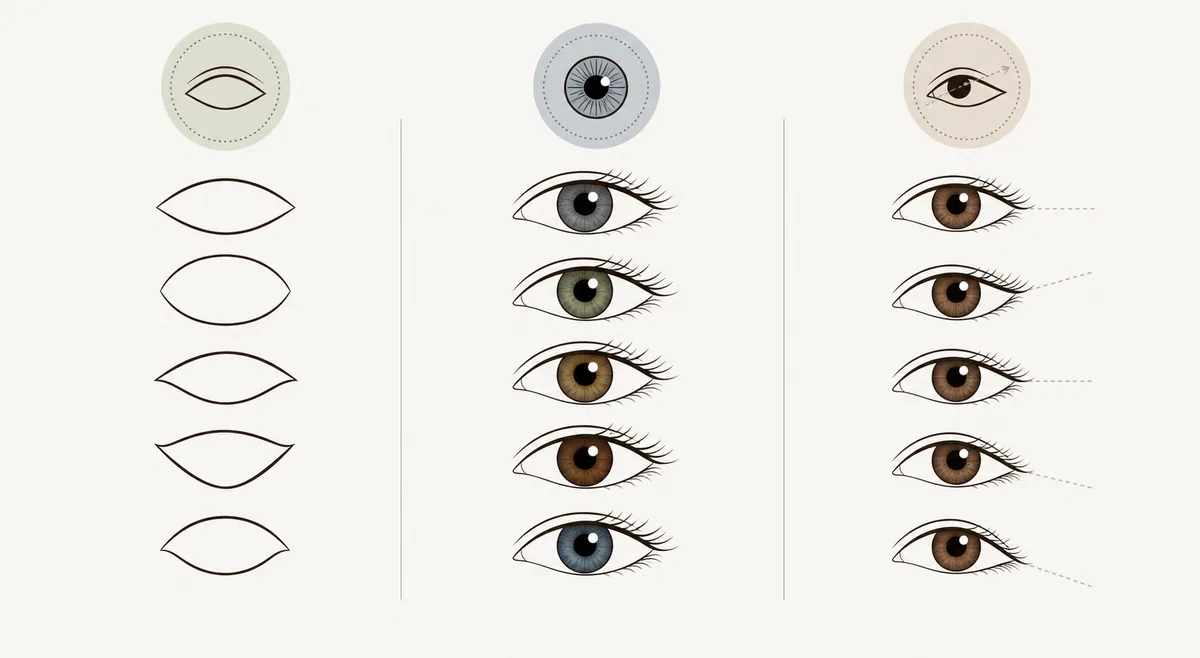
In Beauty-Guides sind Mandelaugen eine häufige beschreibende Kategorie. Gemeint ist meist eine Augenöffnung, die länger als hoch wirkt, an den Winkeln sanft zuläuft und wenig Weiß oberhalb oder unterhalb der Iris zeigt.
Eine genaue Prozentzahl ist deutlich schwerer zu belegen. Studien können Lid-Höhe, Augenwinkel oder periokulare Proportionen messen, aber solche Messungen sind nicht dasselbe wie eine öffentliche Beauty-Bezeichnung. Virale Zahlen sind schwach, wenn Stichprobe und Definition fehlen.
Die bessere Frage ist, ob Mandelaugen Ihren Hauptumriss beschreiben und ob zusätzlich Schlupflid, ein auf- oder abwärts gerichteter Winkel oder ein enger bzw. weiter Augenabstand sichtbar ist.

Warum Seltenheitsclaims verwirren
Wichtig ist, Augenform, Augenfarbe, Winkel und Mischmerkmale getrennt zu betrachten.
Form ist nicht Farbe
Statistiken zur Augenfarbe sagen nicht, wie häufig eine Augenform-Kategorie ist.
Form ist nicht Herkunft
Mandelförmige Konturen können in vielen Hintergründen vorkommen; die Form allein belegt keine Ethnie oder Abstammung.
Mischmerkmale sind normal
Mandelaugen können gleichzeitig Schlupflider, auf- oder abwärts gerichtete Winkel sowie einen engen oder weiten Abstand haben.
Zahlen brauchen eine Methode
Eine Prozentzahl ohne Population, Stichprobe, Messung und Definition beweist keine Seltenheit.
Eigene Merkmale prüfen
Verwenden Sie ein klares Frontalfoto bei gleichmäßigem Licht. Vermeiden Sie starke Filter, hochgezogene Brauen, kräftigen Eyeliner und sehr nahe Weitwinkel-Selfies.
Prüfen Sie jeweils ein Merkmal, damit Sie Umriss, Lidabdeckung, Abstand und Augenwinkel nicht vermischen.
Mit dem Umriss beginnen
Fragen Sie, ob die Augenöffnung länger als hoch wirkt.
- Mandelaugen wirken eher horizontal ausgewogen.
- Runde Augen wirken vertikal offener.
- Ein neutraler Ausdruck erleichtert den Vergleich.
Die Iris prüfen
Bei Mandelaugen berührt die Iris in vielen Beschreibungen beide Lider oder liegt sehr nah daran.
- Mehr Weiß oberhalb oder unterhalb kann auf runde Augen hindeuten.
- Licht und Ausdruck verändern den Eindruck.
- Vergleichen Sie mehr als ein Bild.
Die Winkel prüfen
Die Richtung des Außenwinkels ist ein eigenes Merkmal und nicht dasselbe wie der Mandelumriss.
- Ein angehobener Winkel ist aufwärts gerichtet.
- Ein abgesenkter Winkel ist abwärts gerichtet.
- Beides kann mit Mandelaugen vorkommen.
Sekundäre Merkmale ergänzen
Erst wenn der Umriss klar ist, sollten Sie Schlupflid, Monolid sowie engen oder weiten Abstand ergänzen.
- Ein einzelnes Etikett kann zu einfach sein.
- Mehrschichtige Beschreibungen sind oft genauer.
- Nutzen Sie den Detektor als zweite Einschätzung.
Nützliche vs. irreführende Aussagen
Diese Tabelle hält die Suchintention praktisch und vorsichtig.
| Aussage | Bessere Einordnung | Warum es wichtig ist | Was pruefen |
|---|---|---|---|
| Mandelaugen sind selten | Ohne Methode zu pauschal. | Seltenheit braucht eine definierte Population und Definition. | Beginnen Sie mit sichtbaren Merkmalen. |
| Mandelaugen sind häufig | Als Beauty-Kategorie plausibel. | Viele Guides verwenden Mandelaugen als große Formkategorie. | Umriss und Iris-Kontakt prüfen. |
| Mandelaugen bestimmen die Herkunft | Irreführend. | Die Form allein belegt keine Identität oder Abstammung. | Keine stereotypen Schlussfolgerungen ziehen. |
| Mandelaugen sind immer aufwärts gerichtet | Nicht korrekt. | Mandel beschreibt den Umriss, aufwärts beschreibt den Winkel. | Innen- und Außenwinkel getrennt vergleichen. |
Bedeutung für Make-up, Wimpern und Brillen
Der Nutzen der Bezeichnung Mandelaugen ist praktisch, nicht wertend. Ein ausgewogener Umriss kann mit vielen Eyeliner-, Lidschatten-, Wimpern- und Brillenstilen funktionieren.
Sekundäre Merkmale verändern die Empfehlung. Bei mandelförmigen Schlupflid-Augen sollte das Detail oberhalb der Lidfalte sichtbar bleiben; bei aufwärts gerichteten Augen ist weniger äußerer Lift nötig; bei eng stehenden Augen kann Helligkeit innen und Tiefe außen ausgleichen.
Nutzen Sie die Bezeichnung als Ausgangspunkt und prüfen Sie Ihr eigenes Foto und Ihren Komfort. Keine Augenform muss korrigiert werden, um gültig zu sein.
Mandelförmig und Schlupflid
- Details bei geöffneten Augen sichtbar halten.
- Zu dicken Eyeliner vermeiden.
- Weiche Übergänge nutzen.
Mandelförmig und aufwärts
- Mit dem natürlichen Lift arbeiten.
- Wing proportional halten.
- Beide Augen geöffnet prüfen.
Mandelförmig und eng stehend
- Inneren Winkel aufhellen.
- Tiefe nach außen verlagern.
- Innen nicht zu dunkel schminken.
Gemischtes Ergebnis
- Mandel beschreibt den Umriss.
- Ein sekundäres Merkmal ergänzen.
- Mit neutralem Foto erneut prüfen.
Was wir nicht seriös behaupten können
Eine genaue weltweite Prozentzahl sollte ohne klare Quelle, Definition und konsistente Messung nicht behauptet werden.
Aus der Augenform sollten wir keine Identität, Gesundheit, Persönlichkeit oder Attraktivität ableiten. Die Bezeichnung dient der Beschreibung und dem Styling, nicht der Bewertung.
Die vorsichtige Antwort lautet: Mandelaugen sind eine häufige und normale Kategorie, genaue Seltenheitszahlen sind meist nicht belastbar.
Wann ein KI-Detektor hilft
Ein Detektor hilft, wenn Sie prüfen möchten, ob Mandelaugen die beste Beschreibung für Ihr eigenes Foto sind. Er vergleicht sichtbare Signale wie Lidabdeckung, Iris, Winkelrichtung und Abstand.
Nutzen Sie ein klares Frontalfoto und betrachten Sie das Ergebnis als strukturierte zweite Einschätzung. Eine kombinierte Antwort kann hilfreicher sein als ein einzelnes auffälliges Etikett.
Wann ein KI-Detektor hilft
Mandelaugen gelten in Beauty-Guides nicht als extrem seltene Form. Sie sind eine häufig beschriebene Kategorie; genaue Prozentzahlen sind jedoch meist nicht belastbar.
FAQ
Mandelaugen gelten in Beauty-Guides nicht als extrem seltene Form. Sie sind eine häufig beschriebene Kategorie; genaue Prozentzahlen sind jedoch meist nicht belastbar.
A precise global number is not reliable without a clear study and definition. Treat broad percentages carefully.
Ja. Mandel beschreibt den Umriss, Schlupflid die Abdeckung der Lidfalte. Beides kann gleichzeitig vorkommen.
Yes. Do not use eye shape alone to infer ethnicity or ancestry.
Use a neutral photo and check outline, iris contact, corner taper, and secondary traits separately.
Quellen und Weiterlesen
Selected sources for careful wording around eye-shape categories and periocular variation.