아몬드형 눈은 드문가요? 눈 모양이 실제로 의미하는 것
아몬드형 눈은 드문가요? 아몬드형 눈이 흔히 설명되는 눈 모양인 이유, 정확한 비율을 증명하기 어려운 이유, 자신의 특징을 확인하는 방법을 알아보세요.
빠른 답변
아몬드 눈은 대체로 매우 드문 특징이라기보다 뷰티 가이드에서 자주 쓰이는 대표적인 눈 모양입니다. 정확한 비율보다 형태 단서를 구분하는 것이 더 중요합니다.
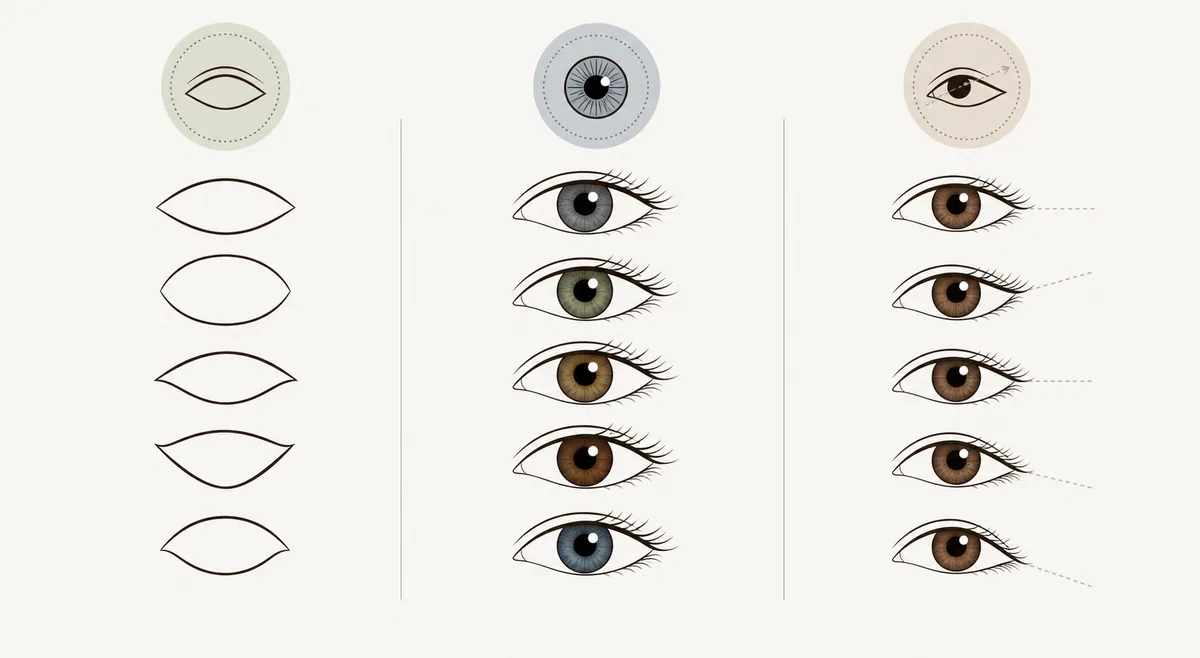
눈 모양, 눈동자 색, 눈꼬리 각도, 복합 특징을 분리해서 보세요.
실용적인 결론은 간단합니다. 아몬드형 눈은 자연스럽고 흔히 설명되는 눈 모양이지만, 출처가 특징·표본·방법을 정의하지 않는다면 세계적인 정확한 비율은 주의해서 봐야 합니다. 먼저 기본 윤곽을 확인한 뒤 후드형, 눈꼬리 각도, 눈 사이 간격 같은 보조 특징을 더해 보세요.
실제로 얼마나 흔한가
뷰티 문맥에서 아몬드형 눈은 흔히 사용하는 설명적 분류입니다. 일반적으로 세로보다 가로로 길어 보이는 눈매, 부드럽게 좁아지는 앞머리와 눈꼬리, 홍채 위아래로 보이는 흰자위가 적은 특징을 말합니다.
A precise percentage is much harder to support. Scientific and clinical studies may measure eyelid height, canthal tilt, or periocular proportions, but those measurements are not the same as a public beauty label. That is why viral numbers should be treated as weak unless the source explains the sample and definition.
A better question is not whether the shape is rare, but whether almond is your main outline and whether another trait such as hooding, upturn, downturn, close-set spacing, or wide-set spacing should be added.
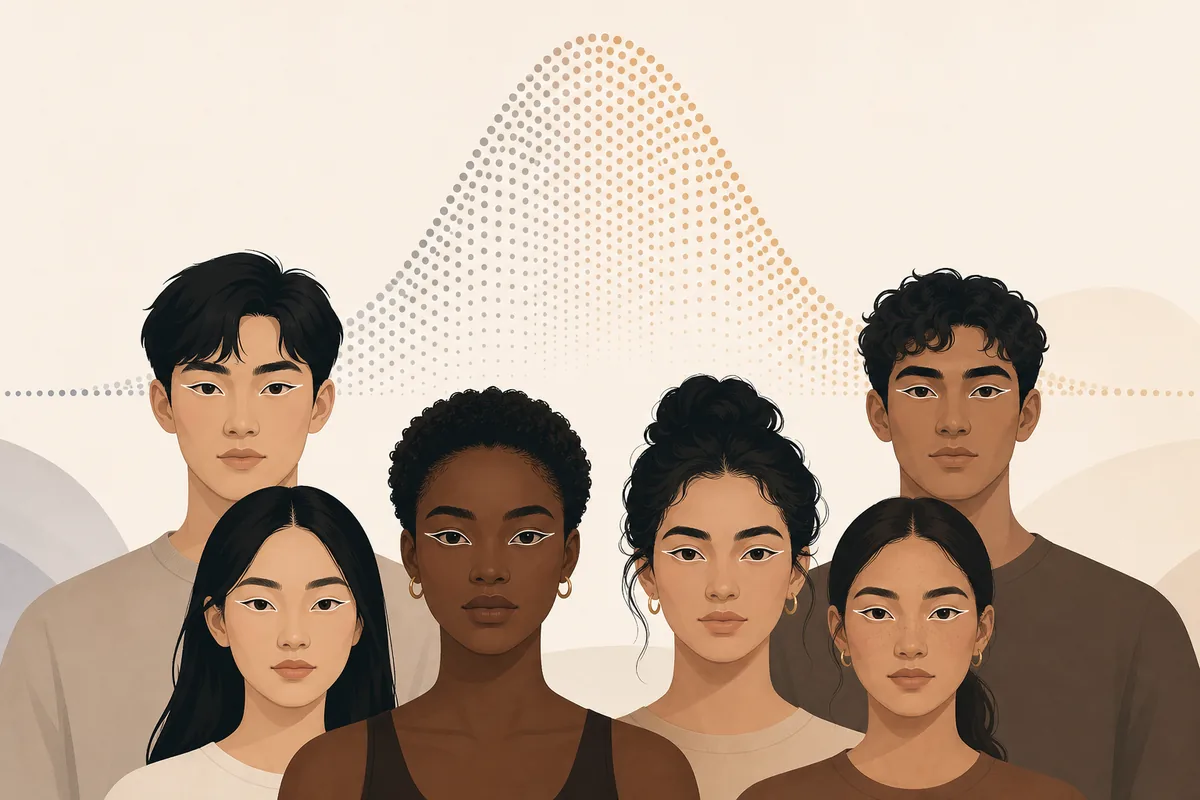
희귀성 주장이 헷갈리는 이유
눈 모양, 눈동자 색, 눈꼬리 각도, 복합 특징을 분리해서 보세요.
모양과 색은 다릅니다
Eye-color rarity does not explain eye-shape frequency.
모양과 혈통은 다릅니다
Almond-like outlines can appear across many backgrounds.
여러 특징이 함께 나타나는 것은 자연스럽습니다
아몬드형 눈은 후드형, 올라간 눈꼬리, 내려간 눈꼬리, 가까운 눈 간격 또는 넓은 눈 간격과 함께 나타날 수 있습니다.
수치에는 측정 방법이 필요합니다
A percentage without a sample, definition, and method should not drive your conclusion.
내 눈 특징 확인하기
눈 모양을 확인할 때는 밝고 균일한 정면 사진을 사용하세요. 강한 필터, 올라간 눈썹, 진한 아이라인, 너무 가까운 광각 셀카는 피하세요.
Look at one feature at a time so you do not mix outline, lid coverage, eye spacing, and corner direction.
먼저 눈 윤곽을 확인하세요
눈의 가로 길이가 세로보다 길어 보이는지 살펴보세요.
- Almond reads horizontally balanced.
- Round reads more vertically open.
- A neutral expression is best.
홍채를 확인하세요
여러 설명에서 아몬드형 눈은 홍채가 위아래 눈꺼풀에 닿거나 거의 닿아 보입니다.
- Extra white above or below the iris can suggest round eyes.
- Lighting and expression matter.
- 사진을 한 장 이상 비교하세요.
눈 앞머리와 눈꼬리를 확인하세요
Outer-corner direction is a separate trait from almond shape.
- Lifted means upturned.
- Lowered means downturned.
- Either can coexist with almond.
보조 특징을 추가하세요
윤곽을 확인한 뒤에 후드형, 무쌍, 눈 사이 간격 같은 특징을 추가하세요.
- 하나의 라벨만으로는 지나치게 단순할 수 있습니다.
- 여러 특징을 함께 설명하는 편이 더 정확한 경우가 많습니다.
- 검사 결과는 두 번째 참고 의견으로 활용하세요.
유용한 주장과 오해
This table keeps the search intent practical and cautious.
| 주장 | 더 나은 해석 | 중요한 이유 | 확인할 점 |
|---|---|---|---|
| 아몬드형 눈은 드뭅니다 | 방법이 없으면 지나치게 넓은 주장입니다. | Rarity claims need a defined population and definition. | Use visible traits first. |
| 아몬드형 눈은 흔합니다 | 뷰티 분류로는 타당한 표현입니다. | 많은 가이드에서 대표적인 눈 모양 중 하나로 설명합니다. | Confirm with outline and iris contact. |
| 아몬드형 눈만으로 혈통을 알 수 없습니다 | 오해를 부를 수 있습니다. | Shape alone should not be used for ethnicity assumptions. | 고정관념에 근거한 결론은 피하세요. |
| 아몬드형 눈이 항상 올라간 눈은 아닙니다 | 정확하지 않습니다. | 아몬드형은 윤곽을, 올라간 눈은 눈꼬리 각도를 설명합니다. | 눈 앞머리와 눈꼬리를 따로 비교하세요. |
메이크업, 속눈썹, 안경에 주는 의미
The styling value of the almond label is practical, not about rarity. A balanced almond outline often adapts well to liner, shadow, lashes, and many frame shapes.
보조 특징에 따라 스타일링 방법도 달라집니다. 후드형 아몬드 눈은 쌍꺼풀 선 위에서도 디테일이 보이게 하고, 올라간 눈꼬리라면 바깥쪽을 과하게 끌어올리지 않으며, 눈 간격이 가깝다면 앞머리를 밝게 하고 음영을 바깥쪽으로 옮기면 균형을 잡기 쉽습니다.
Use the label as a starting point, then check your actual photo and your comfort. No eye shape needs to be corrected to be valid.
후드형 아몬드 눈
- 눈을 뜬 상태에서도 디테일이 보이게 하세요.
- 너무 두꺼운 아이라인은 피하세요.
- 부드러운 그라데이션을 사용하세요.
올라간 아몬드 눈
- 자연스러운 상승감을 살리세요.
- 아이라인 꼬리의 비율을 맞추세요.
- 양쪽 눈을 뜬 상태에서 확인하세요.
눈 사이가 가까운 아몬드 눈
- 눈 앞머리를 밝게 하세요.
- 음영을 바깥쪽으로 옮기세요.
- 안쪽을 너무 어둡게 하지 마세요.
복합적인 결과
- 윤곽은 아몬드형으로 설명하세요.
- 보조 특징을 하나 추가하세요.
- 자연스러운 표정의 사진으로 다시 확인하세요.
정직하게 말할 수 없는 것
특징을 명확히 정의하고 일관되게 측정한 출처가 없다면 아몬드형 눈의 정확한 세계 비율을 주장해서는 안 됩니다.
We also should not infer identity, health, personality, or attractiveness from eye shape. The label is useful for self-description and styling, not for ranking people.
가장 신중한 답은 아몬드형 눈이 흔하고 자연스러운 분류이며, 정확한 희귀성 비율은 대체로 신뢰하기 어렵다는 것입니다.
AI 감지가 도움이 되는 경우
An AI detector can help when your real question is whether almond is the best label for your own photo. It compares several visible cues at once, including lid visibility, iris exposure, corner direction, and spacing.
Use a clear front-facing photo and treat the result as a structured second opinion. A layered output is often more useful than a single dramatic label.
AI 감지가 도움이 되는 경우
아몬드 눈은 대체로 매우 드문 특징이라기보다 뷰티 가이드에서 자주 쓰이는 대표적인 눈 모양입니다. 정확한 비율보다 형태 단서를 구분하는 것이 더 중요합니다.
자주 묻는 질문
아몬드 눈은 대체로 매우 드문 특징이라기보다 뷰티 가이드에서 자주 쓰이는 대표적인 눈 모양입니다. 정확한 비율보다 형태 단서를 구분하는 것이 더 중요합니다.
A precise global number is not reliable without a clear study and definition. Treat broad percentages carefully.
Yes. Almond describes the outline, while hooded describes crease coverage.
Yes. Do not use eye shape alone to infer ethnicity or ancestry.
Use a neutral photo and check outline, iris contact, corner taper, and secondary traits separately.
참고 자료
Selected sources for careful wording around eye-shape categories and periocular variation.